
Snow and Ice Lighting for Homeowners: App Control, No Rehanging

Snow and Ice Lighting for Homeowners: App Control, No Rehanging
The most practical path to safe, low-maintenance snow and ice lighting is a permanently installed LED roofline or track system, or, for seasonal setups, string lights certified for year-round use. LEDs use about 70% less energy than incandescent strands and last much longer, and every outdoor circuit should run through a GFCI-protected outlet for safety.
TL;DR:
- Choose string lights certified under UL 588 Supplement SD for year round use; standard UL 588 strands are intended for temporary seasonal use.
- Route outdoor lights through GFCI protection, test the GFCI monthly as instructed, and inspect cords and sockets for cracks, fraying, or heat damage before use.
- Choose 2700K to 3000K lighting and diffuse or dim fixtures facing snow, which reflects light and can intensify glare at night.
- For decorative lighting, favor dusk to dawn photocells with timers because drifting snow can trigger false activations and cold can shorten motion sensor range.
Types of Winter-Ready Outdoor Lighting for Your Home
Not every lighting product is built to survive a winter on your roofline. The right choice depends on how much maintenance you want to do each year and how permanent you want the result to be.
- Permanent track-mounted LED roofline systems stay installed year-round and let you change colors through a phone app instead of swapping bulbs.
- Year-round certified string lights cost less upfront but need certification for continuous outdoor use so they can stay up through winter.
- Spot and accent downlights along eaves, steps and roof edges add visibility on icy walkways without the glare of a floodlight.
- Path and step luminaires need careful placement and height so snowfall does not bury the fixture or block the beam.
Permanent systems suit homeowners who want to stop climbing ladders every November. Seasonal string lights suit those happy with an annual hang-and-remove routine, as long as the product is rated for the job.
Safety and Code Basics You Need Before Lighting for Winter
Winter lighting safety starts with the outlet, not the bulb. Every outdoor receptacle and plug-in cord should run through a Ground-Fault Circuit Interrupter, and the Consumer Product Safety Commission recommends testing GFCIs monthly following the manufacturer’s instructions. A qualified electrician can wire GFCI protection permanently rather than relying on a portable unit.
Fact: LED holiday lighting uses roughly 70% less energy than incandescent strands, a difference that compounds over the long nights of a winter season.
Lighting products also fall into distinct certification categories that matter for winter use:
- Seasonal string lights are tested under UL 588 for temporary, holiday-season use.
- Year-round string lights fall under UL 588 Supplement SD, which sets additional construction requirements.
- Permanent fixtures and permanent wiring need listed products rated for permanent installation, a distinction covered under the relevant National Electrical Code articles for fixtures and wiring methods.
- Before each season, inspect every cord and socket for cracks, fraying or heat damage, and never daisy-chain more sets than the product label allows.
If you’re unsure whether your current setup meets code, our guide to GFCI protection for outdoor lights walks through what a safe outdoor circuit looks like. The CPSC’s holiday decorating guidance adds that you should only buy lights tested by a recognized lab such as UL or ETL and fasten every strand securely so wind and ice cannot pull it loose.
Choosing Light Color and Mounting for Snow and Ice
Snow and ice reflect light aggressively, so a fixture that looks fine on dry pavement can throw harsh glare once the ground turns white. Warmer color temperatures, such as 2700K to 3000K, can read as softer and more inviting while helping limit glare against snow.
- Choose warmer white tones over cool blue-white light to cut glare off snow and ice.
- Use diffusers or soft-optic lenses, and dial back lumen output where a fixture faces a reflective surface.
- Use secure fasteners and brackets suited to the fixture and mounting surface.
- Place path and step lights where drifting snow is less likely to cover them.
Purpose-made clips and brackets can help protect your roofline from damage. Our breakdown of 2700K versus 3000K lighting goes deeper on picking the right tone for your home’s exterior.
Pro Tip: Test a new fixture’s glare after the first snowfall, not before, since reflection off fresh snow looks very different from reflection off bare ground.
Controls That Save Energy and Simplify Seasonal Changes
Winter nights are long, which makes an always-on lighting schedule expensive and unnecessary. LEDs already use about 70% less electricity than incandescent strands, and the right controls trim the remaining cost further.
- Dusk-to-dawn photocells can switch lights on and off automatically in response to changing light levels.
- Astronomical timers and zone-level scheduling let you light only the areas you actually need, which the Department of Energy notes reduces wasted electricity compared with manual operation.
- App-controlled permanent systems let you switch from everyday white light to holiday colors without touching a ladder.
- Motion sensor performance can vary in snow and cold, so consider testing the setup in local conditions.
If you’re deciding between a basic photocell and a smarter timer, our comparison of photocell versus timer options for homeowners can help you weigh which fits your routine.
Installation and Maintenance Checklist for Winter Lighting
A little planning before the first snowfall keeps your lighting working through the whole season instead of failing on the coldest night.
- Have a licensed electrician handle any permanent wiring and GFCI installation rather than relying on extension cords strung from an indoor outlet.
- Choose fixtures and drivers rated for outdoor use and suited to the winter conditions in your area.
- Use weather-rated connectors and follow the product’s installation instructions for connections.
- Plan access points so tracks and mounts can be serviced if ice builds up, and consider removable guards in spots prone to heavy buildup.
- Test the GFCI according to the manufacturer’s instructions, check for damaged cords or cracked sockets, and clear ice carefully rather than chipping at fixtures directly.
Pro Tip: Schedule your pre-winter inspection before icy conditions make roof access hazardous, so repairs can be handled more safely.
What Drives the Cost of a Snow-Ready Lighting Project
Three things mostly decide what you’ll pay: how much roofline or path you’re lighting, which product you choose, and how much electrical work is involved.
- Linear footage and the number of separate lighting zones set the baseline scope of any quote.
- Permanent track systems cost more upfront than seasonal string lights but eliminate the recurring labor of hanging and removing lights each year.
- Adding a new dedicated circuit or GFCI protection where none exists adds to the electrical portion of the job.
- More advanced app control and zone scheduling typically raise the control budget compared with a single photocell switch.
The time needed for a residential roofline install depends on the project scope and roof access. Warranty coverage is worth weighing too: check the terms for parts coverage and how they apply to your installation.
Types of Snow and Ice Sensors for Outdoor Lighting Systems
Some outdoor lighting setups pair with sensors that respond to weather conditions rather than just time of day. Photocell sensors detect ambient light levels and can trigger lighting as conditions grow darker.
Temperature-based sensors may be used with heated gutter or walkway systems to control ice-prevention equipment rather than decorative lighting. Motion sensors remain an option for security-focused fixtures, but cold weather and drifting snow can reduce their reliability, sometimes causing false triggers from blowing snow or a shortened detection range in sub-freezing air.
A dusk-to-dawn photocell combined with an astronomical timer is one option for scheduling winter lighting; the right setup depends on your needs and conditions. If your goal is purely decorative or ambient lighting, simpler photocell control tends to be the more dependable choice; motion detection is better reserved for security fixtures where occasional false triggers are an acceptable tradeoff for added coverage.
How Snow and Ice Buildup Affects Light Visibility and Color
A fixture that throws clean, even light in October can look very different once snow piles against it or a layer of ice forms over the lens. Snow accumulation on a fixture housing may block some light and alter its appearance.
Ice is a different problem. Ice on a lens can scatter light and alter its apparent color or beam pattern. This matters most for accent and color-changing fixtures, where a crisp blue or red can read as a muddy gray once ice builds up over the lens.

Reflection off surrounding snow compounds the effect. Light reflecting off snow can add brightness, so consider warmer, lower-glare lighting to help manage the effect. Keeping fixtures angled and positioned so buildup doesn’t collect directly over the lens goes a long way toward preserving both visibility and true color through the season.
How to Remove or Prevent Snow and Ice on Light Fixtures
Prevention works better than removal, since scraping ice off a cold fixture risks cracking housings or lenses. Angling fixtures so they shed snow naturally, rather than facing straight up into falling snow, cuts down on how much accumulates in the first place.
For fixtures that do collect buildup, a soft brush or broom can clear loose snow without contacting the lens directly. Avoid metal tools, hot water, or de-icing chemicals on any fixture, since sudden temperature changes can crack glass or plastic lenses and chemical de-icers can corrode housings and wiring over time.
Permanent track systems and clip-on string lights may respond differently to snow and wind, so choose a mounting approach suited to your conditions. For fixtures in spots that reliably collect heavy drifts, a seasonal physical guard or small overhang can redirect snowfall away from the lens without permanently altering the fixture. Routine seasonal inspection, as covered in the maintenance checklist above, remains the simplest way to catch buildup before it becomes a visibility or safety problem.
Connecting Winter Lighting to Home Safety and Security
Outdoor lighting does double duty in winter: it sets a festive tone and it also illuminates the exact spots where ice makes a fall most likely, like front steps, walkways and driveways. Positioning fixtures to cover these transition points gives you a practical safety benefit alongside the decorative one.
Many homeowners also pair their lighting schedule with existing security systems, since a well-lit exterior at night supports whatever cameras or motion-triggered security lights are already in place. App-controlled permanent systems make this easier, since a single schedule can keep walkways lit through the same hours your security system is most active, without a separate manual switch to remember.
Just be mindful that a security system’s own motion lighting and a decorative lighting schedule can sometimes work against each other, for instance if a bright security floodlight washes out the softer color you’ve set for a holiday display. Running decorative and security lighting on separate zones, each with its own control, avoids that conflict while still covering the same ground.
What Snow and Ice Resistant Lighting Typically Costs
Upfront cost for a winter-ready lighting system depends heavily on which category you choose. Year-round certified string lights may cost less upfront, though replacement needs vary by product and use. Permanent track-mounted systems cost more to install because they involve custom-fit tracks, weatherproof wiring and, in many cases, electrical upgrades like added GFCI protection.
Maintenance expenses follow a similar pattern in reverse. Seasonal string lights carry a recurring cost in labor, whether that’s your own time hanging and removing them each year or a hired install and takedown service. Permanent systems shift more of the cost to the initial install; ongoing maintenance and warranty coverage depend on the product and installation.
Electrical work is the variable most homeowners underestimate. Adding a dedicated outdoor circuit or GFCI protection where none exists may add to the project total. Consult a qualified electrician about applicable code requirements. Getting a firm number for your home means accounting for roofline footage, the number of controlled zones, and whether your existing electrical panel has room for the new circuit.

Why a Professional Winter Lighting Perspective Matters
Seasonal string lights and winter-ready systems may perform differently in cold conditions, so check that products are suited to their intended use. The specifications matter more than the marketing: UL 588 Supplement SD covers string lights intended for year-round use, a different category from seasonal lighting strings.
Our team installs permanent outdoor lighting around the Capital Region, including phone-controlled roofline and track systems. Check the warranty terms for track installations. Our experience installing brackets, tracks and connections shapes the advice above.
— Luis T
A Permanent Solution That Skips the Seasonal Hassle
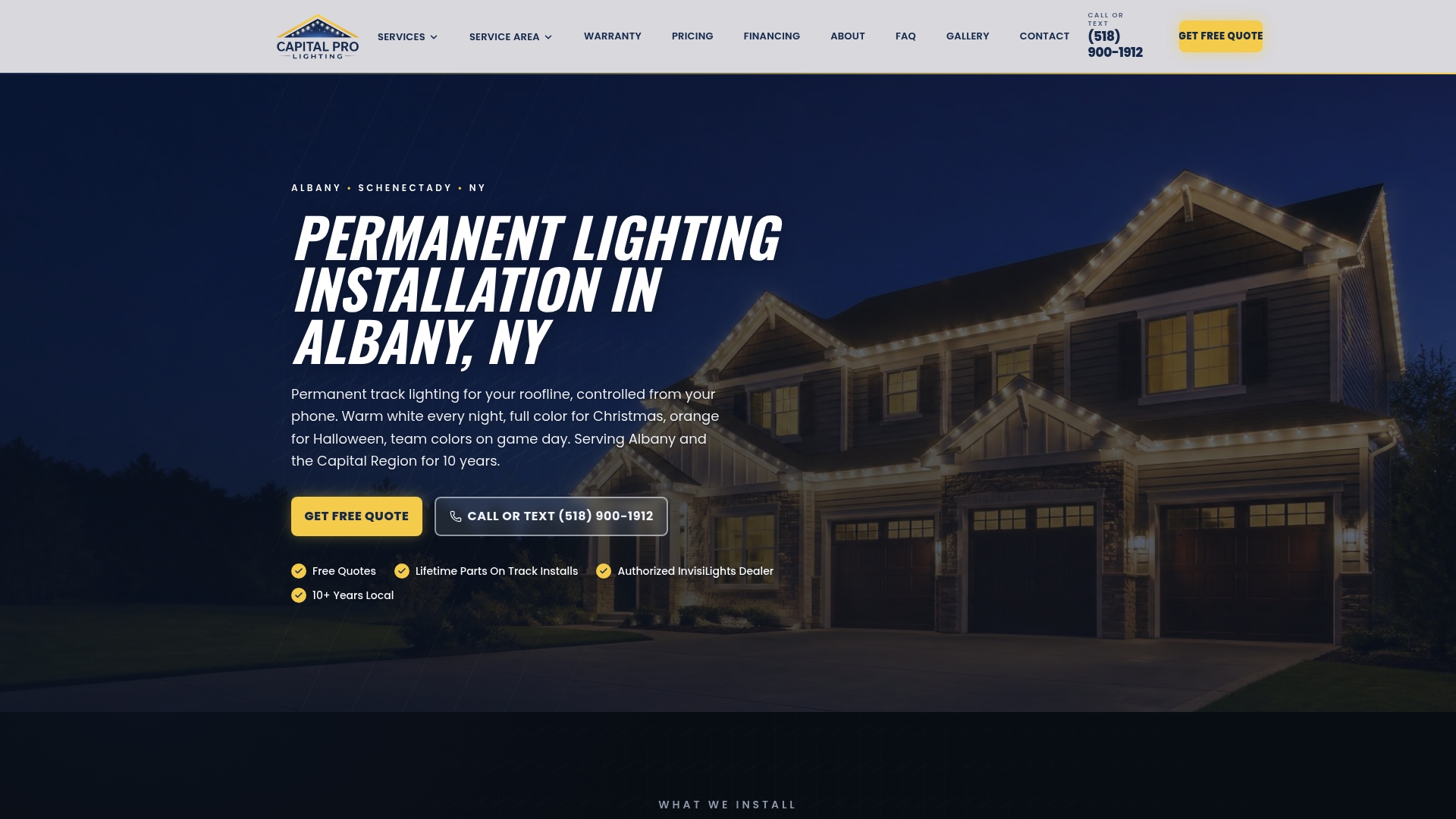
We install permanent outdoor lighting to help reduce the need to climb a ladder for holiday decorating. Our InvisiLights track-mounted and InvisiClips trackless systems let you switch your roofline’s color from your phone, whether that’s warm white for a quiet Tuesday or full color for a winter party, and track installs include parts warranty coverage. Check the warranty terms for details.
- Skip the annual hang-and-takedown routine with a system built to stay up through every winter.
- Change colors for holidays, game days or everyday use without touching a single bulb.
- Get discreet, color-matched hardware and custom 3D-printed brackets for a clean finish.
If seasonal hanging and removal still fits your plans better, we also offer Christmas light installation with full takedown and storage. For homes ready to make the switch to a lasting system, visit our permanent outdoor lighting page to request a quote and see what a winter without ladders looks like. While you’re weatherproofing the house for the season, One Day Doors & Closets has a practical guide on winterizing your doors that pairs well with getting your exterior ready for snow and ice.
FAQ
Do outdoor Christmas lights need to be on a GFCI outlet?
Yes. The CPSC recommends that all outdoor lighting run through a Ground-Fault Circuit Interrupter to reduce shock hazards, whether that’s a permanently wired GFCI or a portable unit. Test the GFCI monthly to confirm it’s still working correctly.
Can regular string lights stay up all winter?
Only if they’re designed and certified for year-round use. Seasonal lighting strings and string lights for year-round use fall into distinct categories under UL 588.
What color temperature works best for winter outdoor lighting?
Warmer tones in the 2700K to 3000K range generally look better against snow and cause less glare than cooler, blue-white light. This range also tends to feel more inviting for a home’s exterior at night.
How much does permanent outdoor lighting cost compared to seasonal lights?
Permanent track-mounted systems like InvisiLights start from 2500 USD, while trackless InvisiClips installs start from 2000 USD, both as one-time costs. Seasonal string lights cost less upfront but add recurring labor or service costs every year, which narrows the long-term cost gap.
Are motion sensor lights reliable in snow and cold?
Performance can vary, since falling or drifting snow sometimes triggers false activations and cold temperatures can shorten a sensor’s effective range. A dusk-to-dawn photocell paired with a timer tends to give more predictable results for winter lighting than motion detection alone.
Sources
- How Do Holiday Lights Work? | Department of Energy
- Cpsc
- String Lights for All-Year UseUL 588 Supplement SD | UL Solutions
Recommended
Ready for a Brighter Home?
Free, no-pressure quotes across the Capital Region.
No obligation. Local installer. Same-day callback.
Reviewed by Capital Pro Lighting
Capital Pro Lighting installs permanent outdoor lighting, architectural lighting, and holiday lighting across Albany and New York's Capital Region. We install UL listed permanent lighting systems and have 10 years in business. More about our team.


