
Stop Rehanging Lights: Porch Roofline Lighting for Homeowners

Stop Rehanging Lights: Porch Roofline Lighting for Homeowners
For most porches, a low-profile LED perimeter strip or a permanent track system gives the best mix of looks, durability, and safety, with tasteful string lights as a casual backup. Before plugging in anything or scheduling a hardwired install, check that your outdoor receptacle has GFCI protection. If you’re adding a new circuit, upgrading to permanent wiring, or working near an HOA-restricted roofline, call a licensed electrician instead of handling it yourself.
TL;DR:
- Permanent track or concealed LED strip systems provide a weather-resistant, app-controlled roofline lighting solution suited for year-round use.
- String lights and puck kits are only safe as seasonal, temporary fixtures limited to 90 days unless UL-certified for all-year exposure.
- Upgrading to permanent lighting requires professional installation, especially when adding circuits or working near rooflines, to comply with electrical codes.
- Proper wiring methods include using purpose-built clips, avoiding staples through cords, and sealing connections to prevent moisture damage.
- Local permits and inspections are often necessary for permanent installations, and GFCI protection on outdoor receptacles drastically reduces electrocution risks.
1. Porch roofline lighting ideas worth considering
The right fixture depends on how your porch is built, how long you want the lighting to stay up, and whether you want to change colors on a whim or set it once and forget it.
Perimeter LED or linear strips trace the edge of the roofline for a clean, continuous glow that reads as architecture rather than decoration. These work year-round and pair well with homes that have a defined fascia or trim line to mount along. Because the light source is hidden behind the fixture channel, you get illumination without visible bulbs, which tends to look more polished after the holidays end.
Soffit-mounted recessed or puck fixtures fit into covered porches with a flat soffit ceiling. They cast light downward in a wash rather than outlining the roof edge, which suits porches where you want ambient light for sitting outside rather than a decorative silhouette. Installation usually means cutting into the soffit, so it leans toward a one-time job best paired with other electrical work.

String or bistro lights remain the easiest and cheapest way to add warmth to a porch, especially for renters or anyone who wants a seasonal, changeable look. They work well zigzagged across an open porch ceiling or strung along a railing, but they’re genuinely a temporary product. Using seasonal-rated string lights as a permanent fixture is one of the most common mistakes homeowners make, and it carries real safety tradeoffs we cover in the next section.
Concealed track systems and under-eave strips sit in a track or channel mounted just under the roof edge, hidden from view during the day and lit at night. This is the category permanent installers favor because the track protects the wiring, keeps the look consistent, and often supports color-changing control through an app. Compared with string lights draped by hand, a track system gives a straighter line and holds up to weather without annual rehanging, often featuring advanced smart and adaptive controls for efficient energy savings.
- Perimeter LED strips: year-round, hardwired or low-voltage, best for defined roof edges.
- Soffit pucks: ambient downlight, best for covered porches used as living space.
- String or bistro lights: seasonal, plug-in, best for casual or temporary décor.
- Track or channel systems: permanent, often app-controlled, best for a clean finished look.
Spacing and layering: space perimeter fixtures evenly along the fascia rather than clustering them near the entry, and consider a second, lower layer, like railing lights or path lights, to avoid a flat single band of brightness. For color temperature, 2,700K to 3,000K reads as warm white and suits most home exteriors, while anything above 4,000K starts to look clinical against brick or wood siding.
Most perimeter strips and track systems need a hardwired or low-voltage transformer connection, while string lights and plug-in puck kits run off a standard outdoor receptacle. That distinction matters when you’re deciding whether a project is a weekend task or one that needs an electrician.
Pro Tip: Test your chosen color temperature on a single section at night before committing to the whole roofline. Porch lighting looks different under a dark sky than it does in daylight at the hardware store.
2. Mounting, wiring, and the code basics you need to check
Porch roofline lighting sits at the intersection of decoration and electrical work, and the code rules exist because outdoor circuits face moisture, temperature swings, and accidental damage that indoor wiring doesn’t.
As of 2026, the National Electrical Code requires GFCI protection on outdoor receptacles for residential dwellings. GFCI protection matters because it cuts power within milliseconds if current escapes its intended path, which is the difference between a tripped breaker and a serious shock. Industry guidance also distinguishes between temporary holiday lighting and permanent installations: temporary displays under NEC Article 590 are generally limited to 90 days, while anything left up longer falls under the rules for permanent wiring and often triggers a required inspection.
Statistic: GFCI protection has been linked to a 95% drop in electrocutions caused by consumer electronics since the devices became standard, a figure worth remembering before you decide a cheap extension cord is close enough to code.
UL also updated its standards to address a common gap: ordinary seasonal string lights aren’t built for twelve months of UV exposure and temperature cycling. UL Solutions created a “String Lights for All-Year Use” category under its testing program, requiring heavier wire gauge, thicker insulation, and stronger strain relief than seasonal-only products carry. If you plan to leave lights up permanently, this is the listing to look for on the packaging.
A few practical mounting rules keep a project both safer and longer-lasting:
- Never staple or nail directly through a wire or cord; the puncture can nick insulation and create a shock or fire risk over time.
- Use purpose-built clips, tracks, or non-penetrating brackets designed for the fixture, which protect the wire jacket and hold up to wind.
- Confirm the fixture or string is UL or ETL listed for its intended use, seasonal or year-round, before installing it.
- Check with your local building department, the Authority Having Jurisdiction, before converting any seasonal display into a permanent fixture, since AHJs often require inspection for permanent outdoor electrical work.
- Test GFCI outlets monthly using the built-in test button, a habit safety organizations recommend for any outdoor circuit carrying lighting loads.
Weatherproofing deserves its own mention: seal any outdoor connection with a rated cover or boot, keep splices off the ground, and avoid running cords through standing water or snowbanks. None of this is complicated, but skipping it is exactly how a cheap lighting project turns into a repeated troubleshooting chore.
3. DIY, seasonal kits, or a permanent system: what fits your porch
Not every porch needs the same approach, and the right one usually comes down to how long you want the lights to last and how much electrical work you’re comfortable doing yourself.
DIY or temporary installs cover string lights, plug-in puck kits, and battery-powered fixtures. These typically take an afternoon, cost relatively little upfront, and require no permit, but they’re bound by the 90-day seasonal limit if wired under Article 590 rules and aren’t rated for year-round outdoor exposure.
Semi-permanent or plug-and-play kits sit a step-up: still plug-in, but built with sturdier housings and sometimes smart plugs for scheduling. They’re a reasonable middle ground for renters or anyone not ready to commit to hardwiring, though they still rely on extension cords or exposed connections that need regular inspection.
Permanent hardwired or track systems are installed once, concealed, and typically controlled through an app rather than a physical switch. They cost more upfront and take longer to install, often a full day or more depending on roofline length, but they remove the seasonal cord-and-ladder routine entirely.
- Choose DIY string or puck lights for a casual look you plan to change seasonally.
- Choose a semi-permanent kit if you want sturdier hardware without committing to hardwiring.
- Choose a permanent track or hardwired system for year-round color control and a finished, cord-free appearance.
- Call a licensed electrician any time the project involves a new circuit, adding load to an existing panel, or working from roof access rather than a ladder on flat ground.
4. What a professional permanent system actually offers
Professional-grade permanent lighting answers the two biggest complaints homeowners have about seasonal setups: climbing a ladder every November and being stuck with one color scheme all year.
Capital Pro Lighting’s permanent outdoor lighting installs are built around a few specific claims worth knowing before you compare options:
- App-based control lets you change roofline color from your phone for holidays, game days, or everyday use, without touching a single bulb.
- Track installations carry a lifetime parts warranty, which matters for a fixture meant to stay up year after year.
- Custom 3D-printed brackets are designed to sit flush against trim for a discreet, color-matched finish rather than visible hardware.
- Over 10 years of installation experience in the Albany, New York region backs the claim of reliable, locally tailored work.
Those features directly address the seasonal hassle and the code concerns covered above: a sealed, warrantied track system avoids the staple-through-the-wire problem and the 90-day seasonal limit altogether, since it’s built and inspected as a permanent fixture from the start.
5. An installer’s take on getting this right
Durability costs more upfront, but a permanent system earns that back by never needing re-hanging. The mistakes I see most often are running seasonal string lights through a second or third winter and stapling cords along a fascia board, both of which quietly shorten a fixture’s safe life. Before getting quotes, photograph your roofline and test your GFCI outlets. It’s a five-minute step that saves real back-and-forth later.
— Luis T
How we can help with a permanent roofline install
If you’ve decided a permanent setup makes more sense than another round of seasonal lights, we install exactly that: concealed, color-changing roofline lighting built to stay up year-round. Our InvisiLights track-mounted and InvisiClips trackless systems both give you app control over color and brightness, and track installations come with a lifetime parts warranty on parts so you’re not budgeting for repairs down the road.
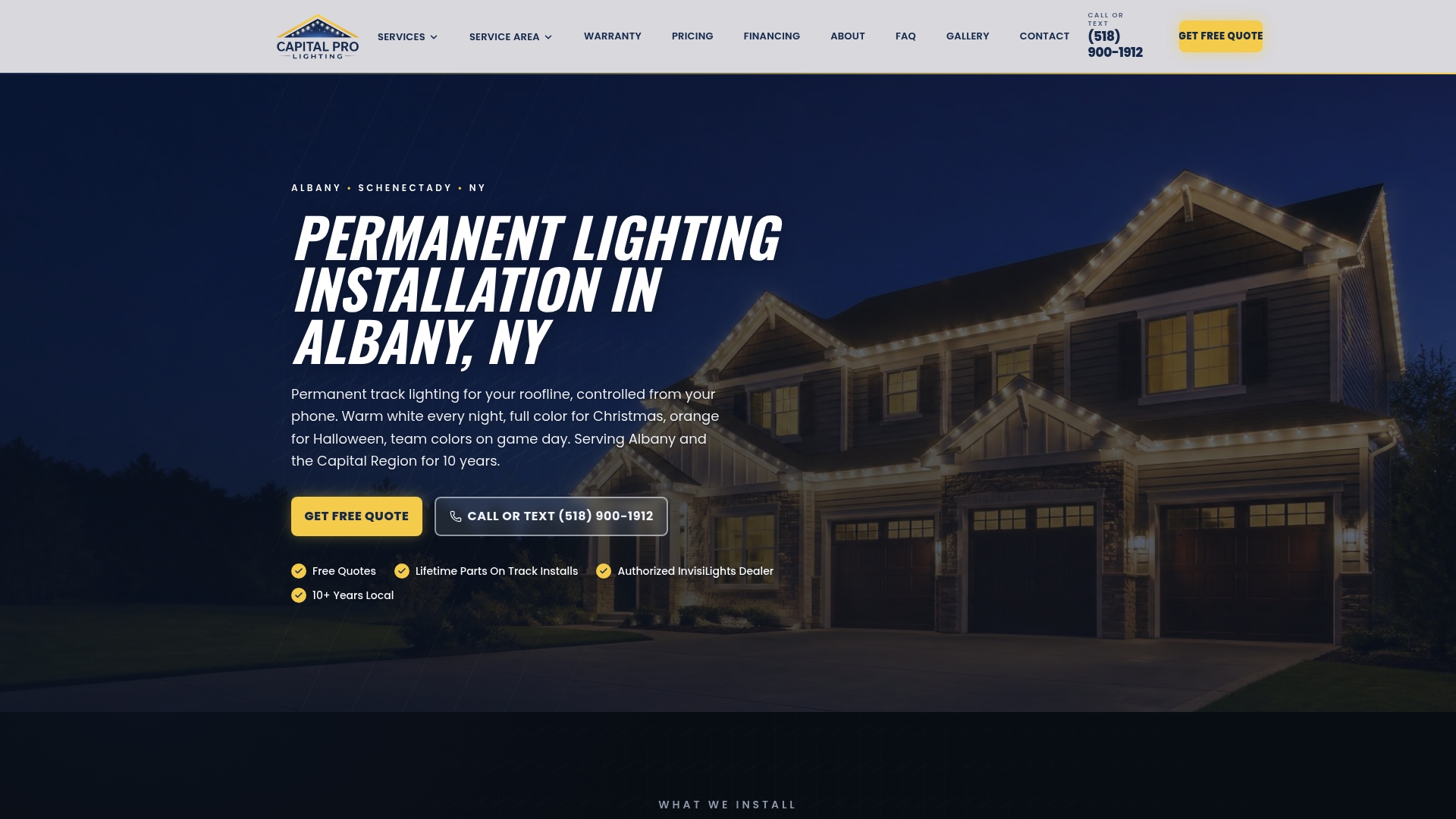
This fits best if you’re a homeowner who wants one installation that handles every holiday, every season, and every ordinary weeknight without touching a ladder again. For anyone who prefers to keep things seasonal instead, we also handle Christmas light installation and takedown, storage included.
Getting started is simple:
- Reach out with your porch or roofline details and preferred timeline.
- We schedule a site visit to assess mounting points, circuit needs, and design options.
- You get a clear quote before any work begins.
If you’re in the Capital Region, including Delmar, check availability and request a quote for your home.
FAQ
What is the best type of lighting for an outdoor porch?
For most porches, a low-profile LED perimeter strip or a concealed track system gives the best combination of appearance and durability, since it’s hidden by day and even by night. String or bistro lights remain a good casual option but are best treated as seasonal rather than permanent.
What are the latest trends in porch lights?
Homeowners are increasingly choosing app-controlled, color-changing permanent systems that replace separate holiday and everyday lighting setups entirely. Warm white tones in the 2,700K to 3,000K range continue to dominate over cooler, bluer light for residential exteriors.
What are the trends for outdoor lighting in 2026?
Networked and dimmable LED lighting with app or smart home control is becoming the standard rather than the exception, partly because adaptive controls can meaningfully cut energy use compared with always-on fixtures. Expect more homeowners pairing motion sensors and timers with permanent roofline systems rather than running lights continuously.
Should porch light be soft, white, or daylight?
Soft or warm white light, generally 2,700K to 3,000K, suits most home exteriors and feels inviting rather than clinical. Daylight-range light above 4,000K can work for task areas like a front door keypad, but it tends to look harsh against typical siding and trim colors.
Do I need a permit for permanent porch roofline lighting?
Permit and inspection requirements depend on your local Authority Having Jurisdiction, and permanent installations often require inspection where seasonal displays typically do not. Check with your local building department before converting a seasonal setup into a permanent one.
Sources
- Residential GFCI protection — NEC guide
- Electrical and fire safety considerations for holiday lighting — NFPA
- Ground-fault circuit interrupters (GFCIs) — ESFI
- Decorative lighting strings and year-round use — UL Solutions
- Adaptive lighting for streets and residential areas — U.S. Department of Energy
Recommended
Ready for a Brighter Home?
Free, no-pressure quotes across the Capital Region.
No obligation. Local installer. Same-day callback.
Reviewed by Capital Pro Lighting
Capital Pro Lighting installs permanent outdoor lighting, architectural lighting, and holiday lighting across Albany and New York's Capital Region. We install UL listed permanent lighting systems and have 10 years in business. More about our team.


