
Skip the Ladder: Albany Winter Roofline Lights, 1–2 Day Install
Skip the Ladder: Albany Winter Roofline Lights, 1–2 Day Install
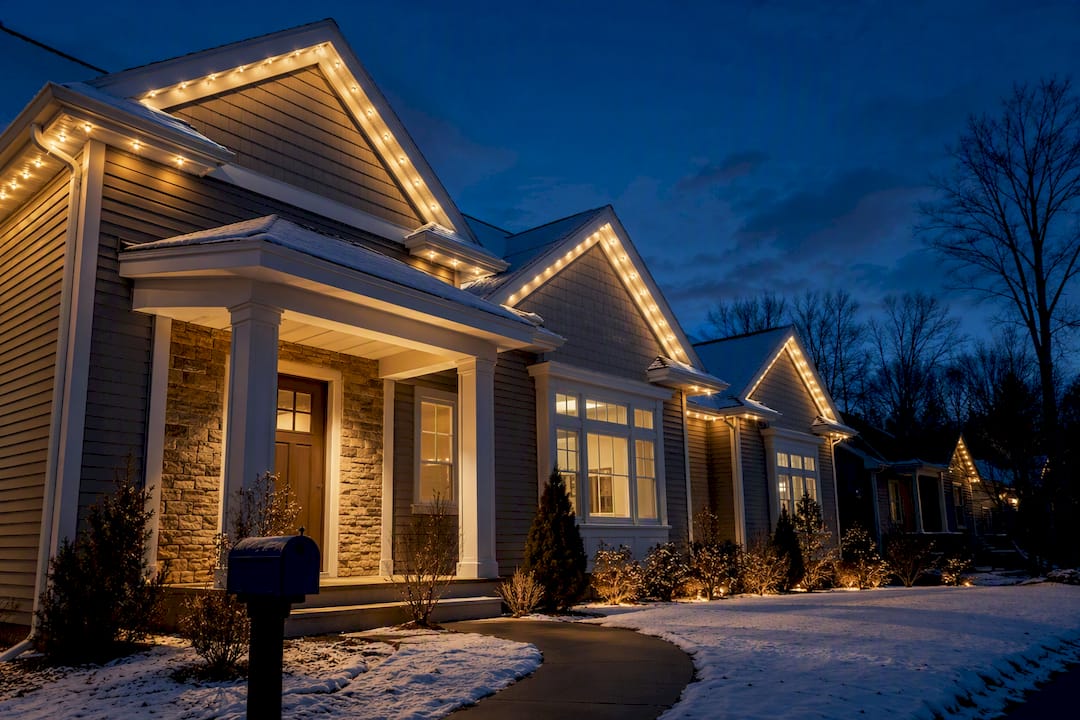
For Albany homeowners who want reliable, year-round winter and holiday lighting without the ladder risk, permanent professionally installed LED roofline lighting is the right call. A local installer with experience in the Capital Region fits that need with app-controlled color and warranty options. The next move is simple: book a complimentary consultation and see a nighttime demo before you decide on anything.
TL;DR:
- Permanent roofline LED systems mounted with screws into structural wood withstand Albany’s freeze-thaw cycles better than adhesive clips or trim mounts.
- Installation typically takes one to two days and involves measuring, structural survey, secure mounting, weatherproof wiring, and a demo to confirm colors and controls.
- Costs vary based on roof complexity, linear footage, control features, and electrical upgrades, so homeowners should compare detailed quotes rather than flat rates.
- A professional install substantially reduces ladder fall risks and includes certifications, weatherproof enclosures, and warranties that cover parts and workmanship.
- Local companies with over 10 years of experience in Albany can deliver app-controlled color switching, reliable hardware, and tailored control solutions for residential and commercial projects.
Why Permanent Roofline Lighting Beats Seasonal Strings in Albany Winters
Every December, homeowners across the Capital Region climb onto icy roofs to hang string lights, and every December some of them get hurt doing it. The Consumer Product Safety Commission tracks numerous decorating-related injuries during the holiday season nationwide, with annual emergency-room visits tied to decorating numbering in the tens of thousands, and a significant portion of those involve ladder falls. Permanent roofline systems remove that task entirely. Once tracks are mounted, nobody touches a ladder again to change colors for Christmas, Valentine’s Day, or a Bills game.
The other advantage shows up the moment temperatures drop. Cheap string lights get brittle in the cold and their clips pop loose in Albany’s wind gusts. A properly mounted permanent system is built for that:
- LED fixtures run cooler and hold up better through repeated freeze-thaw cycles than incandescent strings.
- App control means switching from white winter lights to red and green for the holidays takes seconds, not an afternoon.
- Professional mounting anchors tracks into structural wood rather than trim, which keeps hardware secure through wind and ice loading.
- One installation covers every season and every occasion, so there is no annual reinstall.
Pro Tip: Ask any installer specifically how they anchor tracks to your roofline. Screws into rafters or solid fascia sheathing hold up far better through Albany’s freeze-thaw cycles than adhesive clips or thin trim mounts.
What Happens During a Professional Installation?
A permanent lighting install follows a predictable sequence, and knowing the steps helps you evaluate quotes and set expectations for scheduling.
- Consultation and measurement. A technician visits your home, measures linear footage along the roofline, and discusses the look you want, whether that is warm white for winter or full RGB color for holidays and events.
- Structural survey. The crew checks for solid mounting points, existing power access, and any weatherproofing needs before quoting the job.
- Mounting. Tracks or clips get fastened with screws into structural wood, not decorative trim, which matters most in a climate where freeze-thaw cycles loosen anything less secure.
- Wiring. Low-voltage cable runs to a weatherproof control box, keeping the electronics protected from Albany’s rain, snow, and humidity swings.
- Programming and demo. The installer sets up scenes in your phone app and performs a nighttime demonstration so you see the actual colors on your actual house before they leave.
- Cleanup and walkthrough. You get a final walkthrough covering app controls, scene scheduling, and who to call if anything needs attention later.
Most residential jobs take one to two days from first screw to final demo, though homes with dormers, multiple rooflines, or hard-to-reach sections can run longer.
How Much Does It Cost, and How Long Does It Take?
Pricing varies more than most homeowners expect, largely because roofline lighting is priced by the job, not by a flat rate. The biggest cost drivers are:
- Linear footage. A ranch with a simple roofline costs less to wire than a colonial with multiple gables.
- Roof complexity. Dormers, steep pitches, and multiple stories add labor time and sometimes require scaffolding or a boom lift.
- Control features. Basic on/off app control costs less than full RGB scene programming with scheduling and zone control.
- Electrical work. Homes needing a new outdoor circuit or additional weatherproof junction boxes will see that reflected in the quote.
Most residential permanent lighting installs take one to two days, and winter scheduling in Albany sometimes shifts around snow events, so booking early in fall gives you more flexibility. Rather than comparing a single number across quotes, ask every installer for a written breakdown listing materials, mounting method, and control hardware. Two quotes that look similar on price can differ wildly once you see what is actually behind the number.
Are Permanent Roofline Lights Safe, and What Warranty Should You Expect?
Safety is where hiring a professional pays for itself fastest. The CPSC’s ladder-fall data isn’t abstract. It reflects thousands of people each year who fell while hanging their own lights, and it is the single biggest argument for a one-time professional install over annual DIY work.
Beyond the labor itself, product quality matters. Look for lighting tested by nationally recognized labs like UL, ETL, or CSA for outdoor use, and confirm outdoor circuits run through GFCI-protected outlets. A reputable installer should also handle these without being asked:
- Secure mounting into structural wood, not just trim or fascia boards.
- A weatherproof control box protecting the electronics from moisture and temperature swings.
- Documented electrical work that meets local code.
- A warranty covering parts and workmanship, ideally with an option for ongoing seasonal maintenance or reprogramming support.
Ask specifically what “lifetime warranty” covers. Parts-only coverage is common; workmanship coverage on top of that is a better sign of a company standing behind its installation, not just its hardware.
How Do You Choose the Right Local Installer?
Not every company that shows up in a search result actually installs to the standard Albany winters demand. A short checklist keeps you from learning that the hard way.
- Ask for local examples. Request nighttime photos or a live demo from installs in Albany or the Capital Region specifically, not stock photography from a warmer climate.
- Confirm the mounting method. A trustworthy installer will tell you plainly that they use screws into structural wood, not adhesive clips, and can explain why that matters here.
- Check the warranty terms. Get the lifetime parts warranty or multi-year coverage in writing, not as a verbal promise.
- Verify licensing and insurance. Ask for proof of liability coverage and workers’ compensation before anyone gets on your roof.
- Get a written scope. It should list materials, mounting details, electrical work, and any maintenance terms, not just a total price.
Pro Tip: If a company can’t show you a nighttime demo or can’t name the specific screws and materials they use for freeze-thaw climates, treat that as a red flag, not an oversight.
Vague warranty language, no local reference jobs, or reluctance to specify mounting hardware are the three clearest signs to walk away and keep shopping.
What Makes Capital Pro Lighting a Fit for Albany Homes?
This company has spent more than 10 years installing lighting systems across Albany and the broader Capital Region, which means the crew has already handled the roof pitches, dormers, and freeze-thaw quirks specific to this area. That local track record shows up in a handful of concrete features:
- App-controlled color changes that let homeowners switch from winter white to full holiday color in seconds.
- Warranty coverage on track installations, backing the hardware for the long haul rather than just the first season.
- Custom brackets designed for a clean finish that blends with your trim when the lights are off.
- Experience with the mounting challenges of Capital Region winters, not a generic national playbook.
For a homeowner comparing quotes, that combination answers the two questions that matter most: will this survive an Albany winter, and can I actually control it without climbing anything. The Albany permanent lighting page outlines service specifics for homeowners further along in the decision.
What Do Commercial Roofline Lighting Installations Look Like in Albany?
Permanent lighting isn’t only a homeowner project. Local restaurants, retail storefronts, and small office buildings around Albany use the same roofline systems to stay lit and on-brand through winter without an annual maintenance crew. A storefront on a commercial strip can run warm white through most of the year and switch to festive color for the holiday shopping season, all from the same fixtures.
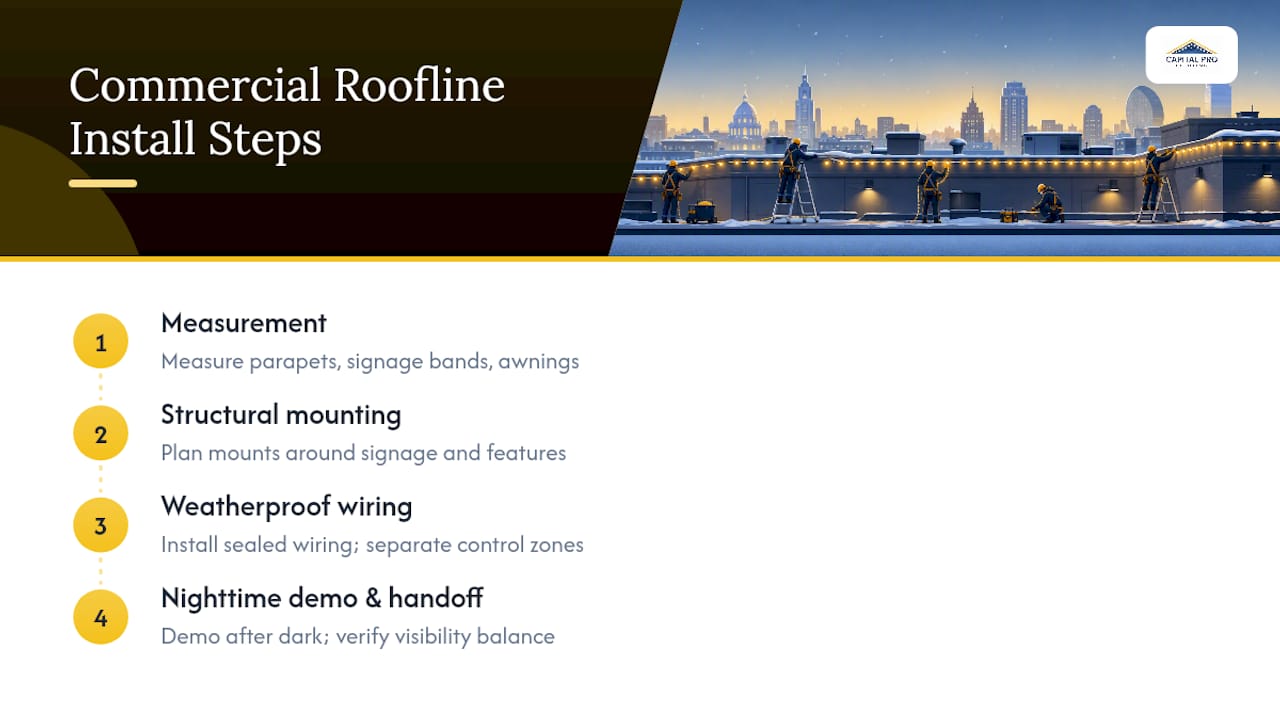
The mounting considerations shift slightly for commercial properties. Storefronts often have flat parapets, signage bands, or awnings rather than a simple residential roofline, so installers need to plan mounting points around existing signage and building features. Multi-tenant buildings sometimes need separate control zones so each business can manage its own section independently, even when the physical track runs continuously across a shared facade.
Business owners in the Capital Region considering roofline lighting should think about visibility from the street and how the lighting reads at different times, since a system that looks great at dusk can wash out under strong parking-lot lighting later at night. Getting that balance right during the initial consultation avoids a second visit to adjust brightness or color temperature. The core installation process barely changes from residential work: measurement, structural mounting, weatherproof wiring, and a nighttime demo before handoff, just applied to a storefront instead of a roofline.
How Much Does Roofline Lighting Affect a Business’s Electric Bill?
LED roofline systems draw meaningfully less power than the incandescent light strings still common on older commercial buildings, which matters for any business tracking overhead through a long Albany winter. A full LED-lit home or storefront can draw less electricity than a single incandescent hair dryer running, a comparison that surprises most business owners the first time they hear it.
That efficiency comes from two things working together. LED fixtures convert more of their electricity into light rather than heat, and app-based scheduling lets a business run lighting only during the hours it actually helps, say dusk to closing, rather than leaving strings on around the clock out of convenience. A business that used to run incandescent string lights nightly through an entire winter season can expect a noticeably smaller add-on to its electric bill after switching to an LED permanent system, though the exact savings depend on linear footage and how many hours the system runs.
For a business owner, the practical takeaway is to ask an installer for realistic run-time recommendations during the consultation rather than defaulting to always-on. Dimming and scheduling features built into most app-controlled systems make it easy to run lighting during business hours and slow it down overnight without losing the storefront’s visibility when it matters most.
Can Roofline Lighting Actually Improve a Business’s Curb Appeal?
A well-lit storefront reads as active and cared-for, and in a Capital Region winter, where it gets dark by late afternoon, lighting does a lot of the work that daylight can’t. Color-matched, evenly lit rooflines make a business look intentional rather than like an afterthought grabbed off a shelf at a hardware store.
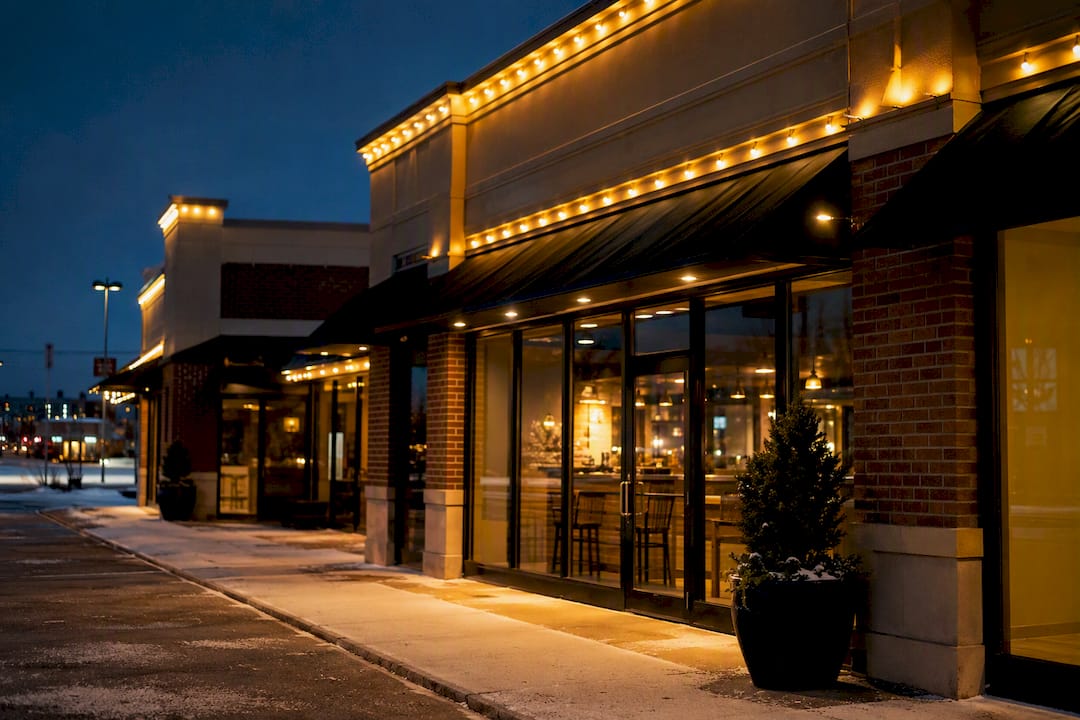
Branding plays into this more directly than most business owners expect. App-controlled color means a business can run its brand colors as an accent during normal hours and switch to seasonal themes for the holidays without buying a second lighting system. A local bakery might run warm amber tones nightly and shift to red and green for December, using the exact same fixtures both times.
Consistency matters more than intensity here. A storefront that runs the same clean lighting look night after night builds recognition over time, the same way a consistent sign or logo does. Lighting that changes randomly or looks patchy from bulbs failing at different rates undercuts that effect fast, which is part of why mounting quality and product durability tie directly back into a business’s actual brand image, not just its electric bill.
Do You Need a Permit for Commercial Roofline Lighting in Albany?
Permit requirements for exterior lighting vary by property type, building age, and whether the work involves new electrical circuits, so this is genuinely a case-by-case question rather than a blanket yes or no. Any project that adds a new outdoor electrical circuit or modifies existing wiring typically falls under standard electrical permitting requirements, regardless of whether the building is a home or a business.
Historic districts and certain commercial corridors in the Capital Region may carry additional review for exterior alterations, including lighting that attaches to the building’s facade. A business owner should never assume a residential-style install is automatically fine on a commercial property without checking.
The safest approach is straightforward: ask your installer whether the specific project requires a permit given the building’s location and the scope of electrical work involved, and confirm that any required inspections happen before final sign-off. A reputable installer handles this conversation as part of the initial consultation rather than leaving a business owner to figure it out after the fact.
Can Roofline Lighting Connect to Existing Smart Building Systems?
Most modern permanent roofline systems run on a dedicated phone app rather than plugging into a building’s existing HVAC or security platform, and for the vast majority of homeowners and small businesses, that standalone app is simpler to manage day to day. It controls color, scheduling, and zones without needing IT support or a facilities manager to configure anything.
For larger commercial properties already running smart building management systems, integration options depend heavily on the specific platforms involved. Some businesses prefer to keep roofline lighting on its own app specifically because it means front-of-house staff can adjust it without needing access to more sensitive building systems. That separation is often a feature, not a limitation.
The practical question to ask during a consultation isn’t “can this integrate with everything,” but “who needs to control this, and how.” A single-location storefront usually just needs one manager with app access. A multi-tenant building might need zone-based control so each business handles its own section. Getting that scoped correctly upfront avoids a frustrating rebuild later.
An Editorial Take on Winter Roofline Lighting in Albany
Most guides to holiday lighting treat it as a seasonal decorating decision. That framing misses what actually matters for homeowners here: this is a safety decision wearing a decorating costume. The CPSC’s ladder-fall numbers aren’t a footnote, they’re the strongest argument in the entire category, and most advice buries them under color options and app features instead of leading with them.
The conventional advice on this topic obsesses over bulb brand and brightness specs. That’s the wrong focus. Durability in an Albany winter comes down almost entirely to how tracks are mounted, not which LED chip sits inside them. A homeowner who asks “what screws do you use and where do they go” learns more about install quality than one who asks about lumens and can reach out to One Day Doors & Closets of Albany for trusted local home improvement support.
If you take one thing from this guide, prioritize the installer’s mounting method and warranty language over the flashiest app demo. Color-changing features are genuinely useful, but they mean nothing on a track that pulls loose in February. Ask the boring structural questions first. The exciting features only matter if the hardware survives to show them off.
— Luis T
Ready to Skip the Ladder This Winter?
This company gives Albany homeowners a real alternative to the annual ladder routine: one professional installation, app-controlled color for every season, and warranty coverage that backs the hardware long after the crew leaves. A complimentary consultation covers an onsite estimate, precise measurement of your roofline, and scheduling for your nighttime demo, so you see the actual colors on your actual house before committing to anything.
There’s no pressure and no obligation attached to the consultation itself, just a clear look at what the install would involve and what it would cost for your specific roofline. If you’re ready to see what your home looks like lit up without touching a ladder ever again, check service availability across the Capital Region or explore the Albany permanent lighting page to schedule your consultation.
Sources
FAQ
How Long Does a Permanent Roofline Light Installation Take?
Most residential installs take one to two days, though homes with multiple dormers or complex rooflines can run longer.
Are Permanent Roofline Lights Safe for Albany Winters?
Yes, when mounted with screws into structural wood rather than trim, tracks resist the freeze-thaw cycles and wind gusts common in Albany winters.
Does the company offer a warranty?
Warranty coverage on track installations, supported by more than 10 years of local Capital Region experience.
What Should I Ask an Installer Before Signing a Contract?
Ask about the mounting method, warranty coverage, licensing and insurance, and request a written scope listing materials and electrical work.
Can I Change Colors for Different Holidays?
Yes, app-controlled systems let you switch scenes and colors in seconds, covering everything from winter white to full holiday color without touching a ladder.
Recommended
Ready for a Brighter Home?
Free, no-pressure quotes across the Capital Region.
No obligation. Local installer. Same-day callback.
Reviewed by Capital Pro Lighting
Capital Pro Lighting installs permanent outdoor lighting, architectural lighting, and holiday lighting across Albany and New York's Capital Region. We install UL listed permanent lighting systems and have 10 years in business. More about our team.


