
No More Ladders: Permanent Year-Round House Lighting for Homeowners
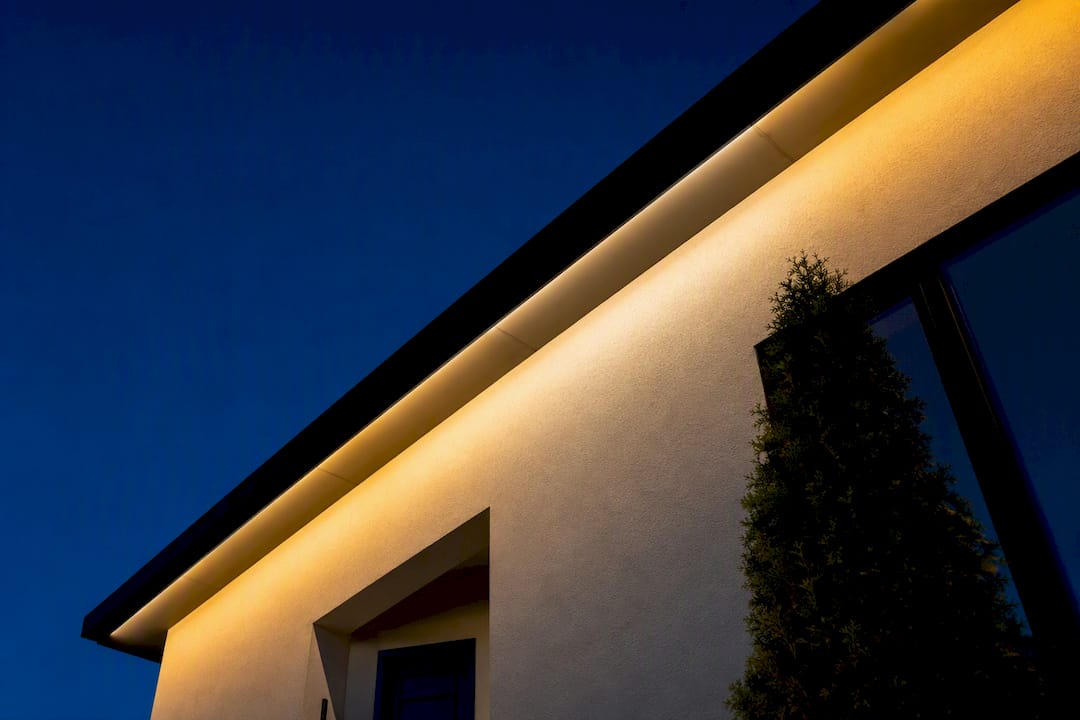
No More Ladders: Permanent Year-Round House Lighting for Homeowners
Permanent roofline LED systems are the practical answer to year round house lighting for most homeowners: a professionally installed track stays warm white for everyday curb appeal and switches to color from your phone for holidays or game day. If you want to stop climbing ladders every November, the next move is simple. Get a site assessment from a licensed installer and see what a permanent system would cost for your roofline.
TL;DR:
- A professional site assessment is essential to determine the exact cost based on your home’s roofline, complexity, and electrical needs.
- Weather ratings should be at least IP65, with LED lifespans of around 50,000 hours, translating to about 17 years of nightly use.
- Quality control includes ensuring proper wiring, UV-stable materials, custom brackets, and warranties that cover parts and workmanship.
- Installation costs vary with roofline size, control zones, and accessibility, but savings come from lower operating costs and fewer seasonal upgrades.
- Verified licensed installers with references and clear, written warranties ensure durability, safety, and satisfaction with the long-term system.
What Counts as Permanent Year‑Round Outdoor Lighting?
Permanent outdoor lighting is a fixed LED track mounted along your roofline, soffits, or architectural trim that stays in place all year and gets reprogrammed instead of rehung. That is the core difference from string lights: nothing comes down in January, and nothing has to survive being stuffed into a bin for eleven months.
A typical system has four parts. LED nodes or a continuous strip sit inside a low-profile track, a small controller manages brightness and color, a power supply ties into your home’s electrical panel, and an app or hub lets you change settings from your phone. Professional installers run the track along fascia boards or roof edges and color-match it to your trim so it disappears into the architecture during daylight hours.
You will run into a few variations when shopping or getting quotes:
- White-only architectural strips, built for homeowners who just want clean, consistent nightly lighting with no color-changing feature.
- RGB or RGBW systems, which add basic color mixing on top of a white channel.
- RGBIC systems, which can display multiple colors and patterns along the same strip at once, useful for holiday scenes or team-color displays.
- Cuttable versus extendable track, which determines whether an installer trims a run to fit your home exactly or adds segments to reach longer rooflines.
By day, a well-installed system reads as a slim, trim-colored strip that most visitors would not notice unless they were looking for it. By night, it becomes whatever you programmed: soft white for a Tuesday, deep orange for October, red and green in December.
What Specs and Durability Details Should You Verify?
Ask for numbers, not adjectives, before you sign anything. “Weatherproof” and “long-lasting” mean nothing without a rating attached to them.
Start with the IP rating, which measures resistance to dust and moisture on a two-digit scale. For roofline exposure to rain, snow, and temperature swings, look for at least IP65, and IP67 is better if your home sees heavy weather. A system rated lower than that is closer to indoor-grade hardware pushed outside.
LED lifetime matters just as much. Quality permanent linear lighting is commonly rated around 50,000 hours of use. Run the lights eight hours a night, and that corresponds to many years of use before the diodes are expected to degrade past useful brightness.
Quick math: what 50,000 hours actually buys you At 8 hours of nightly use, a 50,000-hour LED rating translates to about 17 years of service before meaningful dimming. Most homeowners replace a roof or repaint trim more often than that.
Beyond the light itself, check these before hiring:
- Control options: confirm the app works over Wi‑Fi, whether it supports Matter or a voice assistant like Alexa or Google Home, and test the app on your own phone during the sales visit if possible.
- UV-stable housing material, since cheap plastics chalk and crack after a few summers of direct sun.
- Bracket quality. Generic clips loosen over time; custom brackets designed for your specific fascia profile hold tighter and look cleaner.
- Warranty terms that separate parts coverage from labor, and that specify what happens if a section fails five years in.
- Serviceability. Ask whether a failed segment can be swapped without replacing the whole run.
Why Homeowners Are Switching to Year‑Round Lighting
The appeal goes beyond looks, though the looks are usually what sells people first.
- Nightly curb appeal without effort. A warm white glow along the roofline photographs well, shows up on real estate listings, and just makes a house look cared for after dark.
- Instant seasonal and event color. Halloween orange, Fourth of July red-white-blue, a playoff run in your team’s colors: it is a phone tap, not a ladder trip.
- Fewer ladder injuries. The Consumer Product Safety Commission’s injury data consistently shows falls tied to holiday decorating and ladder use as a recurring seasonal hazard. A permanent system removes that task entirely.
- A visible presence at night. Consistent perimeter lighting makes a home look occupied and deters the kind of casual opportunism that favors dark houses.
- Lower running costs than seasonal strings. LED draw is a fraction of old incandescent C9 bulbs, and you are not buying replacement sets every few years when strands fail.
- Scheduling and zoning control. Most systems let you dim, set timers, or break the house into zones so the porch can run a different scene than the back patio.
Pro Tip: Set your default “everyday” scene to a warm white around 2700K to 3000K. It reads as elegant rather than commercial, and it makes the color-changing feature feel like a genuine event instead of the norm.
What Does Permanent Lighting Cost, and What Drives the Price?
Pricing swings on a handful of factors, and understanding them helps you read a quote instead of just reacting to the total.
Linear footage is the biggest driver. A small ranch roofline costs less to wrap than a two-story colonial with multiple gables. The number of control zones adds cost too, since each zone typically needs its own wiring run back to a controller. Homes with complex rooflines, dormers, or hard-to-reach peaks take longer to install, and labor time shows up in the bid.
What tends to push a quote higher:
- A new dedicated circuit or breaker if your existing panel does not have capacity.
- Conduit runs where wiring cannot be tucked behind existing trim.
- Permit fees, which vary by municipality and sometimes apply to electrical work tied to a home’s exterior.
- Difficult access points: steep rooflines, tall gables, or landscaping that blocks ladder or lift placement.
Some installers offer financing for the upfront cost, and a number bundle a permanent system with seasonal Christmas installation and takedown as an add-on service, which can be worth asking about if you already pay someone to hang holiday lights every year.
On the operating side, permanent linear systems draw far less power than incandescent seasonal strings and are built for multi-year service, so the math tends to favor permanent lighting once you count several years of replacement bulbs, extension cords, and labor for old-style holiday displays. Wired’s coverage of the category frames it plainly: higher cost going in, lower hassle and cost coming out, for as long as you own the house.
How Do You Vet an Installer Before You Sign?
Get this part right and everything else about the project tends to fall into place.
Start with licensing and insurance. Ask directly whether the electrician doing the work is licensed in your state, and confirm the company carries liability insurance and bonding. Contractor guidance on hiring outdoor lighting installers puts this at the top of the list for good reason: unlicensed work can void your homeowner’s insurance if something goes wrong later.
Then work through a short checklist during the estimate visit:
- Ask for references and photos of finished installs, ideally on homes with a similar roofline to yours.
- Clarify what the warranty actually covers. Parts and workmanship are two different things, and a lifetime parts warranty means nothing if labor to fix a failure costs as much as reinstalling.
- Confirm the wiring will be hidden, not just draped along the fascia and hoped invisible.
- Ask whether the track will be color-matched to your trim, and request a sample if the installer cannot show you a finished project in person.
- Get a written scope of work, a timeline, a cleanup plan, and ask whether seasonal maintenance or adjustment services are available afterward.
Watch for the red flags that show up more often than they should: a verbal-only quote, no mention of permits when your municipality requires them, or a warranty that exists only as a sales pitch and never makes it onto paper. A company unwilling to put terms in writing is telling you something about how they will handle a service call two years from now.
A Real Installer Example: What Capital Pro Lighting Delivers
A lighting company with over 10 years of experience installing permanent roofline systems in the Albany and Capital Region offers a useful reference point for what a properly done project looks like.
Some installers back their track installations with a lifetime parts warranty, and some use custom 3D-printed brackets designed to fit specific fascia and trim profiles rather than one-size-fits-all clips. That detail sounds minor until you see the alternative: generic brackets that leave visible gaps or don’t sit flush against uneven trim.
Homeowners working with an installer at this level should expect:
- Full color control from a phone app, with no ladder involved for seasonal changes.
- A track that reads as clean architectural trim by day, not a visible string of hardware.
- A site consultation that includes a walkthrough of the roofline, a written proposal with pricing broken out by zone, an installation timeline, and a plain-language explanation of what the warranty covers.
That combination of documentation and hardware quality is what separates a system that looks sharp for one season from one that still looks sharp in year eight.
A Lighting Professional’s Take on the Objections Homeowners Raise
Every homeowner asks the same three questions: is it safe, will it hold up, and what does it actually cost. On safety, a proper install means nobody in your family is on a ladder in December again. On durability, a well-built system is designed to disappear into your trim during the day, not announce itself as hardware. And on cost, the honest answer is that pricing depends on your roofline, so quotes vary more than people expect. Skip the guesswork and get an on-site assessment. That is the only way to get a number you can actually trust.
— Luis T
How Capital Pro Lighting Can Get You Set Up
A professional installation service offers a practical alternative to seasonal string lights and DIY kits for homeowners across Albany, Schenectady, Saratoga Springs, and the wider Capital Region: one professional installation, controlled entirely from your phone, with no ladder required ever again.
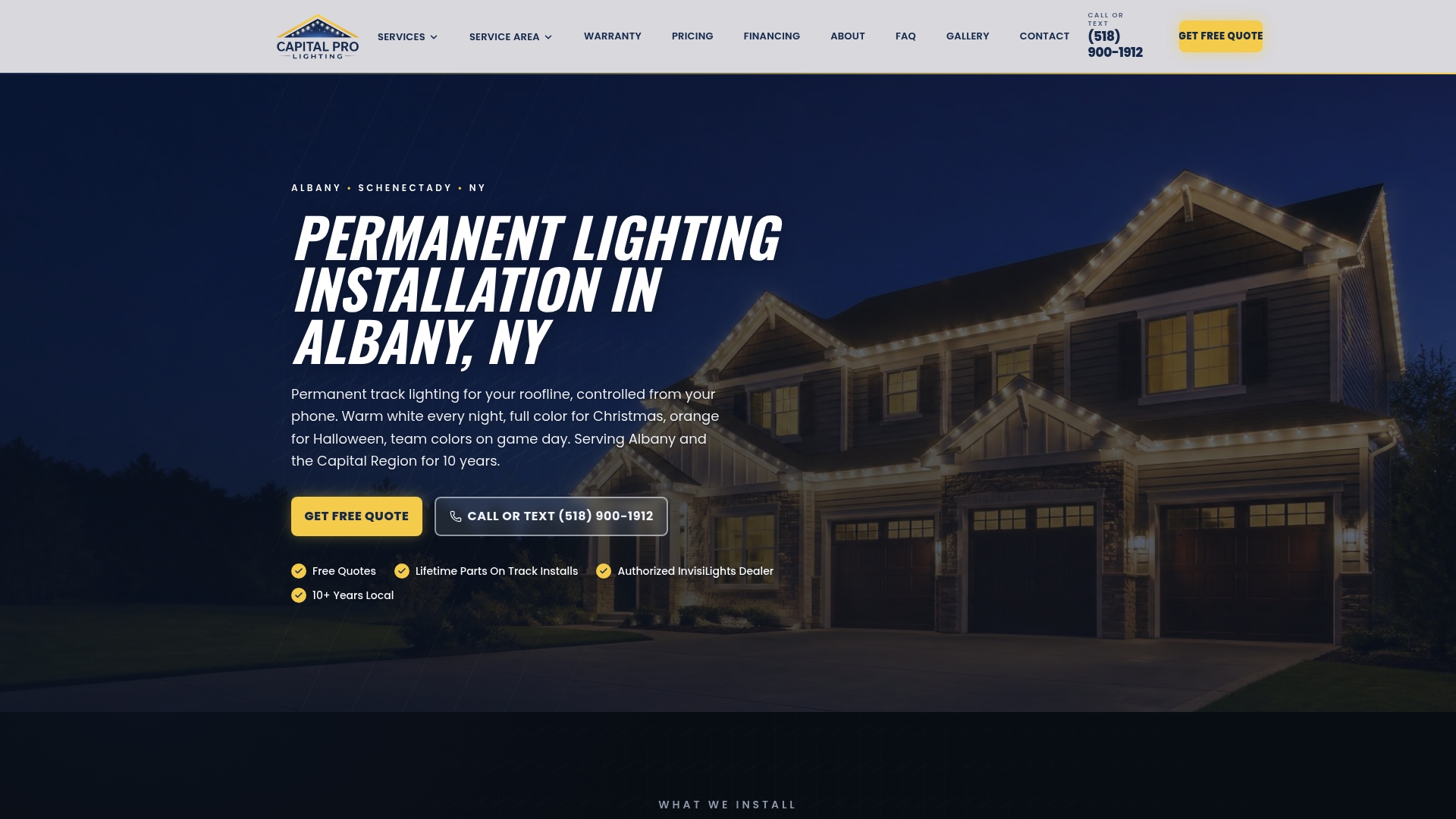
There are services that install permanent roofline lighting with color-matched track and custom 3D-printed brackets built for specific trim, back the work with a lifetime parts warranty, and offer seasonal Christmas install and takedown for homeowners who want that handled too. A standard consultation includes a walkthrough of the roofline, a written proposal broken out by zone, and a clear timeline before any work starts.
If your home is in the Capital Region, check Capital Pro Lighting’s service area and request a quote through the permanent outdoor lighting page to get a site assessment scheduled.
Sources
- CPSC NEISS 2022 Data Highlights
- Permanent Outdoor Lighting: How It Works | Light TN
- Permanent Linear Lighting Explained | Year‑Round Trim Lights
- Should you get permanent outdoor lights? — Wired
- Choosing an outdoor lighting installation contractor — All City Electrical and Lighting
FAQ
What Are the Best Year‑Round Lights for a House?
Permanent LED roofline or linear track systems with an IP65 or higher weather rating and app-based color control are generally the best fit, since they handle daily architectural lighting and seasonal color from one installation.
What Are Year‑Round House Lights Called?
They are most commonly called permanent outdoor lighting, permanent roofline lighting, or permanent linear lighting, distinct from the seasonal string lights they replace.
How Much Do Permanent House Lights Cost?
Cost depends heavily on your home’s linear footage, the number of control zones, and whether electrical upgrades like a new breaker or conduit are needed, so the only reliable number comes from an on-site quote.
Are Permanent House Lights Worth It?
For most homeowners who currently pay for seasonal installation or deal with ladder work every year, permanent lighting pays back through reduced labor, lower LED operating costs, and fewer decorating-related injuries over the system’s multi-year lifespan.
Recommended
Ready for a Brighter Home?
Free, no-pressure quotes across the Capital Region.
No obligation. Local installer. Same-day callback.
Reviewed by Capital Pro Lighting
Capital Pro Lighting installs permanent outdoor lighting, architectural lighting, and holiday lighting across Albany and New York's Capital Region. We install UL listed permanent lighting systems and have 10 years in business. More about our team.


