Homeowners: 2700K vs 3000K Lighting, Room Choices and Installer Advice
Homeowners: 2700K vs 3000K Lighting, Room Choices and Installer Advice
Choose 2700K for the coziest, most relaxed spaces and 3000K when you want a slightly whiter, crisper warm white for tasks and modern finishes. Both sit in the “warm white” family, so the difference is subtle rather than dramatic. Once you land on a Kelvin number, check the CRI and lumen output too, since those specs shape how a room actually looks more than most people expect.
TL;DR:
- Choosing 2700K creates a cozy, amber glow ideal for relaxation-focused spaces like bedrooms and living rooms, especially with warm finishes.
- Opting for 3000K provides slightly whiter lighting that enhances task visibility in kitchens, bathrooms, and modern exterior facades without sacrificing warmth.
- Mismatched fixtures between 2700K and 3000K can cause visual inconsistency, so separating them by function or zone is recommended for a seamless look.
- High-CRI bulbs of 80 or higher are essential for accurate color rendering in task areas, regardless of the Kelvin setting.
- External lighting choices depend on siding and architecture, with 2700K suited for traditional homes and 3000K for contemporary styles, often guided by professional installation.
What Does Color Temperature Mean in Lighting?
Kelvin, written as CCT (correlated color temperature), describes where a light source falls on a scale from amber to blue-white. Lower numbers like 2200K look like candlelight. Numbers climbing past 5000K start to look like a hospital hallway. Warm white covers the 2700K to 3000K stretch, which is why the two get compared so often.
Retail packaging adds its own layer of confusion. Bulbs at 2700K are usually labeled “soft white,” while 3000K bulbs get called “warm white” or sometimes “bright warm white” on the box, according to Number One Lights’ color temperature guide.
A few things worth remembering when you’re standing in the lighting aisle:
- 2700K mimics the glow of a traditional incandescent bulb.
- 3000K reads a touch cleaner and whiter, without tipping into a cold or clinical look.
- Kelvin only tells you color, not brightness or color accuracy. Lumens and CRI are separate numbers you still need to check.
2700K vs 3000K: What Actually Looks Different?
Side by side, 2700K reads amber and cozy, almost golden, while 3000K looks slightly whiter and crisper without losing its warmth. On its own, a single 3000K bulb still looks “warm” to most eyes. The difference only becomes obvious when you put a 2700K fixture next to a 3000K one and the same sightline.
Statistic Callout: The gap between the two is only 300K, a relatively small slice of the lighting spectrum. Yet Lumens’ Kelvin color temperature guide notes that mismatched fixtures placed near each other are one of the most common complaints homeowners raise after a lighting update, because the eye is very good at spotting inconsistency even when it can’t name it.
Wall color and finish choices push the perceived warmth further in one direction or the other:
- Warm wood tones and cream walls amplify the coziness of 2700K.
- Cool grays, whites, and brushed metal finishes tend to make 3000K look even crisper and more neutral.
- Glossy surfaces reflect more color cast than matte ones, so a glossy tile backsplash under 2700K can pick up more amber than you’d expect.
If you’re chasing a specific mood, the finish in the room matters almost as much as the bulb you buy.
Best Rooms for 2700K Lighting
The lower end of warm white earns its reputation as the “relaxation” temperature. It suits any space where the goal is to slow down, not power through a task list.
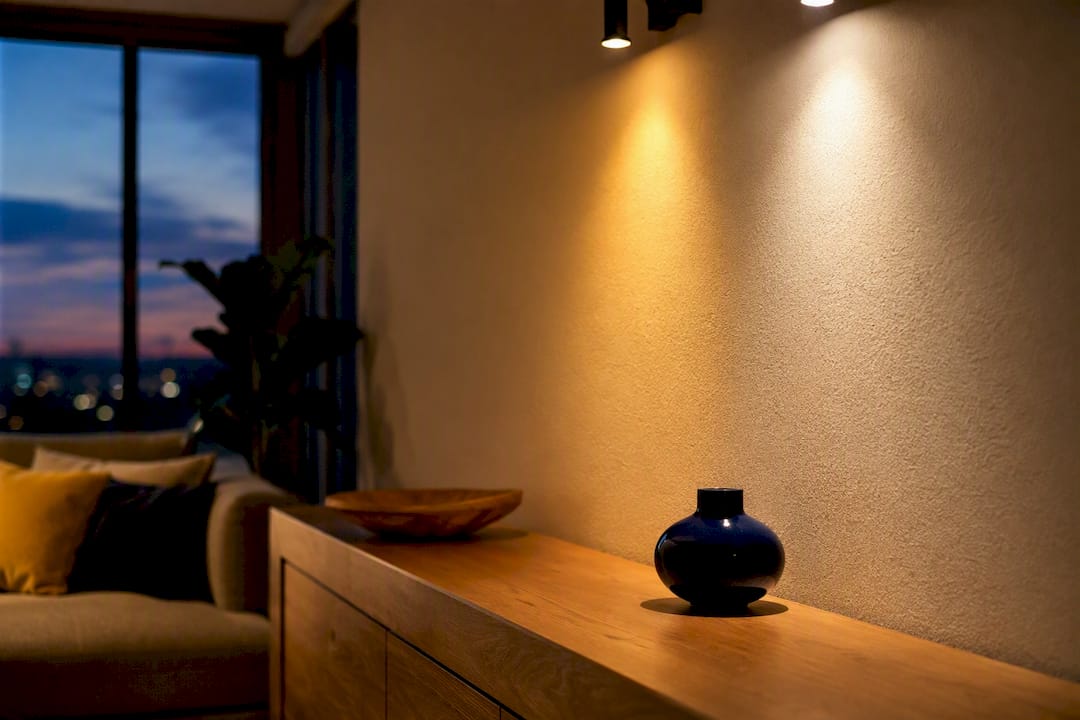
- Bedrooms. 2700K supports winding down at night and pairs well with dimmer switches for a gradual transition to sleep.
- Living rooms. For movie nights and conversation, 2700K to 3000K is considered the ideal range for comfort, with 2700K leaning further into intimate and cozy.
- Dining rooms. Warmer light flatters food and skin tones, which is why restaurants rarely use anything whiter.
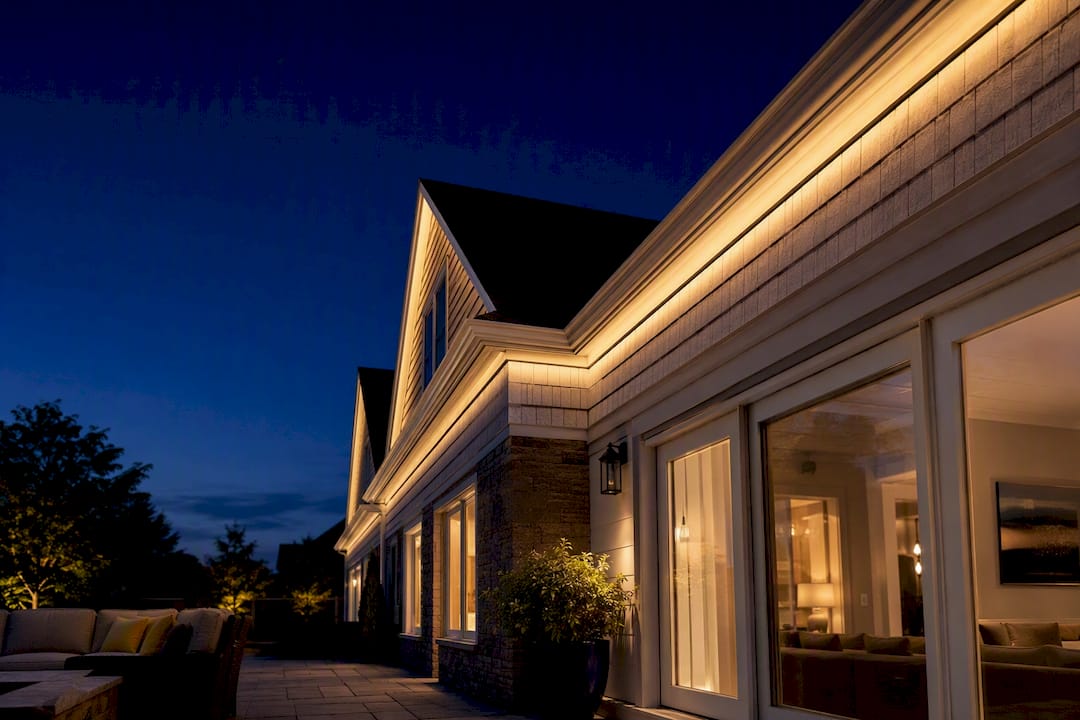
- Covered porches and landscape accents. Traditional homes with wood siding, stone, or brick often look best under 2700K, since it echoes classic lantern or gas-lamp lighting.
Pair 2700K with wood furniture, warm textiles, and dimmable fixtures for the best result. Frosted or diffused shades cut glare from the exposed bulb, which matters more at this warmer end since the amber cast is more noticeable when you can see the filament or LED source directly.
Best Rooms for 3000K Lighting
3000K keeps enough warmth to feel comfortable but adds just enough clarity for spaces where you actually need to see clearly.
- Kitchens. You’re chopping, reading labels, and judging whether chicken is actually cooked through. The added crispness of 3000K helps.
- Bathrooms. Shaving, makeup, and skincare all benefit from color accuracy that 2700K can slightly mute.
- Entryways. 3000K creates a clean first impression without feeling cold or institutional.
- Modern exterior lighting. Contemporary siding, stucco, and stone tend to photograph and read as truer white under 3000K, according to Number One Lights.
For any of these tasks, look specifically for high-CRI bulbs. A 3000K bulb with poor CRI can still make colors look flat, so the Kelvin number alone doesn’t guarantee good task lighting.
Can You Mix 2700K and 3000K in the Same Space?
Mixing works when you separate the temperatures by function, and it fails when both temperatures compete in the same sightline. The safest approach is zone-based: keep ambient lighting on one temperature and task lighting on another, but avoid placing a 2700K fixture where you can see a 3000K fixture in the same glance.
A few rules keep mixed installations from looking like a mistake:
- Match CRI ratings across fixtures, not just the Kelvin number, so colors render consistently even if warmth differs slightly.
- Use similar diffusion or shade materials on both temperatures to soften the transition.
- In open floor plans, assign one temperature per function (2700K for a cozy reading nook, 3000K for the open kitchen) rather than alternating randomly.
Lumens points out that most mismatch complaints come from adjacent fixtures, not from a whole room being one Kelvin or another.
Pro Tip: If you’re unsure, pick one warm-white temperature for the entire main floor. Consistency almost always beats a “perfect” mix that risks looking uneven.
CRI, Lumens, Dimming, and Blue Light: What Else to Check
Kelvin only covers color tone. Color Rendering Index, or CRI, measures how accurately a light source reveals true colors compared to natural daylight. A 300K Kelvin shift often matters less for color fidelity than CRI does, so look for CRI 80 or higher for general living spaces and 90 or higher for kitchens, bathrooms, closets, or anywhere you judge color, fabric, or skin tone.
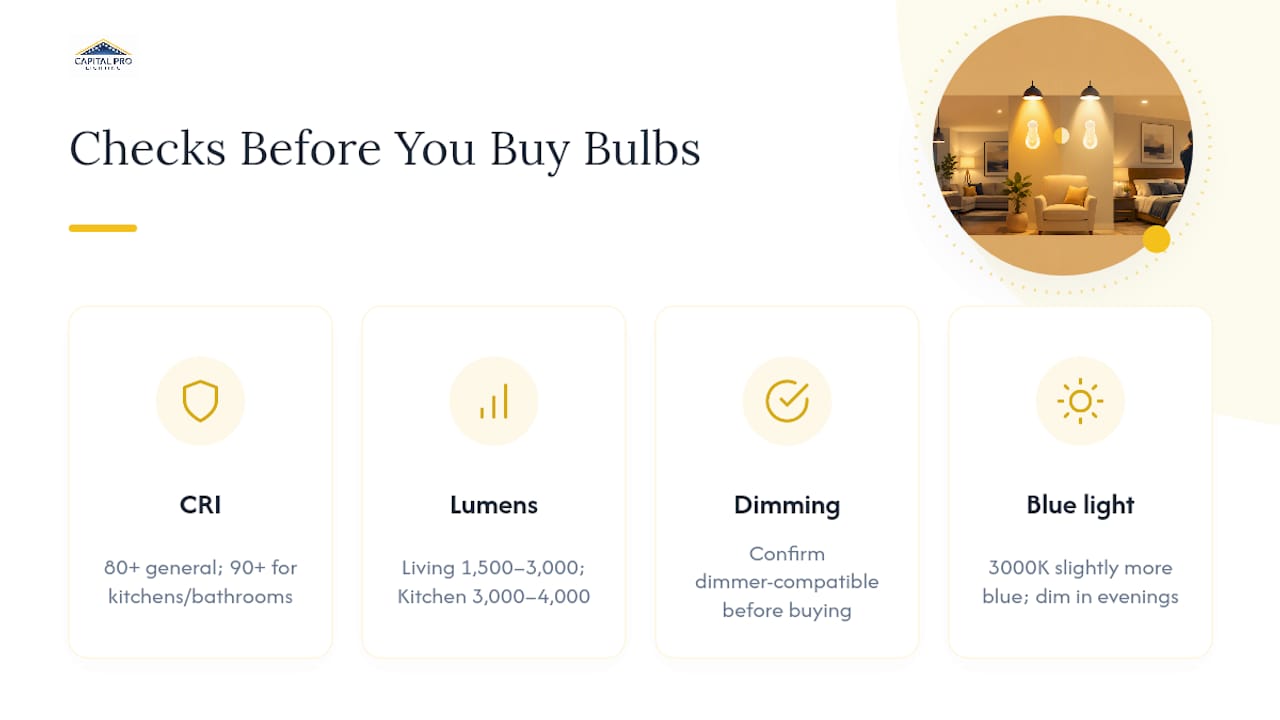
Lumens measure brightness, and they scale with wattage equivalents. A living room typically wants 1,500 to 3,000 total lumens, while a kitchen often needs 3,000 to 4,000 spread across task and ambient fixtures. Check the lumen figure on the box, not just the old-style watt number, since LED wattage doesn’t map to brightness the way incandescent bulbs did.
Dimmability and diffusion both reduce glare regardless of Kelvin, so confirm a bulb is dimmer-compatible before buying if you already own dimmer switches.
On blue light: 3000K carries slightly more blue content than 2700K, which can matter for circadian rhythm in the evening. The effect is real but modest. Brightness level and how long you’re exposed to a light source generally matter more than this particular 300K gap, so dimming in the evening or switching to a warmer bedside lamp after dark does more than obsessing over the exact Kelvin number.
How Professional Installers Choose Warm White for Exteriors
Installers gravitate toward 3000K for modern exteriors because it reads as clean and true against contemporary siding, stucco, and metal accents, while still feeling warm rather than sterile. Traditional homes with brick, stone, or natural wood usually look better under 2700K, since it echoes the glow of classic gas lanterns and gives older architecture a softer, more inviting feel.

Mounting position, shielding, and fixture aim change how a temperature reads almost as much as the Kelvin number itself. A well-shielded 3000K fixture aimed to avoid glare can look warmer in person than an exposed 2700K bulb glaring straight into a window.
A few things that shift perceived warmth on an exterior install:
- Fixture angle and how much direct lamp source is visible from the street or porch.
- Diffusers or frosted lenses, which soften and warm up crisper temperatures.
- Surface material, since brick and stone absorb warm tones differently than vinyl or stucco.
App-controlled color changes, a lifetime parts warranty on track installations, and over a decade of local installation experience all shape how confidently an installer can recommend one temperature over another for a specific home.
What’s the Right Call for Your Home?
If coziness and relaxation top your priority list, 2700K is the safer bet almost every time. If you need clarity for tasks, or you’re lighting a modern facade, 3000K earns its keep. The honest answer for most homeowners is that neither temperature is objectively better. It depends on what a room is for and what it’s built out of.
Before you buy anything, run through a short checklist:
- Preferred Kelvin: 2700K for mood, 3000K for clarity.
- Target lumens: matched to room size and task, not just wattage habit.
- Minimum CRI: 80 for general use, 90+ for kitchens, bathrooms, and closets.
- Dimmer compatibility: confirmed before purchase, not after installation.
Get those four right and the Kelvin debate mostly takes care of itself.
— Luis T
Getting Professional Help With Exterior Warm-White Lighting
Choosing between 2700K and 3000K gets more complicated outdoors, where siding material, roofline shape, and fixture placement all change how a color temperature reads at night. Professional installers sometimes offer permanent outdoor lighting systems with app control that allow color changes, avoiding a single fixed Kelvin choice.

A consultation typically includes a lighting mockup for your home, a recommended Kelvin range based on your siding and architecture, and guidance on fixture and CRI selection for the cleanest possible finish. Track installations often come with warranties, and custom brackets can help keep hardware discreet rather than bolted on as an afterthought. If your home has traditional brick or wood, that mockup will usually lean toward a warmer 2700K glow, while contemporary stucco or metal accents tend to point toward 3000K.
If you’re weighing permanent outdoor lighting against a seasonal setup, Capital Pro Lighting also handles Christmas light installation for homeowners who want a temporary display without the ladder. Check current pricing and packages or explore permanent lighting options in Delmar to schedule a consultation.
Sources
- 2700K vs 3000K Warm White Lighting | Definition & Color Temperature Guide
- Kelvin Color Temperature Chart | Lighting Color Temperature Guide at Lumens
- Choosing Between 2700K and 3000K | Waveform Lighting
FAQ
Is 2700K Too Yellow for a Home?
Not for most living spaces. 2700K reads as amber and cozy, similar to an old incandescent bulb, which most people associate with comfort rather than a yellow cast, especially in bedrooms and living rooms.
Is It Okay to Mix 2700K and 3000K Lights?
Yes, as long as you separate them by zone or function and avoid placing both in the same direct sightline. Matching CRI and diffusion across fixtures, as Lumens recommends, keeps the transition from looking accidental.
Is 3000K Too Bright for a Living Room?
3000K isn’t inherently too bright since brightness comes from lumens, not Kelvin. That said, 2700K to 3000K is the recommended range for living rooms, with 2700K generally favored when the goal is a cozier, more relaxed feel.
Is 2700K Too Warm for a Living Room?
For most people, no. 2700K is one of the most common choices for living rooms specifically because it supports relaxation, though anyone wanting a slightly cleaner, whiter look can move up to 3000K without losing warmth entirely.
Does Capital Pro Lighting Recommend a Specific Kelvin for Exteriors?
Capital Pro Lighting typically recommends 3000K for modern exteriors and 2700K for traditional brick or wood homes, based on which reads truer against the siding material. Every consultation includes a mockup and Kelvin recommendation specific to your home, with current pricing available on the Capital Pro Lighting pricing page.
Ready for a Brighter Home?
Free, no-pressure quotes across the Capital Region.
No obligation. Local installer. Same-day callback.
Reviewed by Capital Pro Lighting
Capital Pro Lighting installs permanent outdoor lighting, architectural lighting, and holiday lighting across Albany and New York's Capital Region. We install UL listed permanent lighting systems and have 10 years in business. More about our team.