
Permanent Lighting Safety: Ask Installers About Monthly GFCI Tests

Permanent Lighting Safety: Ask Installers About Monthly GFCI Tests
Permanent outdoor lights are safe when a licensed electrician installs them to code, with GFCI protection on every outdoor circuit and fixtures rated for wet or damp locations. The must-haves are simple to check: a licensed installer, UL or ETL listed components, and a maintenance plan that includes monthly GFCI testing. Skip any of those three, and risk climbs fast.
TL;DR:
- Ask the installer to document GFCI protection and component listing marks, confirm local permit rules, and provide warranty terms before work begins.
- Test the GFCI monthly and after major storms; if it trips again immediately after reset, stop troubleshooting and call a licensed electrician.
- Require wet location rated fixtures, sealed outdoor connectors, and ventilated weatherproof driver enclosures; low voltage systems still need the same moisture protection.
- If fixtures flicker, breakers trip repeatedly, or you smell burning, cut power at the breaker and contact the installer the same day.
- Change default passwords, update controller firmware, and use a separate guest network for smart lighting when available; avoid third party control apps.
What Permanent Outdoor Lights Are and How They Differ From Temporary Strings
Permanent lighting systems mount LED fixtures directly to a roofline or trim using a track or a series of clips, wired into a dedicated low-voltage or line-voltage circuit with a weatherproof driver and a smart controller. Temporary holiday strings, by contrast, plug into any nearby outlet and come down within weeks, which is exactly why building codes treat them differently.
The core components of a permanent system include:
- Fixtures: sealed LED modules rated for outdoor exposure year-round.
- Drivers or transformers: convert and regulate power, usually mounted in a ventilated, weatherproof box.
- Controllers: manage color, scheduling, and app connectivity.
- Track or clips: the mounting hardware that holds fixtures to the roofline.
- Wiring: outdoor-rated conductors routed and sealed against moisture.
Warranty terms vary by installer, but a well-built system should last well beyond a single season. Track-mounted installations can come with a lifetime parts warranty, which reflects how long these components are expected to perform when installed correctly.
The Hazards Hiding Behind a String of Lights
Electrical decorations cause real harm every year, and most of it is preventable. The Consumer Product Safety Commission estimates that about 10,800 people are treated annually for injuries tied to holiday lights and decorations, with electrical hazards contributing significantly to decoration-related fires and injuries.
About 10,800 people are treated each year for injuries linked to holiday lights and decorations, according to CPSC injury estimates. That figure covers falls from ladders, shocks from damaged cords, and burns from overloaded circuits, and it is the baseline any safety-first installation should aim to beat.
The main risk categories break down like this:
- Falls: climbing ladders to string or restring lights each season.
- Shock: damaged cords, exposed connectors, or missing GFCI protection.
- Fire: overloaded circuits or connectors that overheat under load.
- Water ingress: unsealed fixtures or connectors that let moisture reach live wiring.
Permanent systems reduce fall risk because they stay mounted year-round, but maintenance access to a roofline still carries some risk, which is one reason inspection and testing should happen on the ground whenever possible, not from a ladder. Poor mounting choices, like unlisted clips or staples through wire insulation, are a common cause of water intrusion and short circuits that show up months after installation.
Electrical Code, GFCI, and Inspection Essentials
Outdoor circuits are not optional extras in the electrical code, they are a requirement. NEC 210.8 requires GFCI protection for outdoor receptacles in dwelling units, and that protection should be tested monthly and again after major storms. Licensed professionals handle voltage drop calculations, load management, and surge protection in ways most homeowners cannot, which is part of why hidden risks often surface later as drivers or connectors fail.
Key checks worth confirming with any installer:
- GFCI protection on the branch circuit feeding outdoor fixtures, tested monthly.
- Listing marks (UL or ETL) on every fixture, driver, and connector.
- Wet-location rated lampholders and enclosures for anything exposed to rain or snow.
- Permit or inspection requirements, which vary by local authority having jurisdiction (AHJ).
Code language around outdoor GFCI requirements continues to evolve. Proposed updates to NEC 210.8(F) affect enforcement timelines for certain outdoor outlet exceptions heading into 2026, and some industry groups have requested extended timelines for specific cases. That shifting ground is exactly why a licensed electrician who tracks local AHJ rules matters more than a generic checklist. For a deeper look at permits and when hiring a professional makes sense, our guide to the permanent lights installation process walks through the logistics.
Installation and Weatherproofing Practices That Prevent Failures
The difference between a system that lasts a decade and one that fails within a season usually comes down to five choices made during installation.
- Mounting hardware: use matched track systems or tested clips rated for the fixture, never staples or nails driven through wire insulation.
- Strain relief: custom brackets that hold fixtures without pulling on connectors reduce mechanical stress that leads to cracked seals over time.
- Connectors and enclosures: IP-rated connectors and outdoor-rated enclosures, with every entry point sealed, keep moisture away from live connections.
- Conductor sizing: correctly sized wire reduces voltage drop across long roofline runs, which keeps fixtures bright and drivers from overheating.
- Driver placement: locate drivers in ventilated, weatherproof boxes, away from standing water or direct sun exposure that shortens component life.
Controller placement deserves its own attention. A weatherproof enclosure mounted a reasonable distance from the roofline, usually near the driver, keeps the smart controller protected while still allowing a reliable app connection. Low-voltage systems carry less shock risk during maintenance, but they still need the same sealed, outdoor-rated treatment as line-voltage runs.
Pro Tip: Ask any installer to show you the connector brand and IP rating in writing before signing a contract, not just describe it verbally.
For a practical breakdown of placement decisions beyond the roofline, the landscape lighting placement guide from our partners at GC Signature Outdoors covers fixture spacing and mounting considerations that apply to ground-level accent lighting too.
Maintenance, Inspection, and Realistic Lifespan
A permanent system still needs a few minutes of attention each season to stay safe and to keep its warranty intact.
- Test the GFCI monthly by pressing the test and reset buttons, confirming power cuts and restores correctly.
- Visually inspect fixtures and connectors for cracked housings, discoloration, or pooling water after heavy rain.
- Check fasteners and brackets for looseness, especially after high winds.
- Review the app and controller firmware for update prompts, since outdated firmware can affect scheduling and color accuracy.
Most warranties, including the lifetime parts coverage on track-mounted installs, assume the system was installed by a licensed professional and not modified afterward. LED drivers typically last longer than the fixtures themselves, but either component showing flickering, dimming, or inconsistent color is usually a sign of end-of-life wear rather than a one-time glitch. Our 12-step permanent lights checklist gives homeowners a printable version of these checks.
Troubleshooting Before You Call a Pro
Most faults have a safe, quick first step.
- Reset the GFCI by pressing the reset button; if it trips again immediately, stop and call an electrician.
- Check for visible water pooling near connectors or enclosures without opening sealed housings yourself.
- Power down the affected circuit at the breaker if you see scorch marks, smell burning, or notice a fixture that stays hot to the touch, then call your installer rather than attempting a live repair.
Our installer-tested five-minute fixes cover the most common issues homeowners can safely resolve on their own.
What a Safety-Focused Installer Actually Does Differently
Over 10 years of installing permanent lighting across the Capital Region, we have built our process around the same code requirements every licensed electrician follows, with details that reduce long-term failure. Track installations can carry a lifetime parts warranty, and custom 3D-printed brackets give fixtures proper strain relief while keeping the mount discreet against rooflines.
Before hiring any installer, ask:
- Are you licensed and insured for electrical work in this state?
- Will you test and document GFCI protection on the finished circuit?
- Can you provide the wiring method and connector specifications in writing?
- What does your warranty cover, and what voids it?
Smart Controls Bring Convenience, and a Few New Risks
App-controlled, color-changing systems add a layer of safety consideration that older string lights never had: the network connection itself. A controller that accepts commands over Wi-Fi or Bluetooth is a small computer, and like any connected device, it can be a target for unauthorized access if left on default credentials or outdated firmware.
The practical fixes are straightforward. Change the default password on any lighting app or hub, keep the controller’s firmware updated, and use a separate guest network for smart home devices when your router supports it. None of this requires technical expertise, just the same habits you would apply to a smart thermostat or a security camera.
On the electrical side, a weatherproof enclosure for the controller matters as much for its circuitry as for the signal it manages. Moisture reaching a controller board can cause erratic behavior, including fixtures that turn on unexpectedly or fail to respond to commands, which is more of a nuisance than a hazard but worth noting during the same seasonal inspection you give the rest of the system.

Remote access features, like scheduling lights from a phone while away from home, are safe as long as the app itself comes from the manufacturer and is kept current. Avoid third-party control apps that promise extra features but lack a clear security track record.
When Something Goes Wrong: Warning Signs and Emergency Steps
A permanent lighting system rarely fails without warning. Flickering fixtures, a warm or discolored outlet, a breaker that trips repeatedly, or a burning smell near the driver enclosure are all signs to act on immediately rather than wait out.
If you notice any of these signs, cut power to the affected circuit at the breaker panel first. Do not touch fixtures, connectors, or enclosures that show heat damage or exposed wiring, and do not attempt to reset a GFCI more than once if it continues tripping. Call a licensed electrician or your original installer the same day, since a repeatedly tripping GFCI is doing exactly what it is designed to do: stopping a fault before it becomes a fire.
If you smell smoke or see sparking, treat it as an electrical emergency: shut off power at the main panel if it is safe to reach, leave the area, and call emergency services before attempting any further troubleshooting. These situations are rare in systems built with listed components and GFCI protection, but they are the reason that protection exists in the first place.
Balancing Convenience With Code-Compliant Safety
Permanent lighting sells itself on convenience: no ladders, no tangled strings, a color change from your phone. That convenience is real, but it only holds up when the system underneath it was installed to code. The homeowners who run into trouble are rarely the ones who hired a licensed electrician, they are the ones who skipped the inspection to save a weekend or bought unlisted fixtures because they looked the same online.
If you remember one thing from this guide, make it this: ask for listed components and GFCI documentation before you ask about color options.
— Luis T
Getting Permanent Lighting Installed the Safe Way
We built our installation process around the same code requirements covered throughout this guide: licensed work, GFCI-protected circuits, and components rated for the weather they’ll face. Every track installation can carry a lifetime parts warranty, and custom 3D-printed brackets provide a clean, discreet mount while protecting connectors from the strain that causes failures elsewhere.
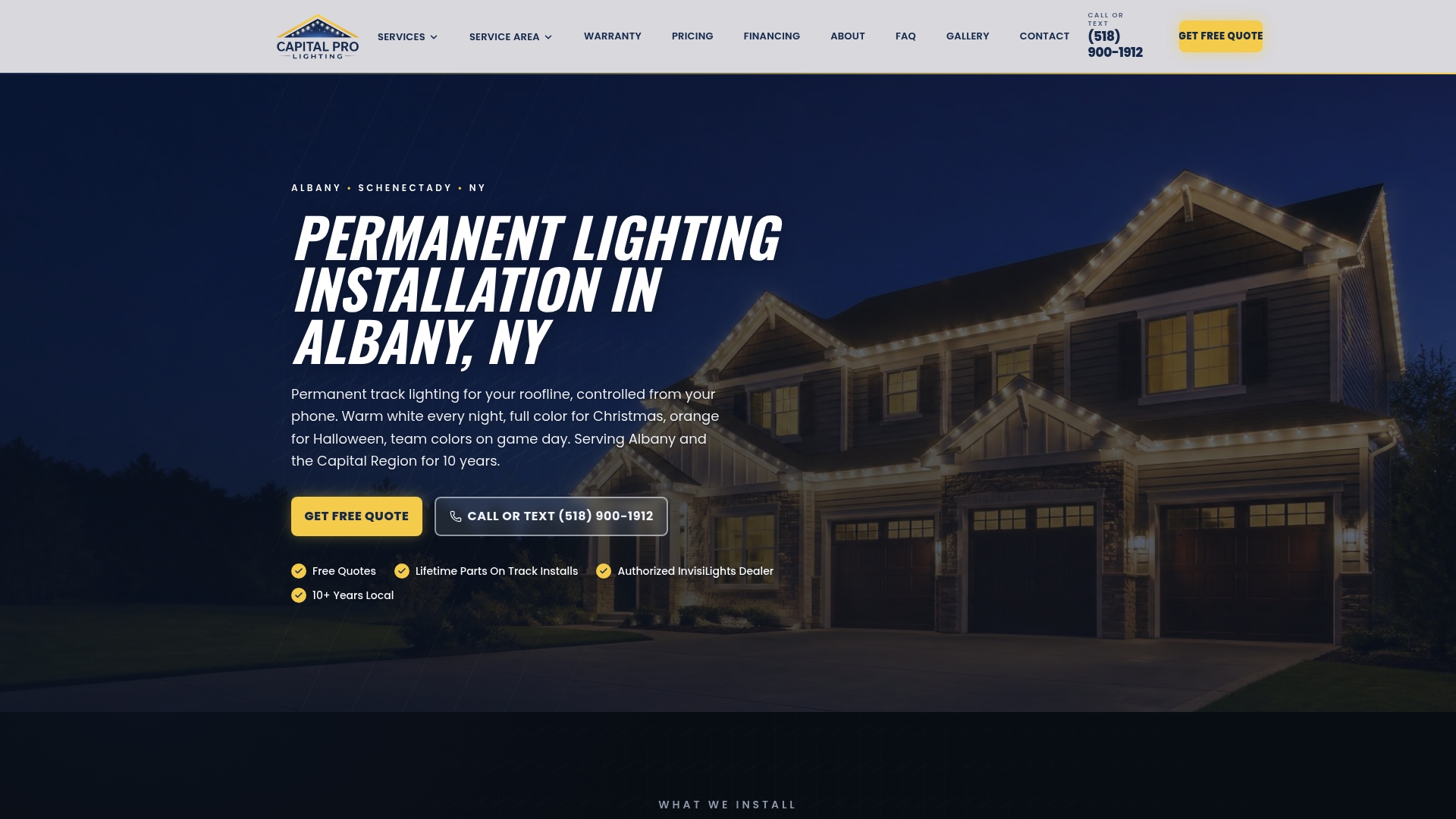
Our systems are app-controlled, so switching colors for a holiday or a game night takes seconds, no ladder required. Before you sign with any installer, confirm GFCI protection, ask about permits in your area, and get the warranty terms in writing.
- Check current pricing for InvisiLights Track Mounted and InvisiClips systems.
- Learn more about our permanent outdoor lighting installations.
- Ask about seasonal Christmas light installation with takedown and storage included.
Reach out to get a quote tailored to your roofline and your local code requirements.
FAQ
Do permanent lights add value to your home?
Permanent lighting is generally viewed as a home improvement that enhances curb appeal and usability rather than a feature with a documented resale premium. The clearer benefit is functional: year-round lighting control without seasonal ladder work, which many buyers notice during showings even if it is not formally appraised.
How safe are LED lights?
LED fixtures are safe when they carry a UL or ETL listing and are matched to the location they’re installed in, whether that’s wet, damp, or dry rated. The CPSC recommends using only lights tested by nationally recognized laboratories and checking for damage before each use.
Why are people leaving their porch lights on?
Many homeowners keep porch and roofline lights on longer with permanent systems because app-based scheduling makes it effortless compared to manually plugging in temporary strings each evening. This is a convenience choice rather than a safety requirement, though any system left running benefits from the same GFCI protection and periodic inspection as one used occasionally.
Where to put permanent lights?
Most permanent systems mount along the roofline, fascia, or trim using a track or clip system designed for that specific edge profile. Placement should also account for driver and controller location, which need ventilated, weatherproof housing away from direct water exposure.
What are the main code requirements for permanent outdoor lighting?
Outdoor circuits feeding permanent lighting need GFCI protection under NEC 210.8, and all fixtures should carry a wet or damp location listing appropriate to where they’re mounted. Local permit and inspection requirements vary, so checking with your authority having jurisdiction before installation avoids compliance issues later.
Sources
- NFPA / National Electrical Code (general reference)
- CPSC estimates and safety guidance (holiday decorating injuries)
- NFPA 70 proposed TIA / 210.8(F) commentary
Recommended
Ready for a Brighter Home?
Free, no-pressure quotes across the Capital Region.
No obligation. Local installer. Same-day callback.
Reviewed by Capital Pro Lighting
Capital Pro Lighting installs permanent outdoor lighting, architectural lighting, and holiday lighting across Albany and New York's Capital Region. We install UL listed permanent lighting systems and have 10 years in business. More about our team.


