
2700K–4000K Room Ranges: Warm vs Cool White and When to Go Programmable
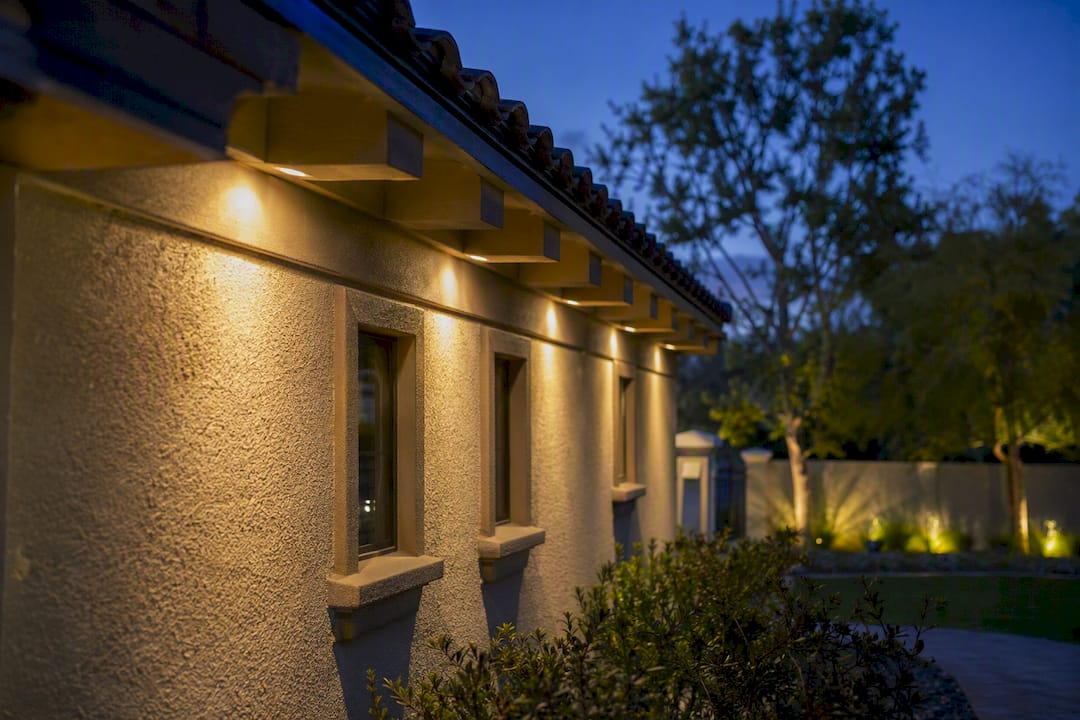
2700K–4000K Room Ranges: Warm vs Cool White and When to Go Programmable
Use warm white (2700K to 3000K) for bedrooms, living rooms, and evening spaces, and cool white (4000K and up) for kitchens, garages, and task-focused work. If you don’t want to choose, tunable lighting solves the problem entirely. Check the ANSI/Duv rating on any bulb before buying, and if you’re upgrading your home’s exterior, Capital Pro Lighting builds that flexibility into permanent installations from day one.
TL;DR:
- Most bulbs with the same Kelvin rating can look different depending on their Duv control, so checking Duv ensures color consistency.
- Cool white light often appears brighter than warm white at the same lumen output because it enhances blue-green wavelengths that boost perceived contrast.
- Cool white lighting significantly suppresses melatonin production, making it less suitable for bedrooms and areas used before sleeping.
- Different rooms benefit from specific Kelvin ranges: 2700K for bedrooms and living rooms, 4000K for workspaces, with tunable lighting ideal for multi-purpose spaces.
- Permanent outdoor lighting systems with app control allow easy switching between warm and cool whites without reinstallation or bulb replacement.
What Warm White vs Cool White Actually Means
Every white light bulb carries a number measured in Kelvin, and that number is what people mean when they debate warm white vs cool white. It’s called correlated color temperature, or CCT, and it describes how a light source’s tone compares to a theoretical heated object. Picture a piece of metal warming up: it starts glowing dull red, then orange, then yellowish white, then a stark blue white as it gets hotter. That’s the black-body analogy lighting engineers use, and it explains why “warm” light sits at a lower Kelvin number (2700K to 3000K) while “cool” light sits higher (4000K to 6500K).
Here’s the part most bulb packaging leaves out: two bulbs can share the exact same Kelvin rating and still look noticeably different on your wall. That’s where Duv comes in, a measurement of how far a light source’s actual color drifts from the pure black-body curve. The DOE’s LED color characteristics factsheet flags ANSI-referenced Duv tolerances specifically because two “3000K” bulbs from different manufacturers can carry a faint green or pink tint depending on how tightly their Duv is controlled. If a product page lists Duv, that’s a real sign the manufacturer is being precise about color, not just slapping a Kelvin number on the box.
Does Cool White Really Look Brighter Than Warm White?
Kelvin measures tone. Lumens measure output. Mixing the two up is the single most common lighting mistake homeowners make, and it’s an easy one to fall into because cool white light often feels brighter even at identical lumens.
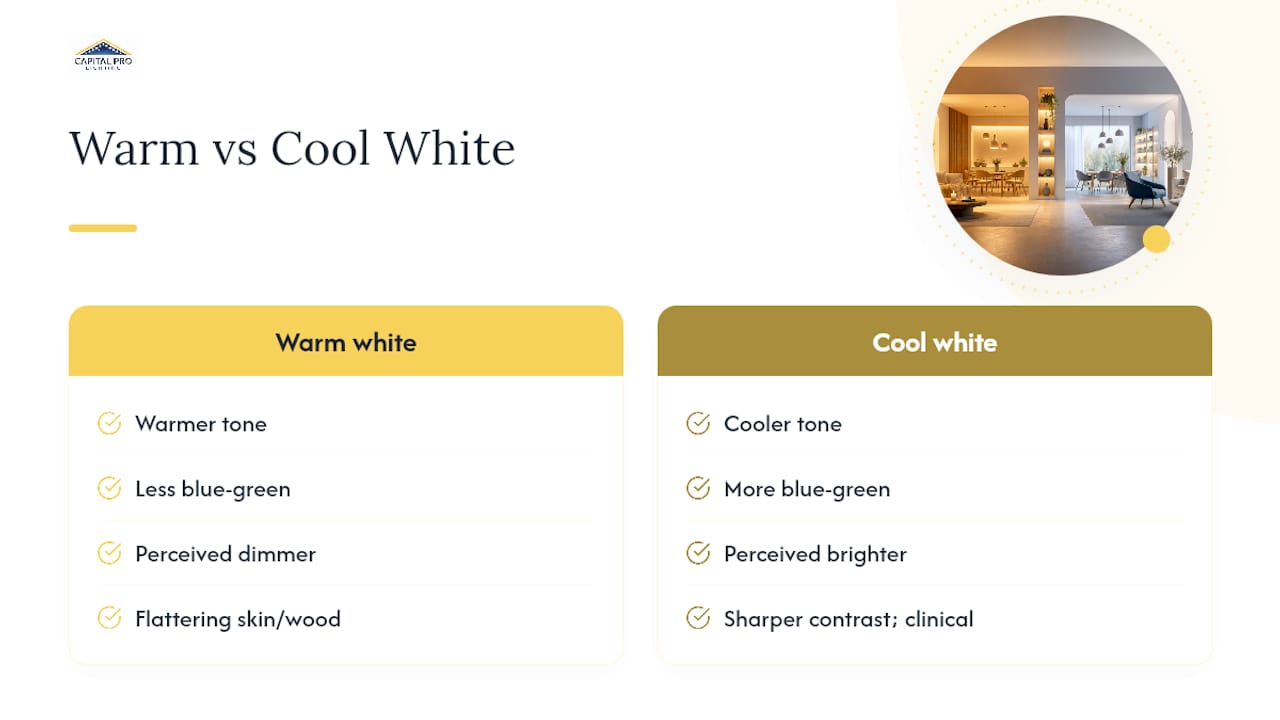
The reason comes down to human vision. Our eyes are more sensitive to blue-green wavelengths, and cool white sources emit more of that range, which boosts perceived contrast and makes edges and details pop. RP Photonics’ technical explainer confirms that higher-CCT sources frequently appear brighter even when a light meter shows the same lumen output as a warmer bulb.
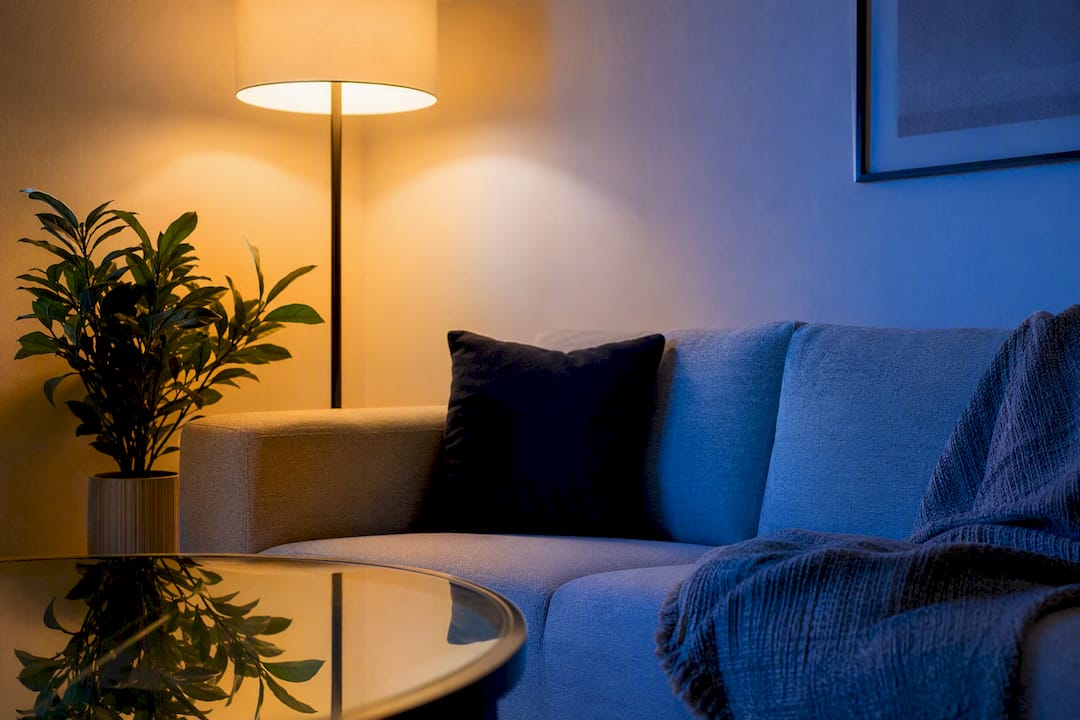
This has real visual consequences indoors. Warm white flatters skin tones and wood finishes, giving faces and natural materials a softer, more forgiving look. Cool white sharpens color accuracy and contrast, which is exactly why it works so well over a workbench but can make the same face look washed out or clinical in a living room.
What Cool Light Does to Your Sleep
The evidence here isn’t ambiguous: cool white light suppresses melatonin significantly more than warm white does, and the gap is large enough to matter for anyone lighting a bedroom or living room used before bed.
The Numbers: A 2026 study in Nature Scientific Reports measured melatonin suppression from LED lamps and found cool white lamps produced a median suppression value of 12.3%, compared to just 3.6% for warm white lamps under the same conditions.
That difference traces back to a specific type of cell in the eye. Retinal ganglion cells containing melanopsin, often called ipRGCs, are tuned to detect short-wavelength blue light, and when they fire, they signal your brain to hold off on melatonin production. Cool white light contains more of that wavelength range, so it triggers a stronger signal.
The science does get more nuanced beyond the headline number. Some calibrated circadian research found that when melanopic irradiance is matched across sources, the color difference alone matters less than intensity and duration. In practice, that means dimming your lights and reducing overall exposure in the two hours before bed protects sleep more reliably than switching to a warm bulb at full brightness. Warm plus dim beats warm plus bright.
Which Kelvin Range Fits Each Room?
Different rooms serve different purposes, and your lighting should match the job happening in that space, not a single house-wide preference. Here’s a practical starting range for each area.
| Room | Recommended Kelvin | Why |
|---|---|---|
| Bedroom | 2700K | Warm tone supports winding down and matches evening melatonin needs |
| Living room | 2700K to 3000K | Soft warmth suits relaxing, socializing, and watching TV |
| Dining room | 2700K to 3000K | Flatters food and faces during meals |
| Kitchen | 3000K to 4000K | Warm-neutral ambient light with brighter task lighting over counters |
| Bathroom | 3000K to 4000K | Neutral tone helps with grooming tasks without feeling harsh |
| Home office | 4000K | Cool light supports focus and reduces eye strain on screens |
| Garage/workshop | 4000K | Maximum clarity and contrast for detail work |
| Outdoor accent/security | 3000K to 4000K | Warm enough to feel inviting, cool enough for visibility |
These ranges echo the common residential mappings most manufacturers design around: 2700K to 3000K for living spaces, roughly 4000K for task areas. If a room genuinely serves double duty, like a kitchen that hosts both cooking and dinner parties, that’s exactly when a tunable fixture earns its price over a fixed-Kelvin bulb.
How to Layer Warm and Cool Light in the Same Space
You don’t have to pick one temperature for an entire room. Professional lighting design typically works in three layers, and mixing them well is what makes a space feel finished rather than flat.
- Ambient light sets the overall mood, usually warm white from ceiling fixtures or lamps.
- Task light handles specific work, like cool white under-cabinet strips over a kitchen counter.
- Accent light highlights art, architecture, or landscaping, often warm to add depth without competing with the main light source.
Tunable white fixtures and app-controlled bulbs remove the need to commit to one temperature at install time. You set the mood by the hour instead of by the bulb.
Pro Tip: Set a schedule that shifts your main living spaces to cooler white in the morning for alertness and warm white after sunset. It mimics daylight’s natural swing and takes five minutes to set up once, then runs itself.
What to Check Before You Buy Warm White or Cool White Lights
Buying lights without checking the specs is how homeowners end up with a kitchen that feels like a hospital or a home office too dim to work in. Run through this before checkout.
- Read both numbers on the label. Lumens tell you how much light you’re getting; Kelvin tells you what color it is. Never assume one implies the other.
- Check the CRI. Aim for 80 or higher for general use, and 90 or higher anywhere color accuracy matters, like a kitchen or a home office with a monitor.
- Look for Duv or ANSI compliance. It’s a strong signal that the manufacturer controls color consistency instead of guessing.
- Decide if you need tunable white. If a room does more than one job, a tunable or smart bulb costs more upfront but saves you from buying two sets of fixtures.
- Confirm dimmer and fixture compatibility. Not every LED bulb works with every dimmer switch, and mismatches cause flickering or buzzing.
Beyond the bulb itself, a few practical questions save headaches down the road:
- Does the fixture’s form factor match your existing housing or trim?
- Is there a warranty on parts, not just the bulb itself?
- If you’re hiring an installer for permanent lighting, do they offer ongoing support if a component fails?
If you’re also updating trim or doors as part of the room, choosing door and trim colors that complement your chosen Kelvin range keeps the whole space cohesive rather than fighting itself.
What Installers Actually See Go Wrong
After years of installing outdoor lighting across the Capital Region, the most common mistake is easy to spot: homeowners pick one color temperature for the entire exterior and live with it regardless of season or occasion. A roofline that’s warm white for a cozy autumn evening looks flat and wrong lit the same way for a Fourth of July party.
Capital Pro Lighting solves that with programmable permanent systems, changeable warm to cool from a phone, backed by a lifetime parts warranty and custom 3D-printed brackets for a clean finish. No ladders, no swapping strands, no committing to one Kelvin for good.
— Luis T
A Permanent Way to Get Both Warm and Cool Outdoor Lighting
Choosing between warm white and cool white gets a lot easier when you’re not locked into either one. Christmas light rental services and one-off holiday installs both force that same tradeoff on your roofline year after year: pick a color, hang it, take it down, repeat. Capital Pro Lighting takes a different route.
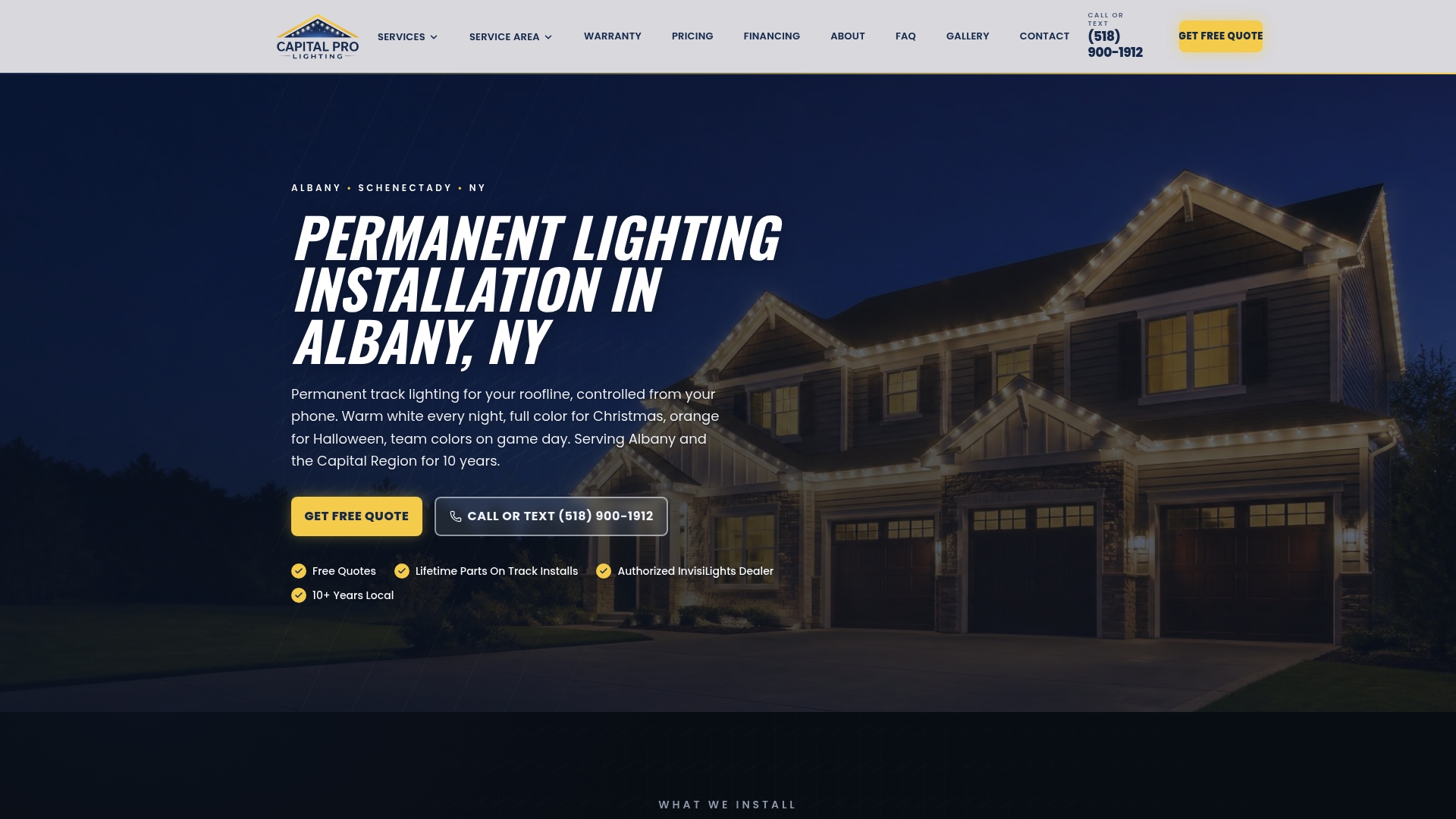
Its permanent outdoor LED lighting installs once and stays year-round, with color changed from your phone whenever the season, holiday, or mood calls for it. No ladders, no tangled strands in the garage, no re-buying bulbs every winter. Every track comes with a lifetime parts warranty and custom 3D-printed brackets for a finish that looks built-in rather than clipped on. Homeowners across Albany, Saratoga Springs, Clifton Park, Troy, and the wider Capital Region have used it to swap between warm white for a quiet weeknight and cool white or full color for game day, all from one system. Check the service area coverage to see if your address qualifies, and get a quote before the next holiday rush fills the schedule.
Sources
- Nature Scientific Reports — study on melatonin suppression by LED lamps (2026)
- LED color characteristics factsheet — U.S. DOE/EERE
- RP Photonics — color temperature explanation (2019)
- Elgato — What is color temperature? (practical Kelvin guidance)
This article is general information, not a substitute for advice from a qualified doctor. Consult a qualified healthcare professional about your own circumstances before acting on anything here.
FAQ
Is Cool White or Warm White Better Overall?
Neither wins outright. Warm white suits relaxation and evening spaces; cool white suits tasks needing focus and detail, so the better choice depends entirely on the room and time of day.
Is Warm White Better for Your Eyes?
Warm white causes less eye strain in low-light, relaxed settings and suppresses melatonin far less than cool white, with a median 3.6% versus 12.3% suppression value in evening use.
What Are the Downsides of Cool White Light?
Cool white light suppresses melatonin more than warm light, can look harsh or clinical in relaxed living spaces, and tends to wash out skin tones compared to warmer sources.
Is Warm White or Cool White Better for a Bedroom?
Warm white, specifically in the 2700K range, works best for bedrooms since it supports winding down and avoids the higher melatonin suppression tied to cool, blue-rich light.
Can I Get Both Warm and Cool Light in the Same Fixture?
Yes. Tunable white bulbs and app-controlled systems, including permanent installations from Capital Pro Lighting, let you shift a single fixture between warm and cool as needed instead of committing to one temperature.
Ready for a Brighter Home?
Free, no-pressure quotes across the Capital Region.
No obligation. Local installer. Same-day callback.
Reviewed by Capital Pro Lighting
Capital Pro Lighting installs permanent outdoor lighting, architectural lighting, and holiday lighting across Albany and New York's Capital Region. We install UL listed permanent lighting systems and have 10 years in business. More about our team.


