
Brick House Lighting: What a Pro Install Should Look Like
Brick House Lighting: What a Pro Install Should Look Like
Brick house lighting, done right, means a permanent RGBW roofline system installed by a professional, running warm white every night and switching to full color for holidays or game day, all from your phone. For most brick homes, Capital Pro Lighting is the direct route to that outcome: app control, a lifetime parts warranty, and a track-and-bracket finish that disappears into the fascia instead of sitting on top of it.
Here’s what that system actually looks like:
- Hardware: low-voltage aluminum track fitted with RGBW LED pucks, mounted flush to the roofline
- Daily use: warm white, dimmed and scheduled through an app
- Special occasions: instant color switching for holidays, birthdays, or a Bills game, no ladder required
Once you know that’s the target, the next move is simple: request a detailed proposal and an app demo before you sign anything.
Key Takeaways
A professionally installed RGBW roofline system with app control, a lifetime parts warranty, and a written line-item proposal is the standard against which every brick house lighting quote should be measured.
| Point | Details |
|---|---|
| Warm white is the priority | Design the system for year-round warm-white curb appeal first; treat color modes as a holiday bonus. |
| Insist on RGBW, not RGB | A dedicated white diode produces a clean warm white instead of a faked, off-color blend. |
| Get an itemized proposal | Fixture counts, transformer specs, wire routing, and zoning should all appear in writing before you sign. |
| Expect a single install day | Most brick homes get track mounted, pucks installed, and the app configured in one day. |
| Choose Capital Pro Lighting for proven local delivery | Over 10 years in the Capital Region, a lifetime parts warranty, and 3D-printed brackets for a clean roofline finish. |
Why Permanent Roofline Lighting Is Worth It
The goal isn’t a Christmas display that happens to run in July. It’s the reverse. Professionals in the outdoor lighting industry design permanent systems as architectural accents for year-round warm-white curb appeal, with color modes treated as a bonus feature for two or three weeks a year. That framing matters when you’re evaluating quotes, because a contractor who leads with “look how many colors it does” instead of “here’s how it looks every single night” is selling you the wrong priority.
There’s a real cost argument here too. Vendor guidance on energy efficiency with permanent LED systems points to smart scheduling, zoning, and app dimming as the levers that keep operating costs down, since the lights aren’t running at full brightness from dusk until you remember to flip a switch at midnight.
What separates a good install from a mediocre one shows up in the details:
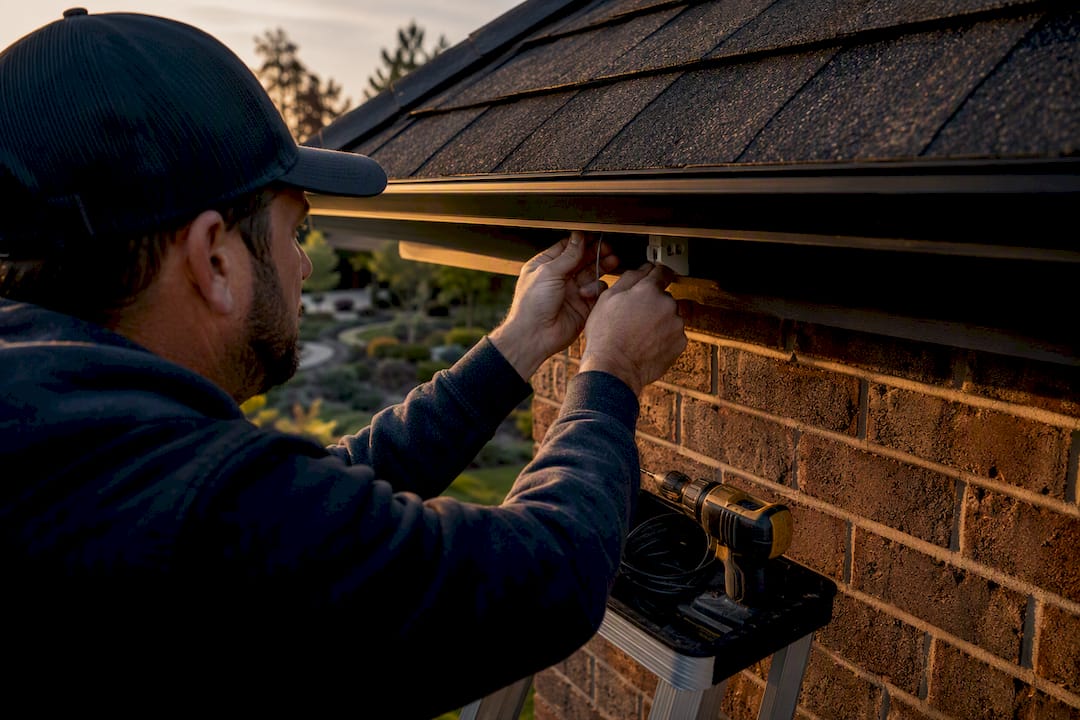
- Track sits flush against the fascia, not bolted on top
- No visible wiring anywhere along the roofline
- Beam spread is even, puck to puck, with no dark gaps or hot spots
- Track doesn’t sag after the first hard freeze or wind event
Installers who avoid sagging tracks and exposed wiring do it through secure mounting hardware and planned wire routing, not luck. A walkthrough and app demo at the end of the job is standard practice among reputable installers, not an upsell.
How Do You Choose a Brick House Lighting Installer?
The proposal you get back tells you almost everything about whether a company will deliver a clean, durable install. Vague quotes produce vague results.
Look for these trust signals before you sign anything:
- A written lifetime parts warranty on the track and puck hardware, not just a one-year labor guarantee
- At least a decade of local install experience, ideally with photos of brick homes similar to yours
- A defined service area, so you know someone answers the phone if a puck fails two years from now
- A portfolio of roofline installs, specifically, not string lights or landscape spotlights
A transparent proposal should itemize fixture counts and types, transformer size and mounting location, wire routing, how the system is zoned for control, and line-item pricing you can actually read. Vendor process guides describe this level of detailed proposal and single-day installation as the industry standard, not a premium add-on.
At the estimate visit, ask directly: Can I see the app before I commit? What finish do the brackets and track have? Will you call Miss Utility before digging for the transformer line? Can I add zones or track later without replacing the whole controller? What should I expect in terms of noise or disruption on install day?
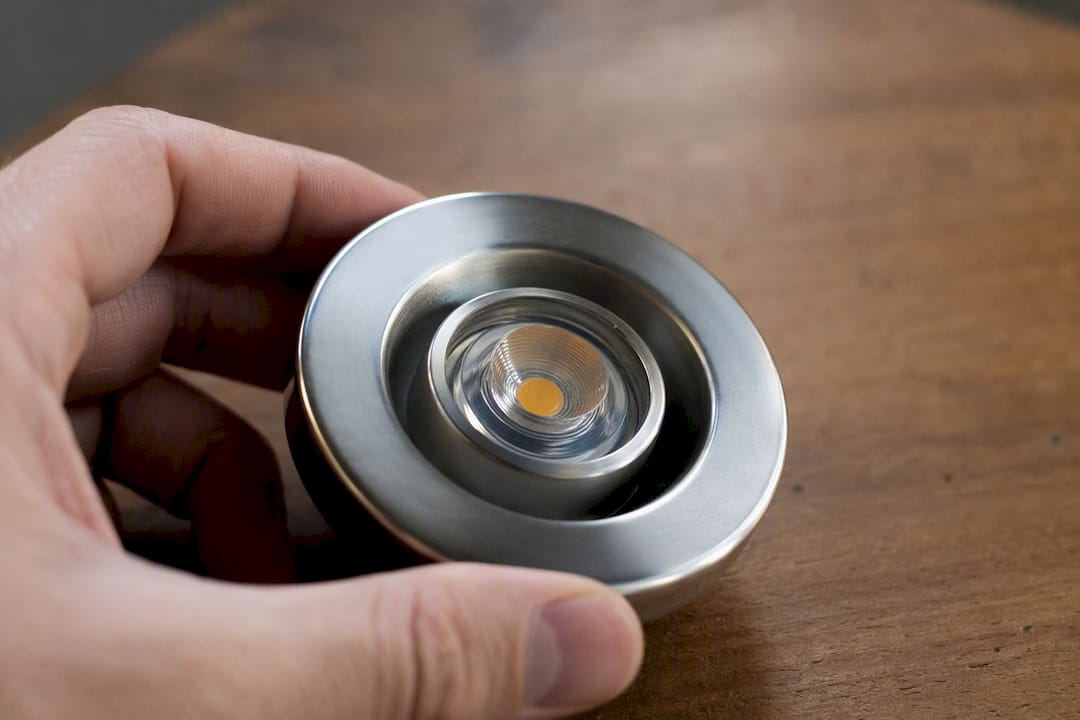
Pro Tip: Ask to see a puck up close during the estimate, not just a photo. The size and finish of the diode housing tells you more about build quality than any brochure will.
Red flags are usually easy to spot once you know to look. No written warranty. Pricing that’s a single lump sum with no breakdown. An installer who can’t describe the wiring plan or where the transformer will live. Any of those should send you looking elsewhere.
What Happens From Quote to Install Day?
The timeline is shorter than most homeowners expect. A design and proposal typically comes back within days of your estimate visit, and installs usually get scheduled within a few weeks, not months. For most brick homes, the physical install itself wraps in a single day.
Here’s roughly how that day unfolds:
- Crew measures the roofline and cuts aluminum track to length
- Track mounts to the fascia using hidden fasteners or custom brackets
- RGBW LED pucks snap into the channel at set intervals
- Low-voltage wiring routes back to a weatherproof controller and transformer
- Every puck gets tested individually before the crew leaves
- At dusk, the crew fine-tunes beam angles and walks you through the app
That day-of sequence, from track measurement to a dusk walkthrough, is standard across most reputable installers, and the final app setup happens at dusk specifically so the crew can see how the lighting actually reads against your brick in real conditions.
On your end, prep is minimal:
- Clear access around the roofline and any planned transformer location
- Have the app downloaded on your phone before the crew arrives
- Expect a Miss Utility call ahead of time if trenching is needed
- Plan for some ladder activity and chop saw noise during the day
Before the crew packs up, they should confirm every puck lights correctly, each zone responds independently, the app connects and controls scenes, and the beam spread looks even from the street.
RGBW, Controllers, and What Actually Matters Long-Term
Not all color-changing systems produce a convincing white. RGBW systems include a dedicated white diode alongside red, green, and blue, which is why the warm white looks clean and consistent instead of the slightly blue or pink cast you get from mixing colored LEDs to fake white. If a system you’re quoted only does RGB, ask directly how it produces white. That answer tells you a lot about the quality of the fixture.
The controller is doing more work than most buyers realize. According to guidance on how permanent outdoor lighting technology functions, the system connects to home Wi-Fi but usually stores schedules locally, so scenes keep running on schedule even during a brief internet outage. Remote changes need connectivity restored, but your porch light isn’t at the mercy of your router.
A proposal worth signing should specify:
- Wi-Fi connectivity with local schedule fallback
- Zone control so the front roofline and garage can run independent scenes
- Saved presets for holidays, game days, and everyday warm white
- Firmware updates handled remotely by the installer
Transformer sizing and placement matter more than they get credit for. An undersized transformer dims pucks at the far end of a run, and a poorly located one turns into a maintenance headache. Ask where it’s mounted and whether the connections are rated for outdoor moisture. One underrated feature: modular track systems let you add zones or extend coverage later without swapping out the whole controller, which matters if you’re only lighting the front roofline now and want the garage done next year.
Maintenance, Warranty, and What It Costs to Run
A lifetime parts warranty on the track and puck hardware means the manufacturer or installer replaces failed components at no charge for as long as you own the system, though labor terms for a service visit vary by contractor, so get that detail in writing.
Day-to-day upkeep is minimal:
- Occasional cleaning to clear dust or pollen off the track
- Periodic checks on waterproof connectors and gel caps at wire joints
- App and firmware updates, usually pushed automatically
- A quick visual check after major storms or freeze events
Operating costs stay low because low-voltage LED draws very little power to begin with, and scheduling plus dimming through the app cuts runtime further, since the system isn’t blazing at full brightness all night, every night.
Call your installer for anything under warranty or firmware related. Simple things, like a temporary Wi-Fi hiccup or resetting a schedule, you can usually handle yourself through the app.
What Most Buying Guides Get Wrong About This Purchase
Most advice on permanent roofline lighting fixates on the wrong variable: color count. How many millions of colors, how many presets, how flashy the holiday mode looks in a demo video. That’s the least important spec on the sheet.
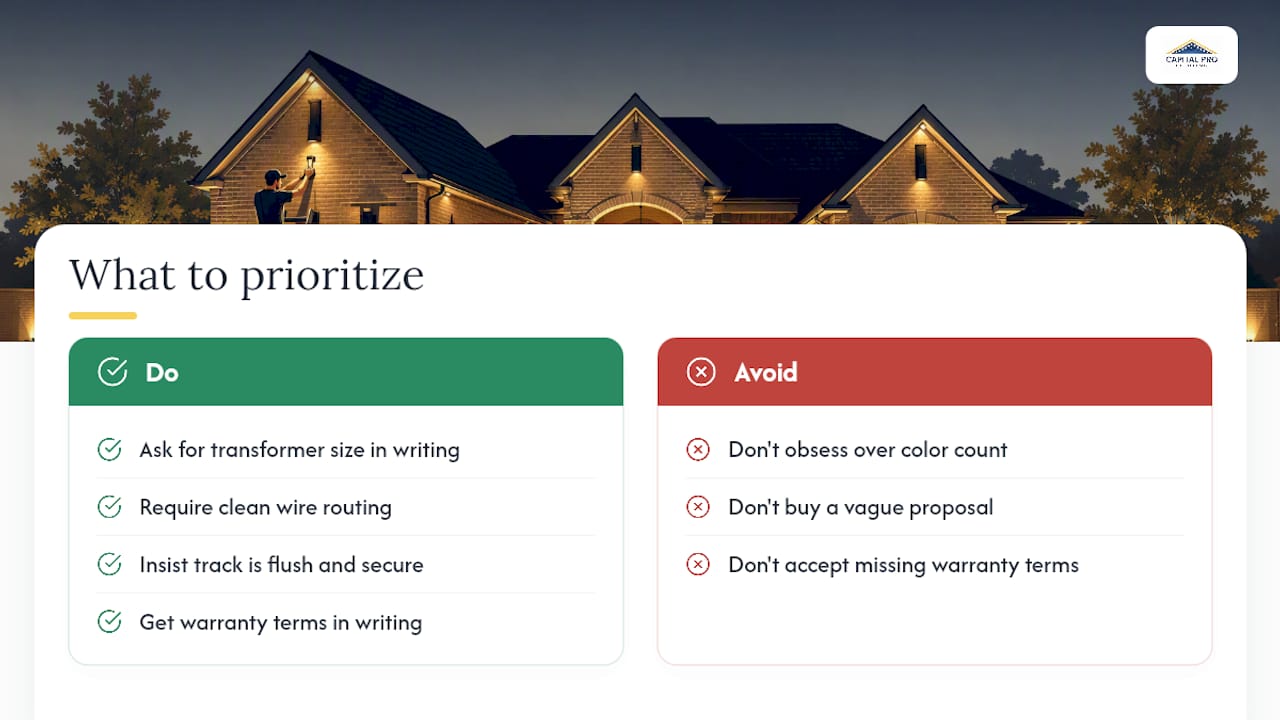
What actually determines whether you’re happy with this system in year three is boring by comparison: whether the track was mounted flush and secure, whether the wiring was routed cleanly enough that you forget it exists, and whether the company that installed it still answers the phone. A system with a mediocre warranty and a gorgeous rainbow mode will look tired and patchy within two winters. A system with a lifetime parts warranty and a clean bracket finish will still look sharp a decade out, even if you never touch the color wheel.
The proposal is where this gets decided, not the sales pitch. If a quote doesn’t specify transformer size, wire routing, and warranty terms in writing, you’re buying a promise, not a system. Ask for those details before you ask about color options. Homeowners who push for that level of detail upfront consistently end up happier with the result, mostly because there are fewer surprises six months in.
— Luis T
Getting a Quote From Capital Pro Lighting
If you’ve read this far, you already know what separates a durable, good-looking install from one that sags and disappoints by year two. Capital Pro Lighting has spent more than 10 years installing exactly that kind of system across the Capital Region, backed by a lifetime parts warranty and custom 3D-printed brackets that give brick facades a track finish you won’t spot from the street.
A proposal from Capital Pro Lighting spells out fixture counts, transformer placement, and zoning before you commit to anything, and the crew calls Miss Utility ahead of any digging near the transformer line. Every install ends the same way: a dusk walkthrough where the crew fine-tunes beam angles and walks you through the app on your own phone, so you’re not guessing how to switch scenes the first time you want red and green for December.
Coverage runs across the Capital Region, including Delmar, Troy, and Ballston Spa, with full details on the service area page. If your brick exterior could use a system that looks as good on a random Tuesday as it does on New Year’s Eve, request a detailed proposal and app demo from Capital Pro Lighting to see what a quote looks like for your home.
Sources
- What is permanent lighting? A guide for cities, parks, and commercial properties — Creative Displays
- What to expect during a professional outdoor lighting installation — TLC Inc.
FAQ
What Is RGBW Lighting and Why Does It Matter?
RGBW adds a dedicated white diode to the standard red, green, and blue LEDs, producing a clean warm white instead of a color blend that can look slightly off-hue for everyday use.
How Long Does a Brick House Lighting Install Take?
Most brick homes are completed in a single day, covering track mounting, puck installation, wiring, testing, and an app walkthrough at dusk.
Does the System Still Work if My Wi-Fi Goes Down?
Yes. Most controllers store schedules locally, so programmed scenes keep running even during a brief internet outage, though remote changes need connectivity restored.
What Should Be Included in a Lighting Installation Proposal?
A solid proposal lists fixture counts and types, transformer size and location, wire routing, zone planning, and transparent line-item pricing, the same detail level Capital Pro Lighting provides before scheduling install day.
What Does a Lifetime Parts Warranty Actually Cover?
It typically covers replacement of failed track and puck hardware for as long as you own the system, though labor terms for service calls vary and should be confirmed in writing.
Recommended
Ready for a Brighter Home?
Free, no-pressure quotes across the Capital Region.
No obligation. Local installer. Same-day callback.
Reviewed by Capital Pro Lighting
Capital Pro Lighting installs permanent outdoor lighting, architectural lighting, and holiday lighting across Albany and New York's Capital Region. We install UL listed permanent lighting systems and have 10 years in business. More about our team.


