
Permanent Roofline Lighting: Your Guide to Year-Round House Color
Permanent Roofline Lighting: Your Guide to Year-Round House Color
For homeowners who want year-round, color-changing house lighting without the seasonal ladder work, a professionally installed, app-controlled permanent system is the answer. The top reasons come down to three things: concealed hardware that disappears into your roofline, a lifetime parts warranty backing the installation, and hardwired power that never depends on a battery pack or a loose outlet. The single best move is booking an in-home demo or measurement with a qualified installer.
- Skip the ladder forever. Hardwired, app-scheduled color control replaces manual strand-hanging.
- Weatherproofing matters more than looks. Insist on IP67-rated components for anything mounted at the roofline.
- DIY kits like Govee work for renters or short-term testing, but they’re not built for permanent, decade-long installs.
- A lifetime parts warranty on the physical track and hardware, offered by installers like Capital Pro Lighting, changes the math on long-term value.
Key Takeaways
Professionally installed, app-controlled permanent roofline lighting outlasts DIY kits because sealed wiring and mechanical fastening prevent the water intrusion that ends most adhesive-mounted systems early.
| Point | Details |
|---|---|
| Demand IP67, not IP65 | IP67-rated modules and sealed connectors withstand direct roofline water exposure that IP65 struggles with. |
| Compare warranty scope | A lifetime parts warranty covering the full track differs sharply from a one-year LED-only guarantee. |
| Expect a one-day install | Most average homes finish in 4 to 8 hours, with complex rooflines occasionally needing a return visit. |
| Weigh true cost over time | DIY kits often need replacing within a few years, while professional installs favor five-plus-year homeowners. |
| Capital Pro Lighting’s offering | Over a decade of Capital Region installs, a lifetime parts warranty, and custom 3D-printed brackets for a clean finish. |
What Is Wedding House Lighting and How Does It Work?
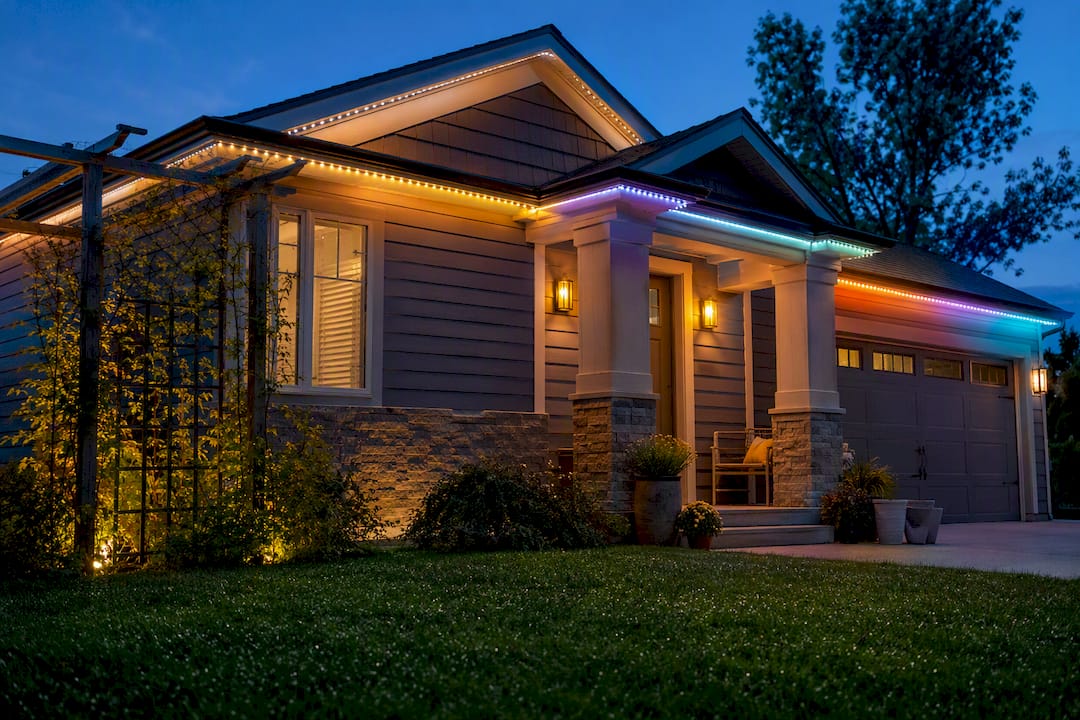
“Wedding house lighting” describes a permanent, app-controlled LED system mounted along your roofline that you can switch to soft white for a backyard ceremony, deep blue for a winter evening, or gold for an anniversary party, all from your phone. The industry term is permanent outdoor lighting or permanent roofline lighting, and it works nothing like a strand of holiday lights, tying beautifully into broader backyard remodeling projects that enhance your outdoor living spaces.
A complete system has six parts: an extruded aluminum channel, an LED strip or individual pixel modules, a frosted lens that diffuses the light evenly, weatherproof connectors at every joint, a controller, and a power supply. The channel mounts to your fascia or soffit and stays there permanently, out of sight during the day.
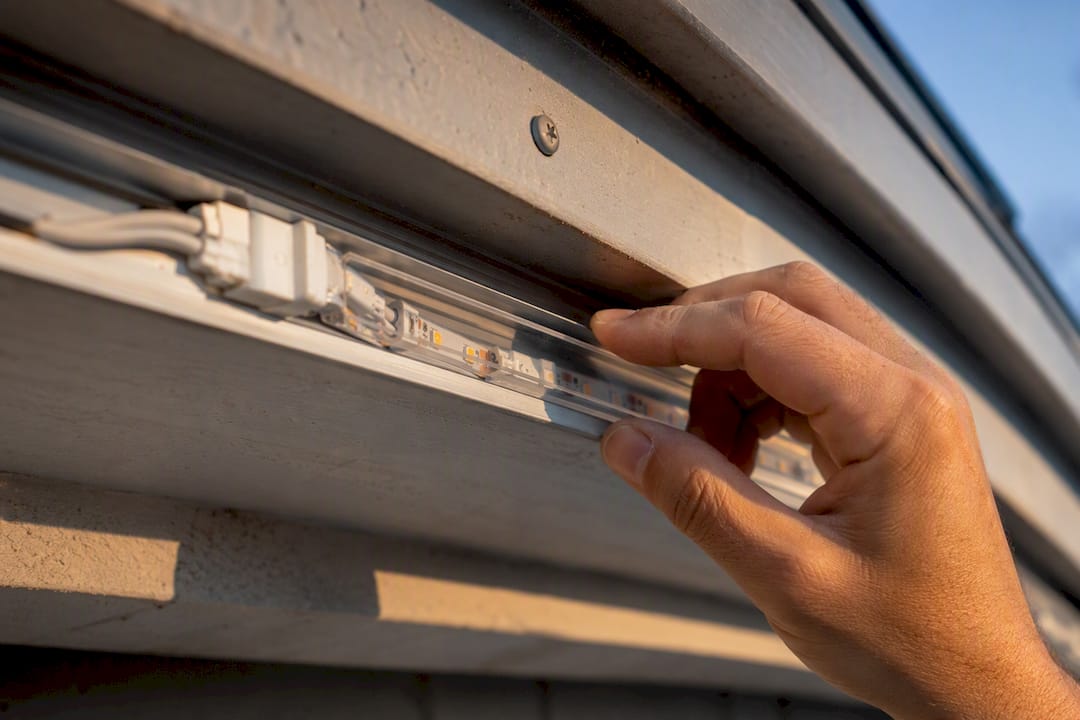
Control runs through a Wi-Fi or Bluetooth bridge app that lets you zone different sections of the house independently, schedule scenes in advance, and push firmware updates without a technician visiting. Many controllers also work with Alexa, Google Home, or Matter-based smart home setups.
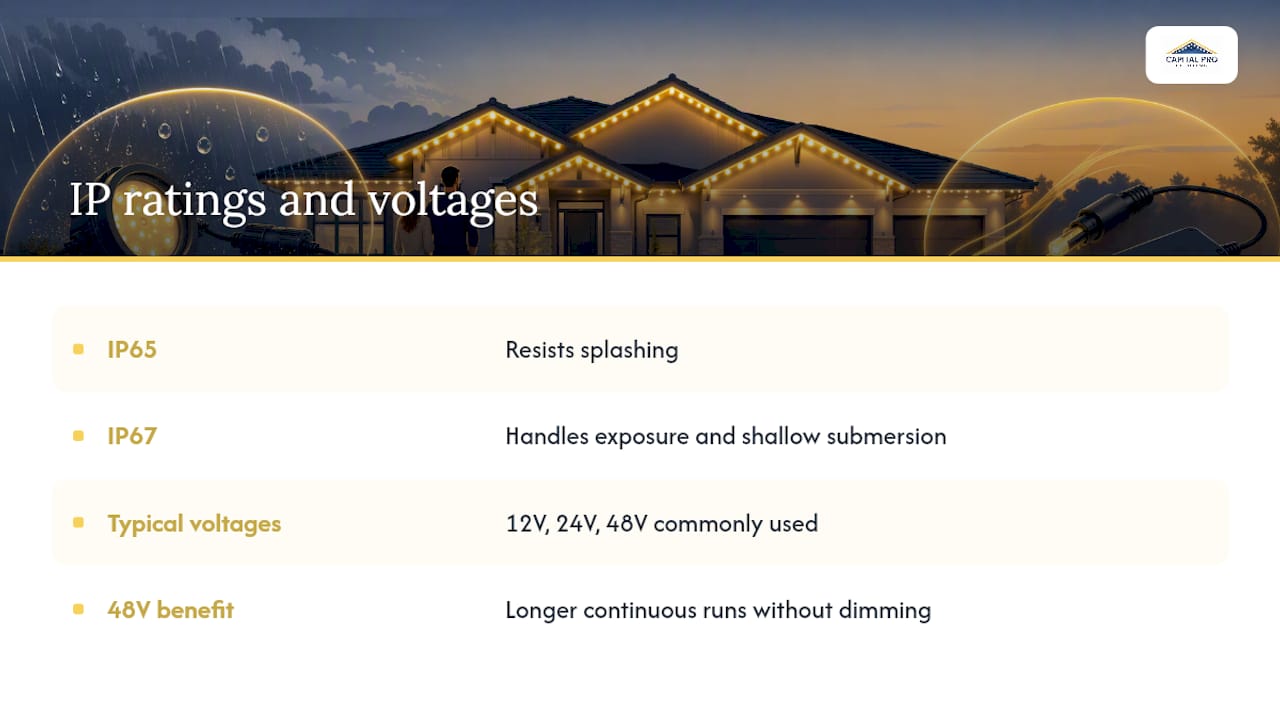
Here’s the number that actually separates a durable system from a disappointing one: IP65 versus IP67. IP65 resists splashing water; IP67 handles direct exposure and submersion in shallow water, which is what your roofline actually deals with every time it rains sideways. Voltage matters too: most systems run 12V, 24V, or 48V DC, and 48V setups handle longer continuous runs without the dimming you see at the far end of a long roofline.
Why Professional Installation Usually Beats DIY
A DIY kit and a professionally installed system can look nearly identical in a product photo. They behave very differently after two New York winters.
- Durability. Professional crews mechanically fasten the channel with screws and route wiring inside it, rather than relying on adhesive strips and plastic clips. Govee’s own installation guide confirms its system uses VHB adhesive and clip mounting, which works fine short-term but is more prone to sag and separation as temperatures swing.
- Safety. A licensed electrician ties the system into a dedicated circuit with surge protection, which cuts your ladder time to near zero and removes the guesswork around outdoor electrical connections.
- Aesthetics and compliance. Color-matched channels blend into trim and gutters, and concealed, professionally mounted hardware tends to pass HOA architectural review more smoothly than visible adhesive strips.
- Time and guarantee. A trained crew typically finishes an average home in a single day, backed by a labor and parts warranty that a self-install simply doesn’t come with.
Pro Tip: Ask any installer you’re considering whether their warranty covers just the LED strip or the entire track assembly, including brackets and connectors. That distinction determines what you’re actually protected against five years from now.
What Specs and Contract Terms Should You Demand?
Before signing anything, run the installer’s proposal against this checklist. Vague answers on any of these points are a warning sign.
- Weatherproofing: IP67-rated strips and fully sealed, weather-rated connectors, not just “outdoor rated” marketing language.
- Channel and materials: extruded aluminum channel with stainless steel fasteners, powder-coated to match your trim color.
- Control features: multi-zone control, scheduling, over-the-air firmware updates, and confirmed integration with your existing smart home platform.
- Electrical scope: hardwired power on a dedicated circuit, a clearly specified controller location, and surge protection using certified hardware.
- Warranty and service: lifetime parts coverage, a stated labor warranty length, and a real service response time, not “we’ll get to it.”
- HOA and permit documentation: as-built wiring diagrams and zone maps the installer hands over for approvals or resale.
| What to Ask | Why It Matters |
|---|---|
| What IP rating are the light modules? | IP67 withstands direct rain and roofline exposure; lower ratings degrade faster. |
| Is the wiring hardwired or plug-in? | Hardwired, dedicated-circuit power avoids extension cords and surge risk. |
| What does the warranty actually cover? | Lifetime parts coverage on the track differs sharply from a one-year LED-only guarantee. |
| Do you provide zone maps and wiring diagrams? | This documentation matters for HOA approval, resale, and future service calls. |
| What’s your average install timeline? | A same-day install for most homes signals an efficient, experienced crew. |
What Happens on Installation Day?
Most homeowners worry the process will take over their week. It usually doesn’t.
- Pre-install survey. The crew measures your roofline, checks power access, and confirms mounting points against your home’s fascia and soffit condition.
- Channel mounting. Aluminum channel gets cut to length and mechanically fastened along the roofline, following the survey plan.
- LED placement and wiring. Strip or pixel modules go into the channel, wiring runs concealed inside it, and connectors get sealed at every joint.
- Controller and power setup. The controller ties into a dedicated circuit with surge protection, typically mounted somewhere discreet like a garage or utility area.
- Programming and walkthrough. The crew sets up your app, configures zones, and shows you how to schedule scenes before they leave.
Most average homes take 4 to 8 hours for a complete install, with more complex rooflines or multi-zone setups occasionally requiring an additional visit. Before the crew arrives, clear access around your foundation, confirm an outlet or panel location for the controller, and have your phone ready for the app setup walkthrough. You’ll walk away with warranty paperwork and a working scene already programmed.
How Do Pros Prevent Long-Term Failures?
Ask anyone who’s replaced a strand of adhesive-mounted lights after two summers, and they’ll tell you the LEDs usually aren’t the problem. Water intrusion at electrical connections is the leading cause of permanent lighting failure, and it’s almost entirely preventable with the right installation approach.
- Sealed splices and connectors keep moisture out of every joint, not just the main power line.
- Wiring routed inside the aluminum channel, instead of exposed along the fascia, avoids UV exposure that degrades adhesive and insulation over time.
- Mechanical fastening resists the sag and separation that VHB tape and plastic clips eventually develop as temperatures cycle through freeze and thaw.
- Firmware updates and periodic app checks catch controller issues early, and a visual inspection after major storms flags loose fasteners before they become leaks.
Weatherproofing the junction boxes, not the LED chip itself, is what determines whether a system survives a decade. When you’re comparing installers, ask specifically how they seal connections and what their service response commitment looks like if something does fail.
What Does a Permanent System Cost, and Are There Financing Options?
DIY kits run roughly a few hundred dollars for a full house, which sounds appealing until you factor in what happens next. Professional full-home installs typically cost several thousand dollars, depending on roofline length and how many zones you want to control independently.
- Adhesive-mounted DIY systems in harsh climates often need replacement within a few years, creating a repeating cost cycle that professional installs with lifetime warranties avoid entirely.
- Factor in the real cost of your own time and ladder risk, not just the sticker price on a kit.
- Homeowners planning to stay in their home five or more years generally come out ahead with a professional system, since fewer replacement cycles offset the higher upfront cost.
- Ask any installer about financing options, including interest-free plans over several months, which lower the barrier to getting a permanent system installed now instead of patching together temporary lights every season.
A Decade of Roofline Lighting Installs in the Capital Region
Capital Pro Lighting has spent more than 10 years installing permanent lighting systems across Albany, Saratoga Springs, Schenectady, and the surrounding Capital Region, which means the installation crews have already solved the problems that come with Northeast winters, humid summers, and everything in between.
- A lifetime parts warranty on every track installation, covering the physical hardware, not just the LEDs.
- Custom 3D-printed brackets designed for a clean, nearly invisible finish along different roofline profiles.
- Phone app control that lets homeowners change colors for holidays, sports team wins, or a backyard event in seconds.
Ten years of local installs means we’ve already seen how a Capital Region winter treats a splice that wasn’t sealed properly. That’s the kind of failure you design around, not react to after the fact.
Why the “Try DIY First” Advice Gets This Wrong
The conventional wisdom says test the concept with a cheap kit before committing to a professional install. That advice makes sense for a lot of home upgrades. It doesn’t hold up here.
Permanent roofline lighting isn’t really a decision about whether you like color-changing lights. Almost everyone does. It’s a decision about whether you want to manage a system that degrades on a predictable timeline, or one that’s engineered not to. A $400 adhesive kit teaches you that you enjoy the feature, then hands you a replacement problem in two or three years once the sun and freeze-thaw cycles have their way with the mounting tape.
What gets overlooked is how much the concealment matters, not just the durability. A channel that disappears into your fascia during the day looks like architecture. A visible LED strip stuck under your gutter looks like a gadget, even when it’s turned off. Homeowners who prioritize resale value and HOA approval should weigh that as heavily as the weatherproofing spec sheet.
If you’re genuinely unsure whether you’ll want this feature in five years, rent a portable light-up display for one event first. If you already know you want it every holiday, every anniversary, every random Tuesday you feel like turning the house purple, skip the trial phase and go straight to a system built to last that long.
Ready for a Custom Lighting Demo?
Once you’ve decided permanent roofline lighting is worth doing right, the next step is simple: get a real look at how it’ll perform on your specific house. A Capital Pro Lighting demo starts with a measurement of your roofline, followed by a color mockup showing how different scenes will actually look against your siding and trim, not a generic sample photo.
From there, you’ll get a proposed zoning plan and a written estimate that spells out exactly what’s covered under the lifetime parts warranty. Before your appointment, snap a few photos of your roofline, jot down which colors or zones matter most to you, and think through your preferred scheduling window. If cost is a factor, ask about the financing options that spread the investment out with no interest over several months.
Homeowners across the Capital Region can check availability through the service area page or browse the full range of permanent lighting solutions to see what a finished install actually looks like before booking a measurement.
Sources
FAQ
What Is Permanent Roofline Lighting?
It’s a hardwired LED system mounted in a channel along your roofline that you control from a phone app, letting you change colors for holidays, events, or daily use without hanging or removing anything.
Is DIY Roofline Lighting Worth It?
DIY kits like Govee work for testing the concept or short-term use, but adhesive mounting tends to degrade faster in harsh climates than a mechanically fastened, professionally installed system.
How Long Does a Professional Install Take?
Most average homes are completed in a single day, typically 4 to 8 hours, though homes with complex rooflines or multiple zones may take longer.
What Voltage Should a Roofline System Use?
Many systems run on 12V or 24V, but 48V setups handle longer continuous runs without the brightness drop-off you can see at the far end of larger homes.
Does Capital Pro Lighting Offer a Warranty?
Yes. Capital Pro Lighting backs its installations with a lifetime parts warranty on the track, covering the physical hardware behind the LED system, not just the bulbs.
Recommended
Ready for a Brighter Home?
Free, no-pressure quotes across the Capital Region.
No obligation. Local installer. Same-day callback.
Reviewed by Capital Pro Lighting
Capital Pro Lighting installs permanent outdoor lighting, architectural lighting, and holiday lighting across Albany and New York's Capital Region. We install UL listed permanent lighting systems and have 10 years in business. More about our team.


