
Curb Appeal Lighting: Fast Wins and When to Hire a Pro
Curb Appeal Lighting: Fast Wins and When to Hire a Pro
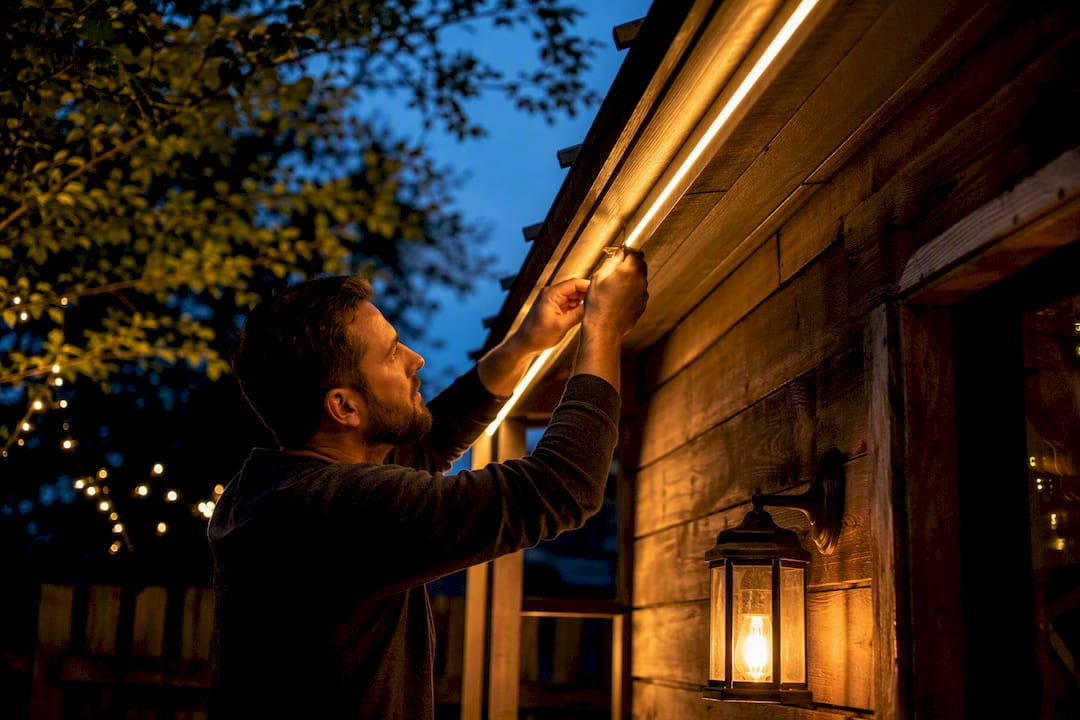
The biggest curb appeal gains at night come from combining warm roofline or porch accents with layered path and tree uplighting. If you want a low-maintenance, high-impact result, a permanent programmable roofline system is the fastest route to getting there and staying there.
Start with whichever fits your weekend and your wallet:
- Swap outdated porch fixtures for warm-toned sconces sized to your entry door.
- Add solar or low-voltage path and step lights along the main walkway.
- Schedule a design consultation with a professional if you want permanent, phone-controlled roofline color that skips the ladder every holiday.
Permanent installs carry real advantages here: lifetime parts warranties, app-based color control, and zero seasonal takedown. DIY swaps get most of the visual impact for a fraction of the cost, but they don’t solve the ladder problem every November.
Key Takeaways
The most effective curb appeal lighting combines warm 2700 to 3000K accents with layered path, step, and roofline lighting, and a permanent programmable system removes the seasonal maintenance entirely.
| Point | Details |
|---|---|
| Layer your lighting | Combine architectural, landscape, and path/task lighting rather than lighting everything evenly. |
| Match color temperature | Keep every fixture within 2700 to 3000K to avoid the mismatched look that undoes good design. |
| Prioritize safety first | Space path lights 6 to 10 feet apart at 100 to 300 lumens before adding decorative accents. |
| Budget realistically | DIY swaps run under $500, while full professional installs often range from a few thousand dollars to $18,000 or more. |
| Consider a permanent system | Capital Pro Lighting installs phone-controlled roofline lighting with a lifetime parts warranty, ending the seasonal ladder routine for good. |
Why Curb Appeal Lighting Actually Pays Off
Good exterior lighting does three jobs at once: it makes your house look better, it makes your property safer, and it makes the place usable after 6 p.m. Light grazing across stone or brick reveals texture that daylight flattens, and a single well-placed uplight on a tree or column creates depth that a flood of brightness never will.
The practical benefits stack up fast:
- Illuminated steps and walkways cut nighttime trip hazards near your front door.
- A lit driveway and entry make it obvious where to park and where to knock.
- Evening curb appeal matters more than people assume. A home that photographs and shows well after dark tends to leave a stronger impression during a sale, especially in neighborhoods where evening walkthroughs are common.
- LED fixtures paired with timers or smart controls burn a fraction of the electricity older halogen systems used, and they rarely need bulb changes.
Pro Tip: Walk your own front yard after dark before you buy anything. Note the two or three spots your eye goes to first. Those are your focal points.
10 Fixture Ideas That Change How Your House Reads at Night
You don’t need every item on this list. Pick the ones that match your home’s shape and your budget, and let the rest wait.
- Wall lantern sconces flanking the front door frame the entry. Match the fixture’s scale to your door height and keep output in the 400 to 800 lumen range so it glows instead of glares.
- Porch pendant or recessed lighting defines the entry plane overhead. Recessed cans avoid the moth-magnet look a hanging pendant sometimes creates.
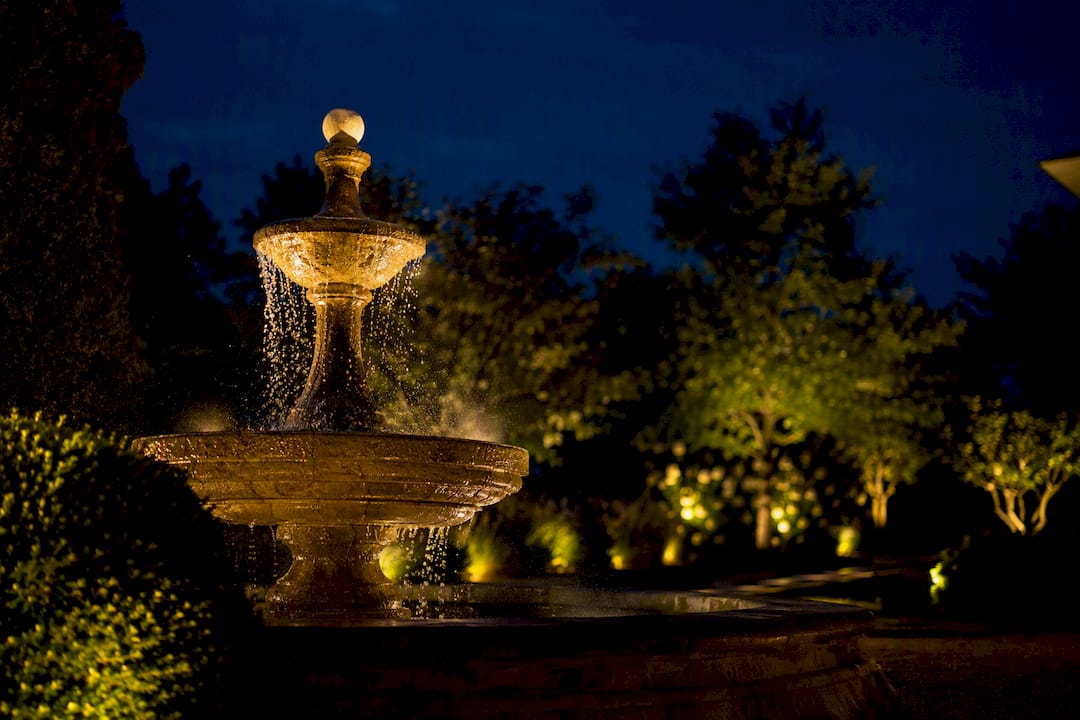
- Uplighting on columns, stone, or mature tree trunks turns flat daytime features into nighttime focal points. Narrow beam angles work best when the fixture sits close to its target.
- Step and stair recessed lights placed low on the riser prevent glare into anyone’s eyes while lighting the tread itself.
- Pathway lights or bollards create a visual line from the street to your door without turning the walkway into a runway.
- Roofline or outline permanent LED track is the highest-impact, lowest-maintenance option on this list, especially with programmable color for holidays and events.
- Post or mailbox lighting gives the approach to your driveway a finished, intentional look.
- String lights across a patio or pergola add ambiance without much infrastructure. All you typically need is an outlet and a few sturdy anchor points.
- Motion-activated floodlights near side entries or dark corners handle security without staying lit all night.
- Garage and driveway overhead fixtures need enough output for function, but a warmer color temperature keeps them from clashing with the softer accents near your front door.
How to Layer Your Lighting Like a Pro
Professionals build outdoor lighting in three layers: architectural (the house itself), landscape (trees, beds, hardscape), and path or task lighting (safety). Working through them in that order keeps the design intentional instead of scattershot.
Before you buy a single fixture, pick one primary focal point. A grand oak, a stone chimney, your front door. Everything else supports that point rather than competing with it.
Overlighting is the single fastest way to flatten curb appeal instead of building it. A house lit evenly from every angle loses the shadow and contrast that made it interesting in daylight.
- Choose one hero feature before adding supporting accents.
- Let some surfaces stay in shadow. Contrast is what creates depth.
- Test fixture placement with temporary or battery-powered lights before trenching wire, since a mockup catches spacing mistakes that are expensive to fix after installation.
What Color Temperature and Beam Angle Should You Use?
Stick to 2700K to 3000K warm white across every fixture. That range flatters brick, wood siding, and stone, and it’s the industry standard for residential exteriors for good reason: cooler light reads clinical against warm materials.
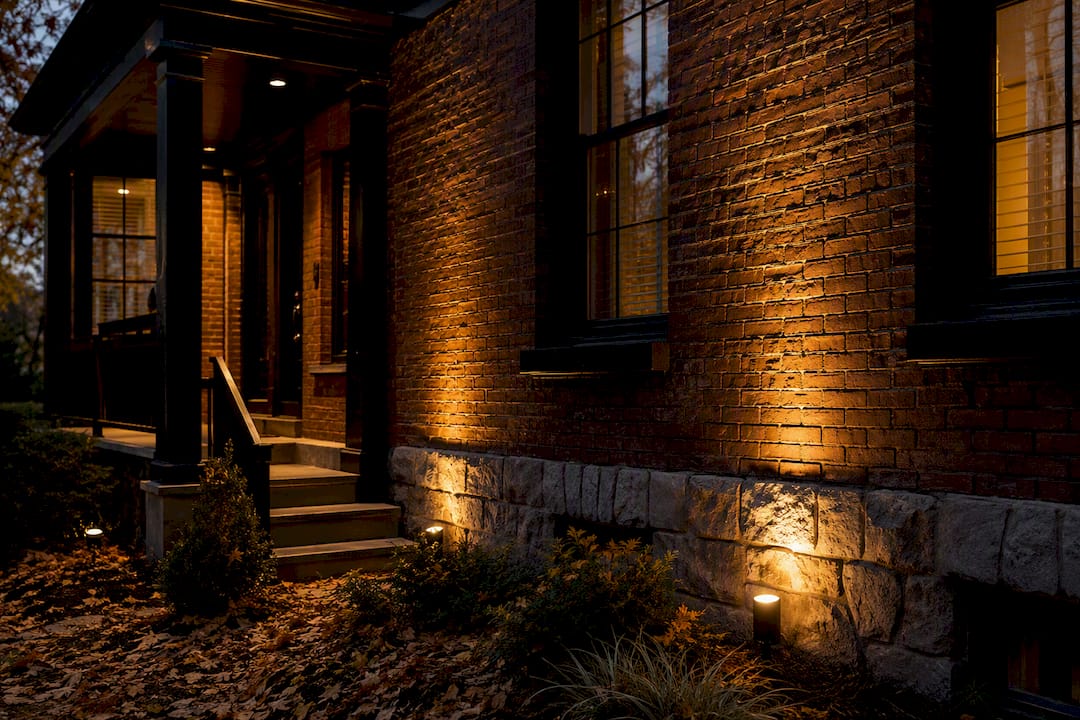
Look for a CRI of 80 or higher, and 90+ where you want true-to-life color on stone or landscaping. For beam angles, narrow spots of 6 to 20 degrees suit tight uplighting on a single tree or column, while wider or medium beams work better for washing an entire wall. Full-cutoff shields keep light off your neighbor’s windows.
Getting Path and Step Lighting Right
Safety lighting comes before decorative lighting, not after. Path lights generally sit 6 to 10 feet apart depending on walkway width, with fixture output in a moderate lumen range. Step lights need less: 50 to 150 lumens per riser, mounted low enough that the light source never hits eye level.
- Space path lights evenly rather than clustering them near the door and thinning out toward the street.
- Mount step lights into the riser face, not the tread, to avoid glare.
- Use motion sensors on security fixtures so they’re not running at full output all night.
- Check your municipality or HOA for lighting curfews or output caps. Some communities enforce dark-sky rules that limit upward spill.
What Does Curb Appeal Lighting Cost?
Budget depends entirely on scope. A handful of DIY path lights and a new porch sconce can run under $500. A modest landscape lighting refresh with a low-voltage transformer typically lands between $1,000 and $5,000.
Full professional installations, including architectural roofline lighting with programmable controls, often start in the low thousands and can reach $18,000 or more depending on fixture count and trenching.
- Fixture quality and driver specs affect both price and lifespan.
- Trenching for buried wire adds labor cost fast, especially on established landscaping.
- Zoning and app-based color control cost more upfront but eliminate seasonal labor later.
- Financing options can spread a professional install’s cost into manageable monthly payments.
The Mistakes That Undo Good Lighting
Most bad exterior lighting isn’t a fixture problem. It’s a planning problem.
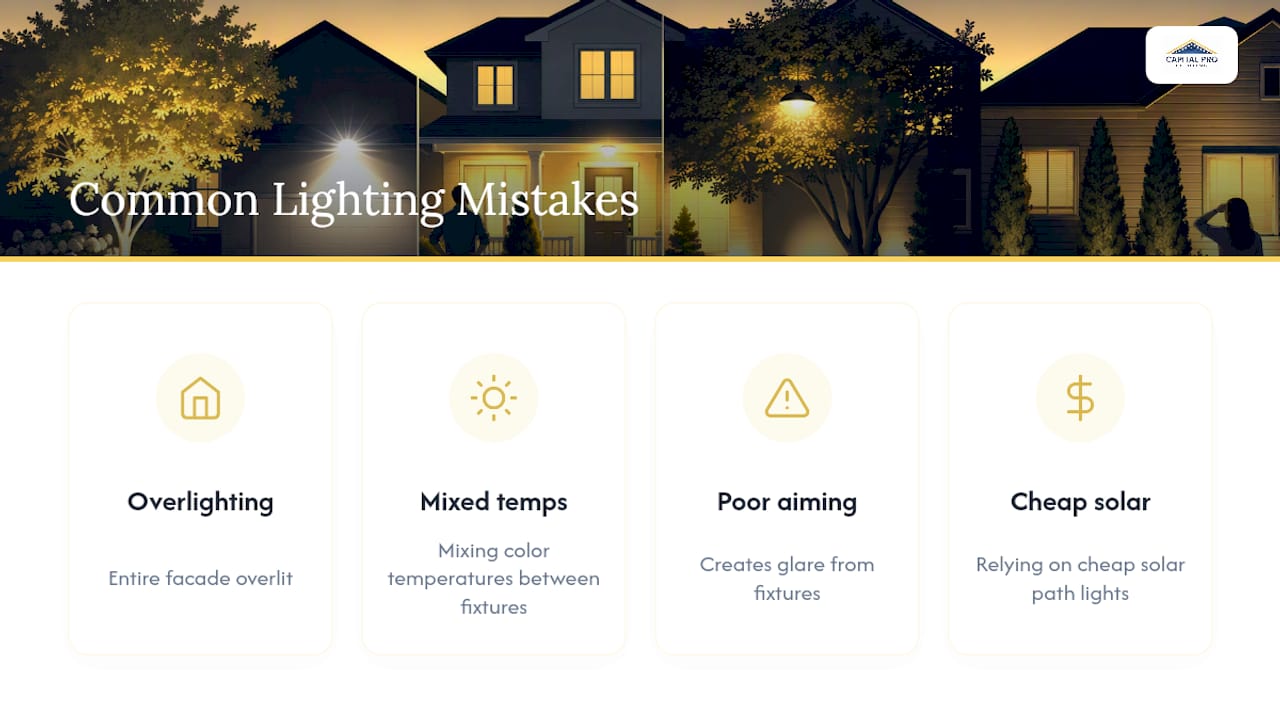
- Overlighting the whole facade. Homeowners often reach for more fixtures than the design needs, which erases the shadow and contrast that made the house interesting.
- Mixing color temperatures. A 3000K porch light next to a 5000K floodlight makes a home look unfinished, even when each fixture works fine on its own.
- Visible hardware and bad aiming. A fixture you can see in daylight, or one aimed straight into a window, undoes the effect it was meant to create.
- Relying on cheap solar lights for primary path illumination. They fade fast and rarely produce enough lumens for real safety lighting.
Pro Tip: If you can see the fixture itself from the street, it’s aimed wrong or placed wrong. Good lighting hides its source and shows only its effect.
How to Vet a Curb Appeal Lighting Professional
A quote without a site visit isn’t a real quote. Use this checklist before signing anything.
- Ask for a site visit and a design mockup, not just a price sheet.
- Request before-and-after photos from homes similar to yours.
- Confirm transformer sizing includes spare capacity for future fixtures.
- Get the warranty terms in writing, including what’s covered on parts versus labor.
- Make sure the zone and control plan is explained clearly, including how you’ll operate any app-based settings.
Red flags include no photo portfolio, vague warranty language, or any installer willing to quote a price sight unseen.
How Capital Pro Lighting Solves the Seasonal Lighting Problem
Permanent roofline lighting with phone-based color control means no more ladders every November and no tangled string lights in storage.
- Lifetime parts warranty on track installations, backed by custom 3D-printed brackets for a clean, factory-finished look.
- Over 10 years of local installation experience in the Albany and Capital Region, which shows up in fewer callbacks and faster service when something needs adjusting.
What I’ve Learned Walking Front Yards for a Living
Every homeowner asks the same first question: how many fixtures do I actually need? The honest answer is almost always fewer than they think. The installs that age well are the ones built around one strong focal point, not the ones with a light on every bush. If you’re not sure where your yard’s focal point is, that’s exactly what a design consultation and photo review are for.
Get a Permanent Lighting System That Never Needs Takedown
Capital Pro Lighting is the alternative to seasonal string lights and yearly ladder trips for homeowners in the Albany and Capital Region. Instead of untangling boxes every winter, you get one system, controlled from your phone, that shifts from warm white for daily use to holiday colors for December and back again in seconds.
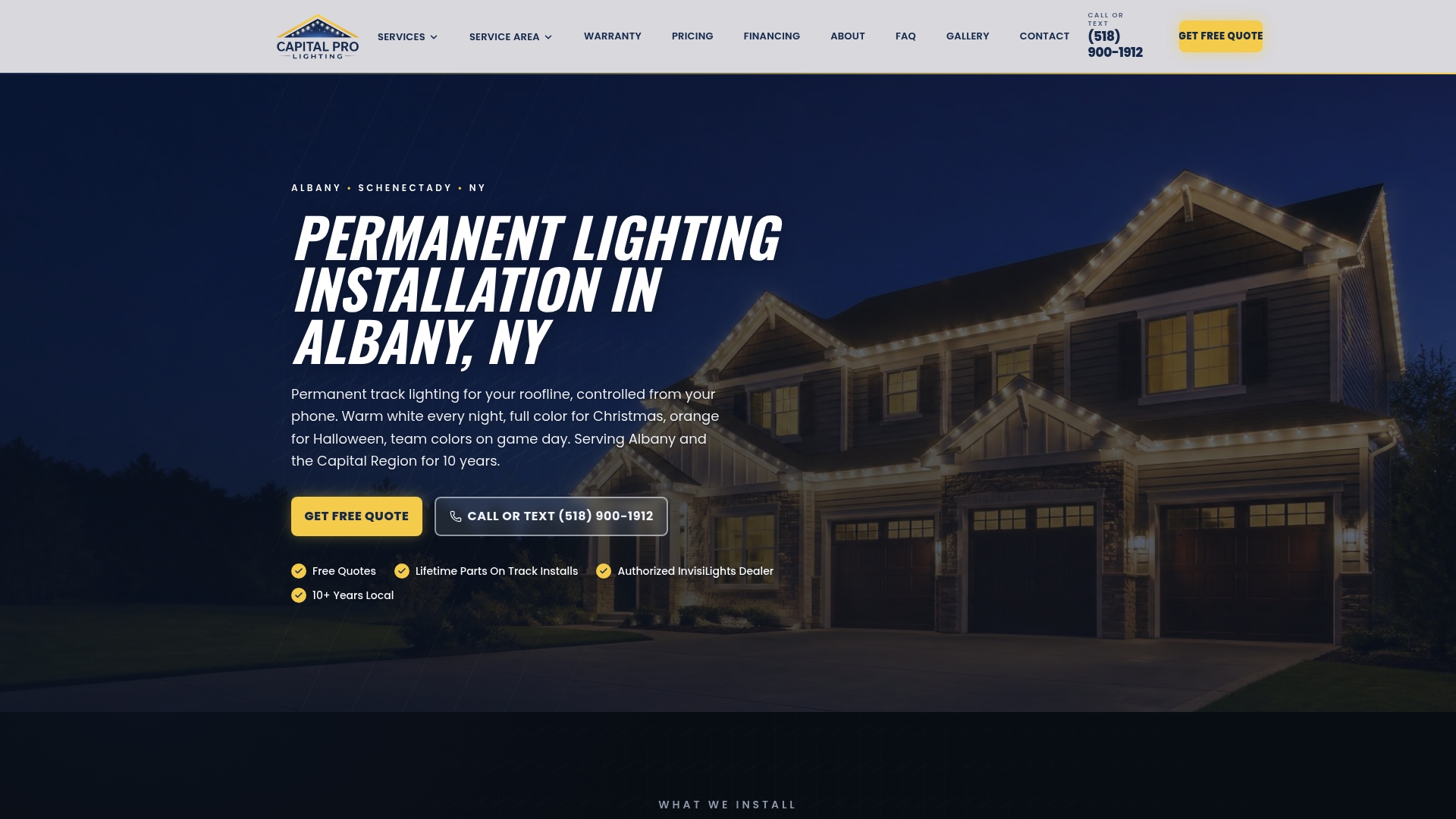
The company installs permanent roofline and landscape lighting with a lifetime parts warranty on every track system, custom 3D-printed brackets for a finish that hides the hardware, and over 10 years of local installation experience across Clifton Park, Saratoga Springs, Guilderland, and the surrounding Capital Region. Financing is available for homeowners who want to spread the cost of a permanent outdoor lighting installation over time rather than paying it all upfront, with flexible financing terms built for residential budgets.
If your porch sconces are outdated or you’re tired of the annual ladder routine, schedule a design consultation to see what a programmable roofline system looks like on a home like yours.
Sources
- How to Design a Lighting Plan That Enhances Curb Appeal at Night - TLC Incorporated
- How Do You Choose Exterior Lighting for Nighttime Curb Appeal? - RKM Homes
- Outdoor Lighting Trends Part 1: Avoid These Lighting Mistakes - Forbes
- Landscape & Architectural Lighting Guide — LED Design | TECHLUMEN
FAQ
What Are the Most Common Curb Appeal Lighting Mistakes?
Overlighting the entire facade, mixing color temperatures between fixtures, poor aiming that creates glare, and relying on cheap solar lights as the main source of path illumination top the list.
What Are the Trends for Outdoor Lighting Heading Into 2026?
Permanent, app-controlled roofline systems using RGBW fixtures are gaining ground because they deliver high-quality white light for daily use and full-color scenes for holidays or events without swapping hardware.
How Can I Improve Curb Appeal Cheaply?
Start with a warm-toned porch sconce and a run of low-voltage path lights. Both projects typically cost under $500 and make an immediate difference after dark.
Is There a Rule of Thumb for Outdoor Lighting Spacing and Color?
Space path lights roughly 6 to 10 feet apart at 100 to 300 lumens, keep every fixture within the 2700 to 3000K warm white range, and build around one primary focal point before adding accents.
Recommended
Ready for a Brighter Home?
Free, no-pressure quotes across the Capital Region.
No obligation. Local installer. Same-day callback.
Reviewed by Capital Pro Lighting
Capital Pro Lighting installs permanent outdoor lighting, architectural lighting, and holiday lighting across Albany and New York's Capital Region. We install UL listed permanent lighting systems and have 10 years in business. More about our team.


