Skip the Ladder: Thanksgiving House Lights That Pay Off in 3+ Holidays
Skip the Ladder: Thanksgiving House Lights That Pay Off in 3+ Holidays
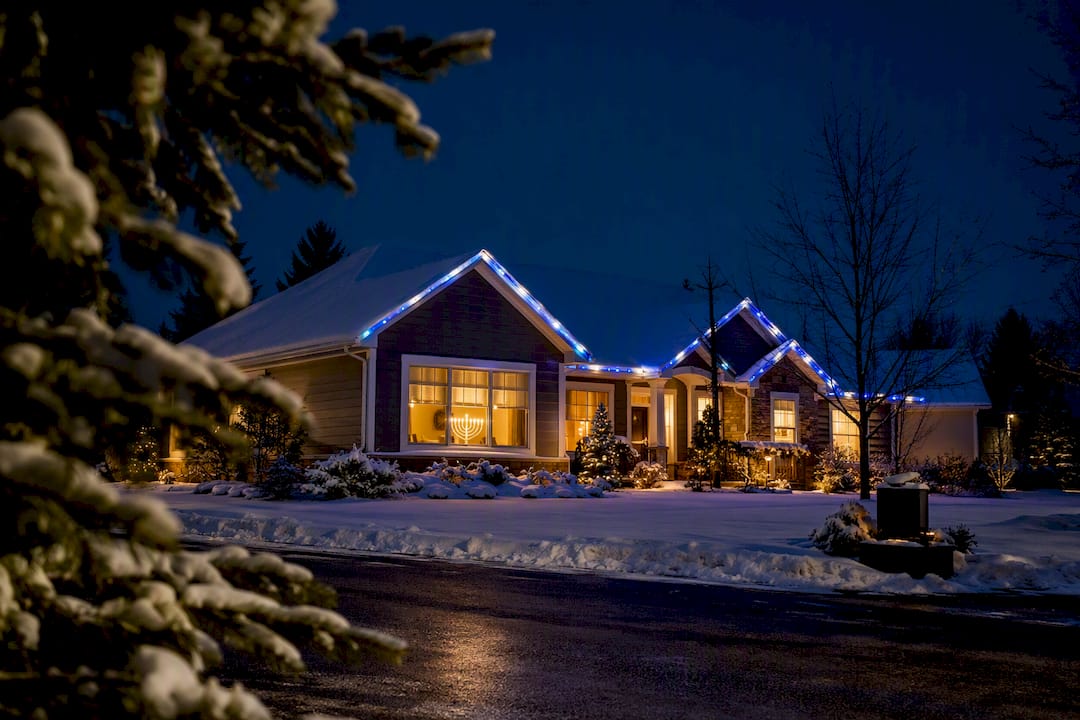
The best Thanksgiving house lights use warm harvest tones (amber, burnt orange, cranberry, gold) layered across your porch, roofline, and tabletop rather than one flat string. Battery lanterns and micro-LEDs handle the indoor accents, while an app-controlled roofline system, like the permanent installs Capital Pro Lighting builds, gives you a warm-amber wash you can flip on for Thanksgiving and change again by December. The rest of this guide covers exact color patterns, hardware choices, safety, and where to shop.
TL;DR:
- Permanent, app-controlled roofline systems offer years of ease, replacing annual ladder work and allowing quick scene changes for multiple holidays.
- RGBW lighting provides true warm white and vibrant harvest colors, with recommended Kelvin ratings between 2700K and 3000K for optimal warmth.
- Mounting outdoor fixtures with proper IP ratings (at least IP65) and using weatherproof connectors significantly reduces failure risks caused by moisture and exposure.
- Indoor lighting should layer low, diffused, and eye-level sources like garland with micro-LEDs and flameless candles for an inviting Thanksgiving atmosphere.
- A traditional harvest palette of amber, burnt orange, cranberry, warm gold, and brown repeated in a consistent rhythm creates a memorable street view, especially when combined with warm roofline washes.
Top Indoor and Outdoor Thanksgiving House Lights Ideas You Can Copy Tonight
You don’t need a lighting designer to make a house look like it belongs on a magazine cover in November. You need layers: one light source at eye level, one low, one warm and diffused. That combination is what separates a genuinely inviting porch from a single strand of white icicle lights left over from last winter.
Indoors, the mantel is your best canvas. A garland threaded with battery-powered micro-LEDs (the rice-grain kind, not big bulbs) gives you texture without wax drips or fire risk. Pair it with a few flameless LED candles in varying heights, and you get the flicker effect of real candlelight with none of the mess.
- Mantel garland with micro-LEDs. Wrap warm-white or amber micro-LEDs through faux magnolia leaves or dried wheat for texture that catches light without looking like a strand of Christmas lights got left up by mistake.
- Battery LED candles on the table. Cluster three to five at different heights down the center of the table; they read as ambient light in photos without competing with your centerpiece.
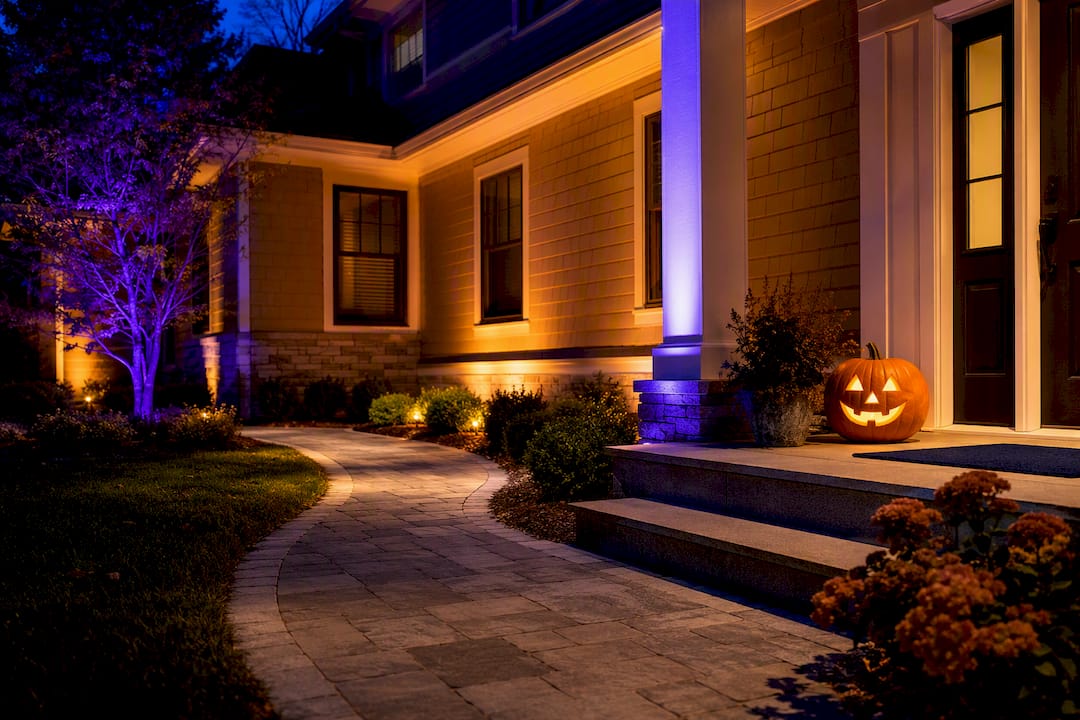
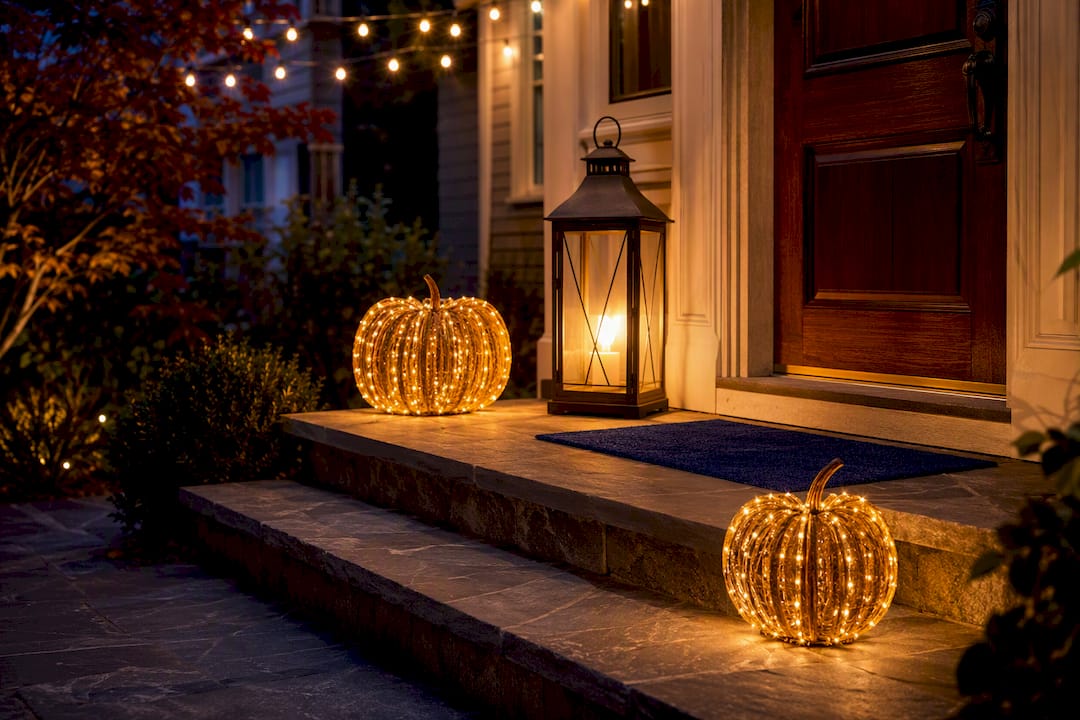
- Light-up pumpkins on the steps. Small battery-powered LED pumpkins on porch steps do double duty as decor and as subtle path lighting for guests arriving after dark.
- Centerpiece lanterns. A single lantern with a warm LED candle inside, set slightly off-center on the table, adds height and a soft glow that doesn’t wash out your food styling.
Outdoors is where the transitional trend really pays off. Design experts have flagged a shift toward pieces that read as general fall décor rather than strictly Thanksgiving, which means the setup you build this month keeps working into early winter, not just for one dinner. Some go-to outdoor moves:
- Pergola or porch canopy string lights. Draped in a loose swag rather than a tight grid, warm-white or amber strings over a porch or pergola create instant atmosphere for evening arrivals.
- LED pumpkins lining the steps. Same idea as indoors, scaled up, ideally paired with a walkway edge so guests aren’t squinting at uneven steps.
- Lantern-lined paths. Solar lanterns spaced every three to four feet along a front path double as safety lighting and as decor, and a roundup of two dozen outdoor Thanksgiving lighting setups shows just how much variety works within that basic idea.
- Tree wraps in warm tones. Wrapping a front-yard tree trunk and lower branches in amber or gold mini-lights adds vertical interest that a flat roofline wash can’t provide on its own.
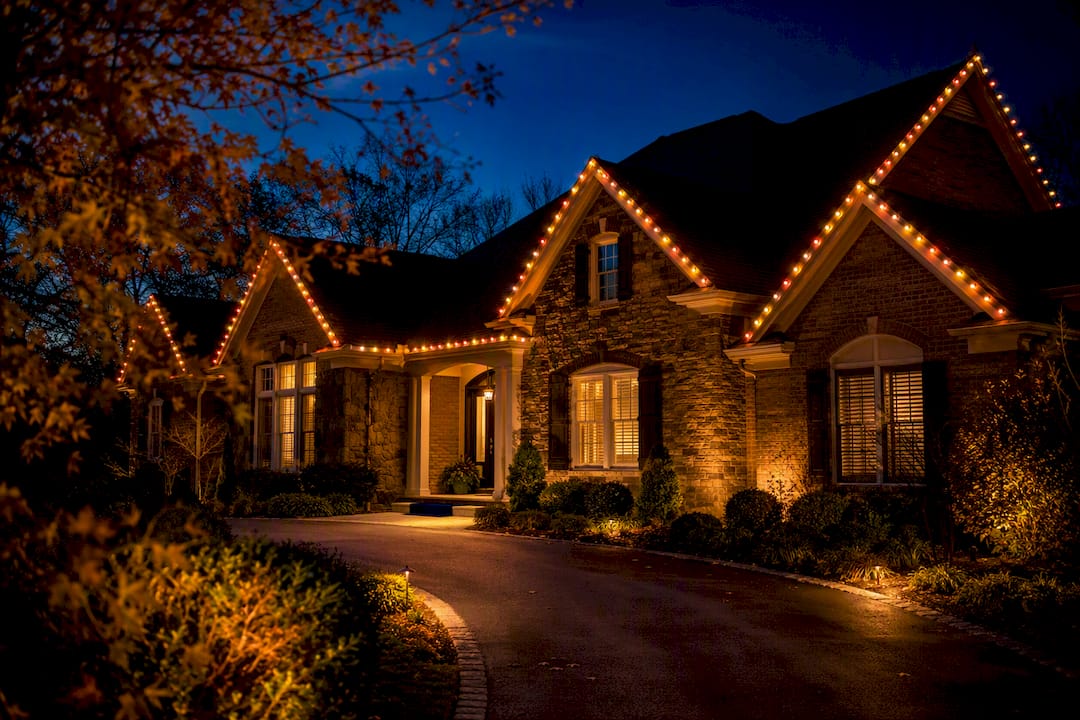
- Roofline wash in amber or cranberry. A continuous warm-toned wash along the eaves is the single most photographed element of a Thanksgiving display, and it’s the one thing a permanent system does better than any temporary strand.
For placement, think about where your guests will actually stand for photos: the front door, the base of the steps, and the dining table. Put your brightest, warmest light near those three spots and let everything else fill in around it.
Pro Tip: Test every outdoor setup after dark, before guests arrive. Colors that look perfect on your phone screen in daylight often shift once the sun goes down. Amber can drift toward a flat yellow, and cranberry can look muddy against brick, so always do a nighttime walk-through the evening before.
Which Types of Lights Work Best for Thanksgiving Displays?
Not every light belongs in every spot. The type of fixture you choose should match how long you want it up, how much weather it needs to survive, and how much control you want once it’s installed.
- Temporary string lights are the cheapest entry point and the most flexible for a single season. They work well on short rooflines, porch railings, and pergolas, but they mean climbing a ladder to hang them and climbing it again to take them down.
- Battery and solar stakes are ideal for steps, planters, and garden beds where running a cord isn’t practical. They’re low-maintenance but depend on sun exposure or battery life, so check them a day or two before Thanksgiving to avoid a dead row of stakes on game day.
- Lanterns and LED candles give you a safe, upscale look for porches and tables without any risk of open flame. They’re the easiest category to layer into an existing display since they don’t require wiring at all.
- Projection lights throw a harvest pattern, like falling leaves or a warm color wash, directly onto your façade from a single ground-mounted unit. They deliver drama fast without any climbing, though the effect is weather-dependent and works best on a flat, light-colored wall.
- Permanent RGBW track systems are mounted once, under the roofline or fascia, and controlled from an app for the rest of the year. Testing and product reviews of these systems consistently point to year-round flexibility and app-based scheduling as the main reason homeowners upgrade from strings.
The RGBW detail matters more than it sounds. Systems that only mix red, green, and blue LEDs produce a muddy, slightly purple white when you try to dial in a clean warm tone. Adding a dedicated white diode, the “W” in RGBW, gives you a true warm white alongside your harvest colors instead of a compromise. That’s a technical detail worth asking about if you’re comparing permanent systems, since it directly affects whether your “warm white” scene actually looks warm.
Harvest Color Palettes That Read as Thanksgiving From the Street
Five colors, repeated in a consistent rhythm, is what turns a random string of lights into a display that looks intentional. Designers call this a “Harvest Table” pattern: warm amber, burnt orange, deep cranberry, warm gold, and a touch of brown or deep red repeating across the eave in the same order, over and over. The repetition is what your eye picks up from the street, even if you can’t consciously count the colors.
If you want something simpler, a single warm-amber wash across the entire roofline still reads as harvest-themed and takes far less planning than a five-color rhythm. It’s the fastest way to bold curb appeal, and it’s forgiving if your house has a lot of window trim or architectural detail that a busier pattern would clutter.
For a more refined, dinner-party feel, try a warm-white base with amber accents at the corners or over the entry. Alternating cranberry and gold works especially well on traditional brick or colonial-style homes, where the contrast reads as festive without looking like a Halloween leftover.
A few technical notes that make or break the effect:
- Keep white light in the 2700K to 3000K range. Anything higher (4000K and up) starts to look clinical and cool, which fights against the whole point of a harvest palette.
- Dial gold slightly toward amber rather than a pure yellow. Straight yellow LEDs can look cartoonish against brick or siding, while an amber-shifted gold reads as candlelight.
- When repeating a five-node pattern, set amber nodes a notch brighter than gold nodes to preserve depth in photos, and keep red or cranberry nodes under roughly 85% saturation to avoid color bleeding on light-colored brick, a detail from harvest lighting pattern guidance that’s easy to overlook until you see it in a photo.
Design trend reporting backs up the bigger picture here: homeowners are increasingly buying transitional fall lighting rather than single-use Thanksgiving pieces, so a well-built harvest palette earns its keep well past the fourth Thursday in November.
DIY Seasonal Setup vs. Permanent Roofline Lighting: Which Fits You?
Three real paths exist here, and the right one depends less on budget and more on how often you decorate and how you feel about a ladder.
The annual seasonal route costs the least upfront. You buy strings, put them up, take them down, store them, and repeat next year. The tradeoff is recurring labor and recurring risk: every fall, someone is back on a ladder, and every string eventually tangles, frays, or fails a bulb test right when you need it.
DIY permanent or semi-permanent kits sit in the middle. These are track-based or clip-based systems you install once and control seasonally, with less annual ladder time than raw strings but still some wiring and mounting work on your end. They suit homeowners who are comfortable with basic electrical work and want app control without hiring it out.
Professional permanent installation carries the highest upfront cost and the lowest ongoing effort. A trained crew handles zone planning, weatherproofing, and transformer placement, and you’re left with a system you control from your phone for every holiday afterward. Reviews of permanent lighting installs consistently frame the long-term convenience as the payoff for heavy decorators, people who’d otherwise be putting up and taking down lights three or four times a year between Halloween, Thanksgiving, and Christmas.
A quick way to sort yourself into one of these three:
- If you decorate once a year and don’t mind storage bins in the garage, seasonal strings are fine.
- If you decorate for multiple holidays and hate the ladder, a permanent system usually pays for itself in saved weekends within a couple of seasons.
- If your roofline is steep, high, or hard to access safely, that alone is a strong argument for paying a professional rather than risking a fall.
- If you want true scene changes (amber for Thanksgiving, red and green for Christmas, blue for a graduation party) without touching a single bulb, only a permanent app-controlled system delivers that on demand.
Pro Tip: Before you commit to any option, walk your roofline and count how many distinct “events” you’d light it for in a year. If that number is three or more, the math almost always favors a permanent install over buying and storing separate string sets for each occasion.
How a Permanent, App-Controlled System Solves Thanksgiving Lighting Hassles
The single biggest complaint about seasonal lighting isn’t the look, it’s the labor: the ladder, the tangled bin, the bulb that’s out right before guests arrive. A permanent system removes that entire cycle by mounting the hardware once and putting every future change in an app.
Permanent outdoor lighting systems often incorporate specific design choices that address common failure points in DIY setups. Its InvisiLights track-mounted option runs the fixtures inside a discreet track along the fascia, so there’s no visible strand when the lights are off, just a clean line during the day. Custom 3D-printed brackets keep the track tight against varied roof profiles instead of the generic clip-on hardware most string lights rely on. A lifetime parts warranty on track installs also means a failed diode years from now isn’t a homeowner’s problem to solve alone.
Behind the scenes, a proper permanent install involves planning most DIYers skip:
- Mapping lighting zones so the roofline, porch, and any accent trees can be controlled independently, not as one all-or-nothing strand.
- Placing the transformer and controller somewhere weatherproof and accessible, rather than wherever the cord happened to reach.
- Setting up app-based scheduling so the harvest palette turns on and off automatically without anyone remembering to flip a switch.
For a homeowner, the outcome is simple: no ladder work each November, a consistent look every night without adjustment, and the ability to swap from a Thanksgiving amber wash to a completely different scene for the next event in seconds.
Safety, Power, and Weatherproofing Checklist for Outdoor Lights
Most outdoor lighting failures trace back to the same handful of mistakes, and they’re all preventable with a five-minute check before you plug anything in.
Start with the fixtures themselves. Anything mounted outdoors, whether it’s a permanent track or a $15 string from a big-box store, should carry an outdoor-rated IP67 or IP68 rating so moisture and dust can’t get into the housing. A light rated only for indoor or “damp” use will fail faster in rain, snow, or even heavy dew than most people expect.
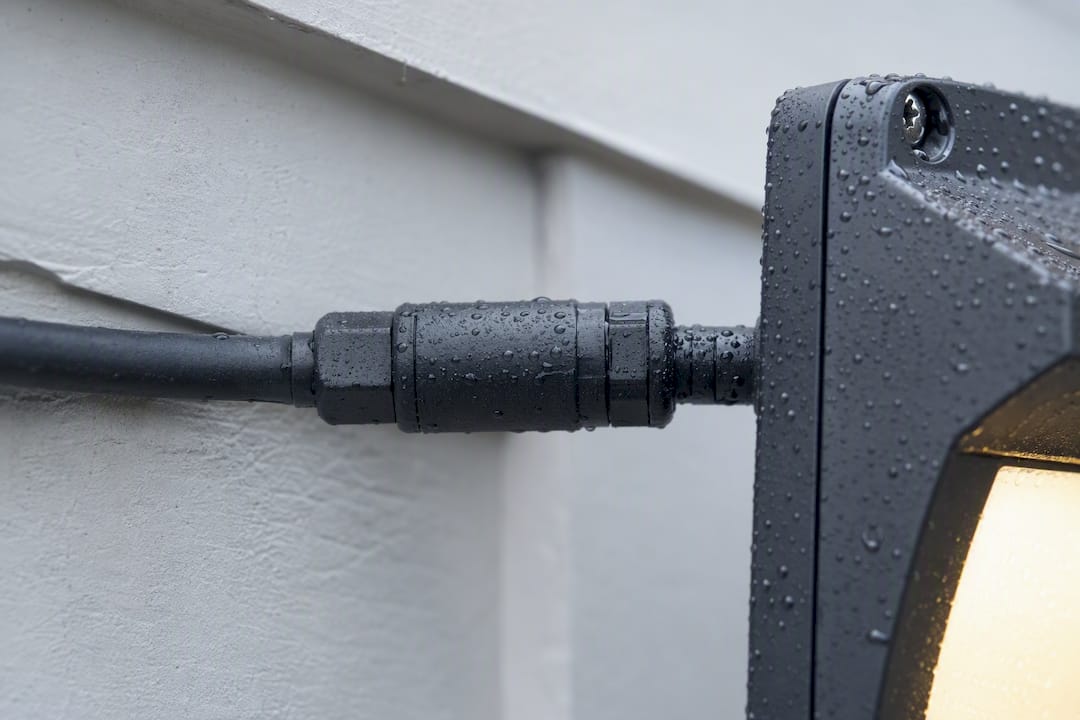
Power matters just as much as the fixture. Run outdoor lighting on a GFCI-protected circuit, and resist the temptation to daisy-chain multiple extension cords end to end just to reach the far corner of the roofline. Every extra connection is another point where water can get in and another spot where a cord can overheat under load.
Before mounting anything, test the full run on the ground first. It’s much easier to swap a dead bulb or a bad connector while the strand is laid out on the lawn than after it’s stapled along a twelve-foot eave. Once everything checks out, secure every outdoor connector with weatherproof tape or a rated in-line housing, and think through where your transformer or controller will sit before you start, ideally somewhere covered and easy to reach for the inevitable reset.
A short troubleshooting list worth keeping on your phone:
- Flickering strand: usually a loose connector or a bulb seated wrong, not a wiring problem.
- One zone goes dark: check that zone’s connector first before assuming a bulb failure.
- Lights dim gradually over the evening: often a sign of an overloaded circuit or too many strands on one outlet.
- App won’t control a permanent zone: confirm the controller’s Wi-Fi connection before troubleshooting the fixtures themselves.
Pro Tip: Keep a spare weatherproof connector and a roll of outdoor-rated electrical tape in your holiday storage bin year to year. It’s the cheapest insurance against a display going dark the night before Thanksgiving.
Where to Buy Thanksgiving House Lights and What to Look For
Shopping for outdoor lighting gets easier once you know which five details actually matter, because most of the differences between a $20 string and a $60 string come down to specs most shoppers never check.
Before adding anything to your cart, look for:
- Waterproof rating. IP44 is fine for a covered porch; anything fully exposed to rain or snow needs IP65 or higher.
- LED type. Standard LEDs are fine for short-term use; look for RGBW specifically if you want a true warm white alongside color options.
- Color temperature. Confirm the packaging lists a Kelvin rating in the 2700K to 3000K range if warm white is the goal.
- App or control compatibility. Some “smart” strings only sync with a single proprietary app that may not support scheduling.
- Warranty and connector quality. Metal-clad or rubber-sealed connectors last longer than the thin plastic clips on bargain strings.
For battery and solar stakes, go solar if the spot gets several hours of direct sun and you want zero cords; go battery if the area is shaded, since solar stakes underperform badly in low light. Plug-in strings make sense for a single season or a rental property. A hardwired, permanent RGBW system makes more sense once you know you’ll want the same roofline lit for more than one holiday a year.
Big-box retailers and seasonal pop-up shops cover most temporary needs just fine. For a permanent system, that’s the point where it’s worth consulting an installer rather than buying track hardware off a shelf, since proper zone planning and weatherproof mounting aren’t a one-size-fits-all product.
Budget tiers roughly break down like this: under $50 typically gets you a single string or a set of battery stakes; $100 to $300 covers a more complete DIY porch and step display; a professionally installed permanent system runs higher upfront but replaces that spending every single year going forward.
What I’d Actually Do With My Own Porch This Year
If you’re only doing one thing this Thanksgiving, do the porch. A five-color harvest rhythm across the whole roofline is impressive, but a well-lit entry, string lights overhead, a couple of LED pumpkins on the steps, one good lantern by the door, is what guests actually walk through and remember. Start small, get that vignette right, and expand from there.
The bigger decision is whether you’re solving this problem once or every year. If you’ve bought your third replacement string in five years, that’s not bad luck, that’s a sign the seasonal approach has already cost you more than a permanent system would have.
Whatever you choose, lean into the transitional trend. A warm harvest palette set up for Thanksgiving doesn’t need to come down the next morning. It works straight through late November and into the early weeks of December before you’d even think about switching to a holiday color scheme.
— Luis T
Capital Pro Lighting: A Permanent Fix for Thanksgiving Ladder Season
If you’re tired of buying, hanging, and storing a new string of lights every fall, one alternative is a permanent, app-controlled roofline system installed once by professionals, so seasonal lighting scenes can be changed easily without climbing a ladder.
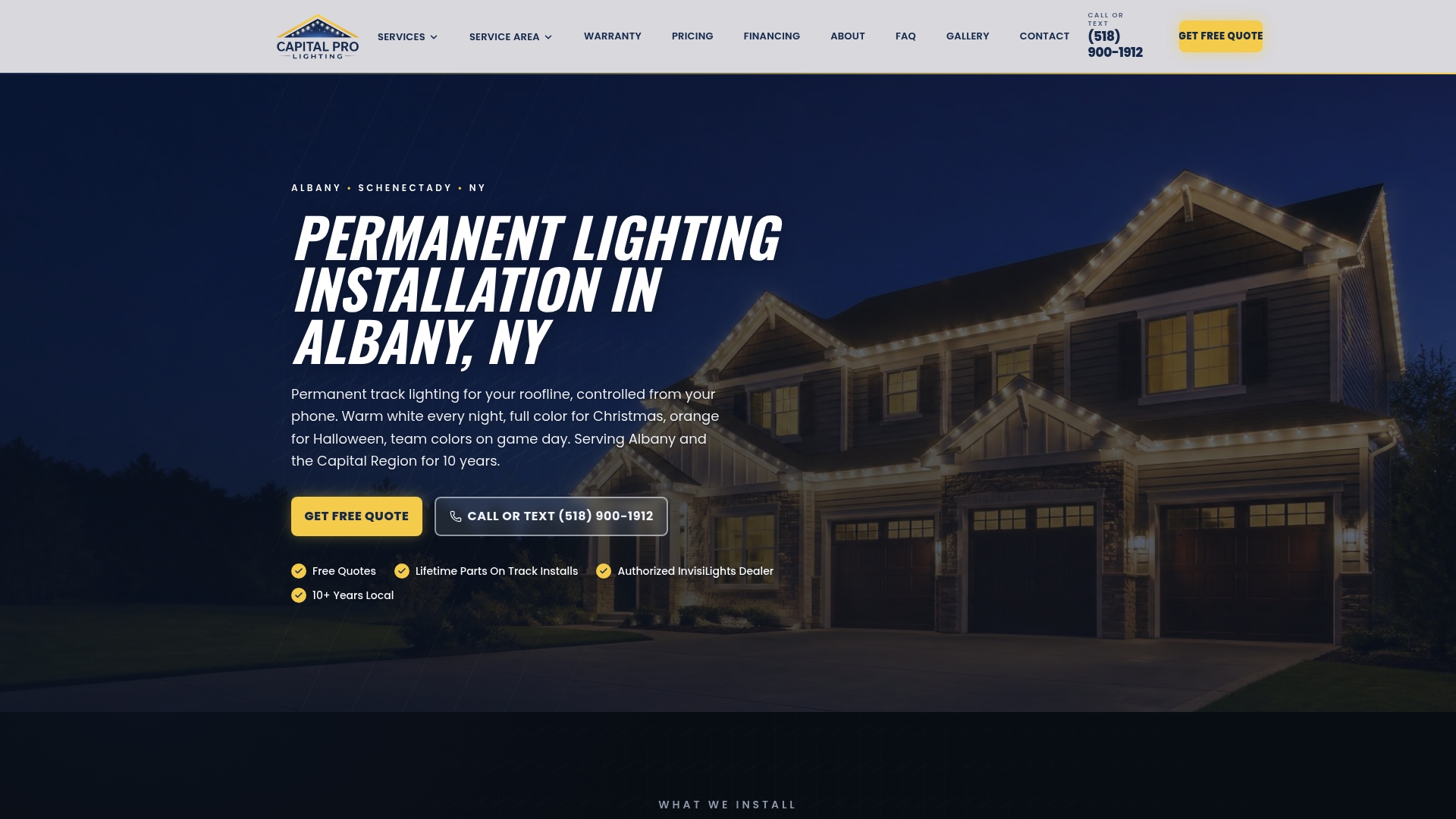
The InvisiLights track-mounted system installs discreetly along your fascia with custom 3D-printed brackets for a clean daytime look, and every track install carries a lifetime parts warranty, so a failed diode years down the road isn’t your problem to fix. Once it’s up, switching from a warm-amber Thanksgiving wash to a red-and-green Christmas scene, or anything else, takes seconds in the app rather than another weekend on a ladder. If you decorate for more than one holiday a year, that math adds up fast.
Take a look at permanent outdoor lighting options for your home, or request a consultation to talk through zone planning and pricing for your specific roofline before the holiday season gets any closer.
Sources
- Harvest Haul: Home décor, hosting trends shaping Thanksgiving 2026 - Gift Shop Magazine
- 24 Thanksgiving Outdoor Light Ideas That Look Incredible in Photos (and Reels) - Trendir
- I tested all the permanent outdoor lights and here’s what I’d buy - Lifehacker
- Holiday Lighting Guide (Permanent Lights, Safety, Power & Troubleshooting) - Portfolio Lighting
FAQ
How Do You Decorate Your House for Thanksgiving?
Layer your lighting rather than relying on one strand: a warm roofline wash, string lights over the porch, LED pumpkins on the steps, and battery candles or lanterns on the table. Stick to a harvest palette of amber, burnt orange, cranberry, and warm gold so the whole display reads as one cohesive scene rather than scattered accents.
How Much Does It Cost to Put Permanent Christmas Lights on Your House?
Permanent lighting pricing depends on your roofline size and the system you choose. Capital Pro Lighting’s InvisiLights track-mounted option starts from 2500 USD one-off, while the InvisiClips trackless option starts from 2000 USD one-off, and current pricing details are available on the Capital Pro Lighting site.
What Are the Latest Trends in Christmas Lights for Houses?
The biggest trend is transitional, app-controlled color: instead of buying separate light sets for each holiday, homeowners are installing one permanent RGBW system and switching palettes by phone, moving from a warm harvest wash in November to red and green in December without touching a single bulb.
What Are the Best Christmas Lights for a House?
The best option depends on how often you decorate. RGBW systems give the cleanest warm white and truest colors, and permanent track-mounted installs remove the yearly ladder work entirely, while seasonal LED strings remain the lower-cost choice for a single display each year.
What Types of Lights Work Best for a Thanksgiving Porch?
A mix of warm-white or amber string lights overhead, a few flameless LED candles or lanterns at table height, and LED pumpkins along the steps covers most porches well. Keep the color temperature between 2700K and 3000K so the whole setup reads as warm rather than stark white.
Recommended
Ready for a Brighter Home?
Free, no-pressure quotes across the Capital Region.
No obligation. Local installer. Same-day callback.
Reviewed by Capital Pro Lighting
Capital Pro Lighting installs permanent outdoor lighting, architectural lighting, and holiday lighting across Albany and New York's Capital Region. We install UL listed permanent lighting systems and have 10 years in business. More about our team.