Homeowners: 58% of Buyers Notice Permanent Lighting, Install It Like a Pro
Homeowners: 58% of Buyers Notice Permanent Lighting, Install It Like a Pro
Permanent outdoor lighting generally boosts perceived home value and can help a property show better and sell faster, but it’s not a line item an appraiser adds to your valuation. The gain shows up strongest in competitive markets, on homes with architecture or landscaping worth showing off after dark, and only when the installation looks professional. Cheap fixtures, visible wiring, or harsh light can just as easily undercut the sale a homeowner was hoping to speed up.
TL;DR:
- Permanent outdoor lighting enhances curb appeal in the evening, but only when professionally installed, layered, and with warm light temperatures.
- Its impact on resale value is indirect, helping attract buyers and generate higher offers, especially in competitive and upscale markets.
- Costs vary based on home size and system complexity, with LED fixtures lasting over a decade and significantly reducing energy expenses.
- Visible wiring, mismatched fixtures, or lack of controls can diminish perceived value and give the impression of neglect at showings.
- Targeted entry and pathway lighting offer the best return for most homes, while full roofline systems are more suited to high-end properties expecting such polish.
How Permanent Lights Add Value to Curb Appeal and Everyday Living
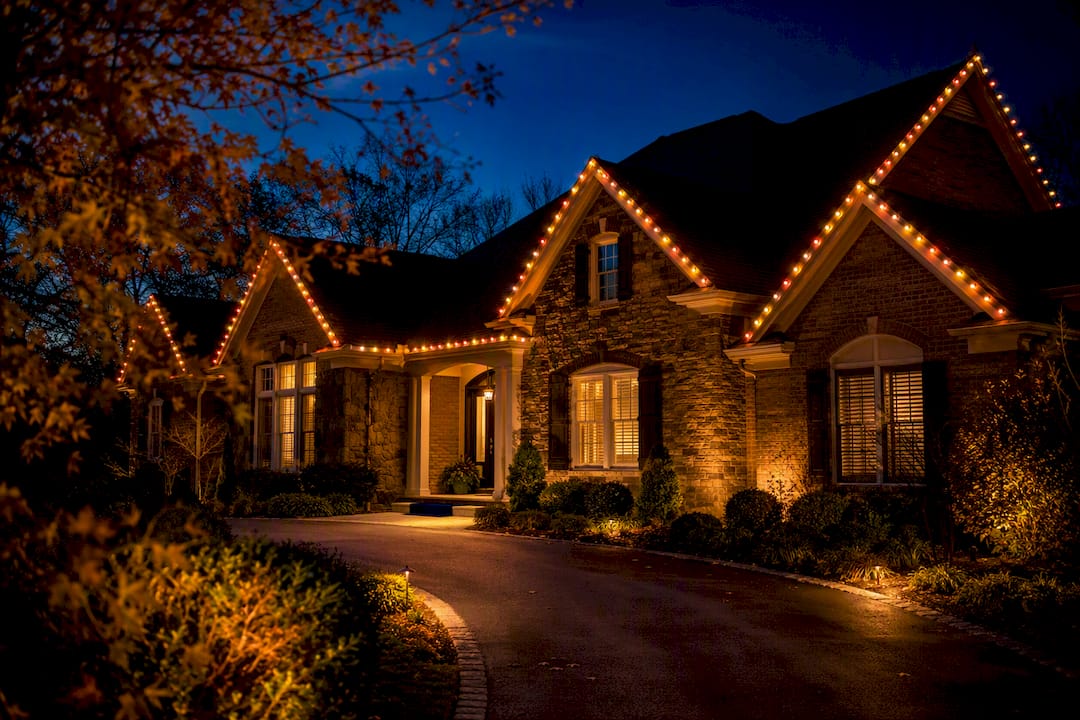
Curb appeal has always been judged in daylight, which is a problem, because most serious house hunting today happens after work, in the dark, from a phone screen. Permanent lighting is what extends your home’s best features into those hours. A roofline that photographs well at 2 p.m. is invisible at 7 p.m. unless something is lighting it up.
Buyers read lit exteriors as a signal of maintenance, not just style. A home with clean, working lighting suggests the owner has kept up with the less visible stuff too, wiring, drainage, roofing. That “halo effect” is well documented by lighting professionals who note that design quality and durability, not fixture count, drive the resale impact. Ten dollar solar stakes scattered across a lawn don’t create that impression. A thoughtfully layered system does.
Lighting also makes outdoor space usable, and usable space is what buyers pay for. A patio nobody can see after sunset is a patio buyers mentally erase from the square footage. Lit walkways, illuminated steps, and a glowing entry turn a showing into something closer to a lifestyle pitch.
There’s a safety dimension too. Buyers touring at dusk notice whether they can see the front steps without a phone flashlight. Visible stairs and lit paths lower the subconscious friction that makes a buyer hesitate.
Design choices that separate a value-adding system from a distraction:
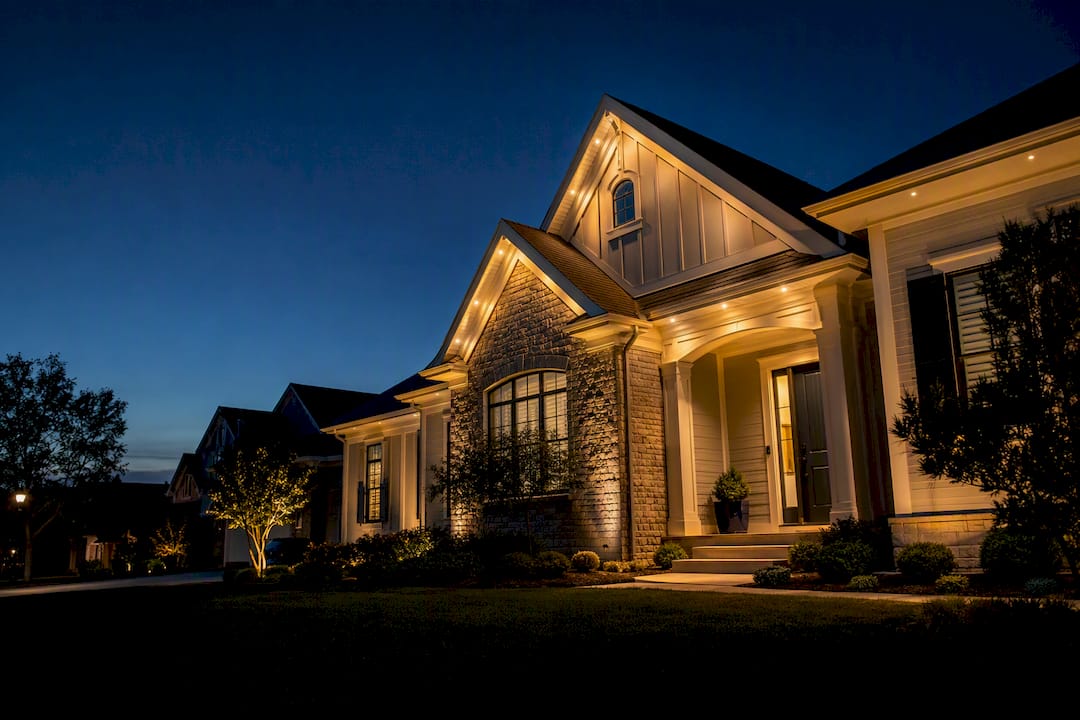
- Layering multiple light sources instead of relying on one bright floodlight
- Sticking to warm white color temperatures (around 2700K to 3000K) rather than cold blue-white tones
- Aiming fixtures to avoid glare into windows or a passerby’s eyes
- Highlighting architectural features, columns, gables, stonework, rather than lighting everything equally
- Keeping brightness proportional to the size of the space, not maxed out
Pro Tip: Walk your own property after dark before you commit to a design. Note which features disappear into shadow and which ones already catch the eye, that’s your lighting priority list, not a generic fixture count.
A National Association of Realtors survey found that 58% of buyers rated exterior lighting as important or very important when evaluating a home. That’s not a minor preference. It’s a majority of buyers actively weighing something most sellers treat as an afterthought.
What the Research Says About Permanent Lighting and Resale
That’s a survey response, not a controlled experiment, but it lines up with what showing agents see: a well-lit exterior photographs better for listings and performs better at evening open houses.
On the return side, the American Society of Landscape Architects has reported that landscape improvements can return a strong multiple in home value for every dollar spent, a wide range that reflects how much local market conditions and installation quality matter. Lighting sits inside that broader landscape category rather than as its own isolated metric, which is worth knowing before you expect a single lighting project to move the needle on its own.
Here’s the appraisal reality nobody likes to hear: an appraiser is not going to write “+$8,000 for roofline lighting” on a comparable sales report. Appraisals lean on comparable properties and square footage, not accent lighting. Where lighting earns its keep is upstream of the appraisal, in getting more buyers through the door, generating stronger first impressions, and supporting a higher initial offer that then gets appraised against.
The effect is strongest under specific conditions:
- Upscale and move-up neighborhoods where buyers expect polish
- Competitive markets with multiple similar listings, where small differentiators swing decisions
- Homes with mature landscaping or distinct architecture that lighting can actually showcase
- Listings marketed with evening photography or video, where lighting becomes part of the pitch
A modest ranch in a market with little competition won’t see the same lift as a colonial in a neighborhood where every other house is also staged to sell.
What Permanent Lighting Costs and How Long It Lasts
Installed cost for a permanent lighting system typically depends on home size, the number of fixtures, and how much control complexity you want, dimming zones, color changing, app scheduling, versus a simpler fixed system. Bigger rooflines with more architectural detail need more fixtures and more mounting work, which moves the price up. A basic single zone system costs less than a full color changing setup with app control across multiple zones.
LED fixtures are the standard now, and for good reason. Quality LED landscape and roofline fixtures typically run 30,000 to 50,000+ hours before significant output loss, which translates to well over a decade of nightly use. Drivers and controllers, the components that actually fail first, usually need attention or replacement somewhere in the 7 to 10 year range depending on quality and exposure.
Energy use is where LEDs separate themselves from older halogen systems. LED fixtures now account for most professional exterior lighting installs and use about 75% to 80% less electricity than comparable halogen setups, which keeps the monthly operating cost low even when a system runs every night for hours.
What actually protects resale value over the life of the system:
- Concealed wiring routed through conduit, not stapled along a fascia board where it degrades and shows
- A manufacturer or installer warranty covering parts, not just labor
- Durable, weather-rated mounting hardware rather than adhesive clips that fail within a season
- Fixtures rated for the climate zone, since freeze-thaw cycles are hard on cheap housings
A system with visible wiring or a busted fixture at the time of a showing does the opposite of adding value. It reads as neglect, the exact impression a lighting upgrade was supposed to prevent.
How to Decide If Permanent Lighting Is Worth It for Your Home
Run through a short checklist before committing:
- Does your neighborhood support it? Lighting adds the most value where buyers already expect a polished exterior.
- Does your home’s architecture give lighting something to highlight? Columns, stonework, and rooflines with character benefit more than flat, featureless facades.
- What’s your realistic timeline? If you’re listing within the next year, prioritize lighting over projects with longer payback windows.
- Is your landscaping mature enough to light? Lighting on immature or sparse landscaping has less to work with.
- Are you staying long-term or selling soon? Homeowners staying put can prioritize personal enjoyment over pure resale math.
Questions worth asking any installer before you sign a contract:
- What’s covered under warranty, parts, labor, or both?
- Is the wiring concealed, and how is it routed and protected?
- Can I see photos of completed installs, not just renderings?
- Do you offer dimming, scheduling, or app-based controls?
- Can you provide references from local homeowners?
- What happens if a fixture fails outside the warranty period?
Watch for red flags: visible wiring runs, mismatched color temperatures between fixtures, fixtures so bright they wash out architectural detail, or a system with no dimming or scheduling options at all.
For most mid-market homes, targeted entry and pathway lighting delivers the strongest return because it solves an immediate safety and usability problem at a lower cost than a full roofline system. Full decorative roofline lighting tends to make more sense in higher-end contexts where buyers already expect that level of polish throughout the property.
A Local Installer’s View on What Actually Moves the Needle
Ten years of installing permanent lighting across the Capital Region teaches you which details homeowners obsess over and which ones actually matter to a future buyer. App controlled color options on a roofline system are a client favorite for holidays and game days, but the detail that protects resale value is quieter: a lifetime parts warranty on track installations and 3D printed brackets designed for a clean, nearly invisible finish.
Small installs often outperform expectations. A single color matched track along the front roofline, paired with a couple of path lights, can transform a showing without the cost of a full-property system. The mistakes that hurt value are consistent across installers: exposed wiring, mismatched fixture brightness, and mounting hardware that looks bolted on rather than built in. Homeowners rarely notice these details in daylight. Buyers touring at dusk notice immediately.
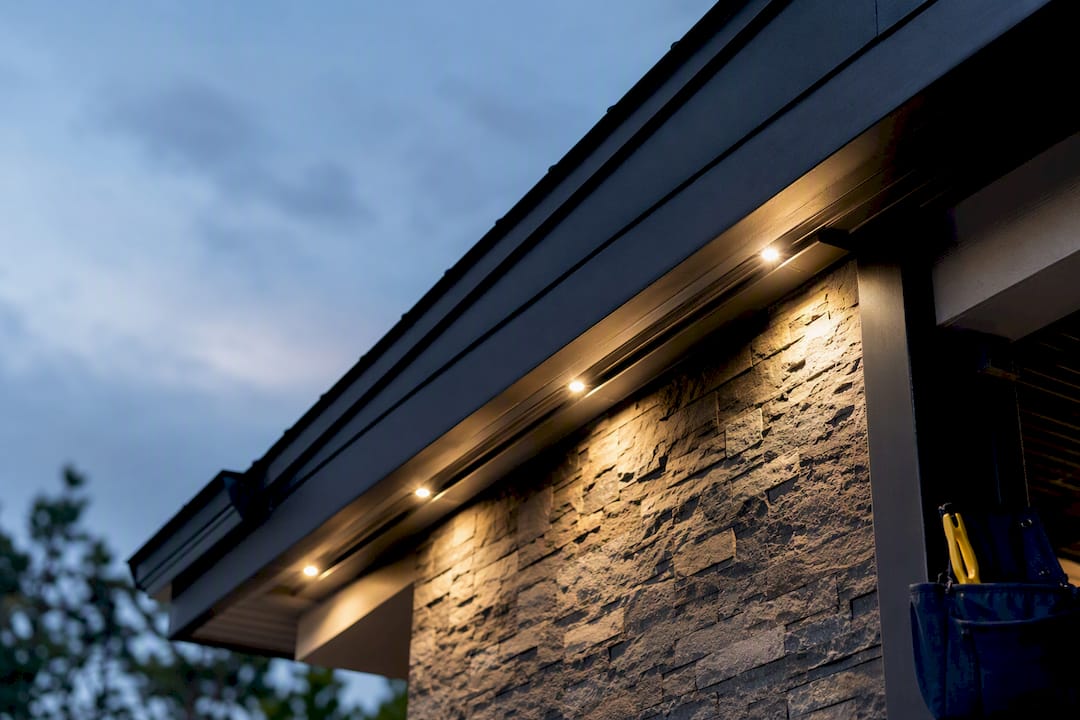
Permanent Lighting vs. Seasonal and Temporary Lighting
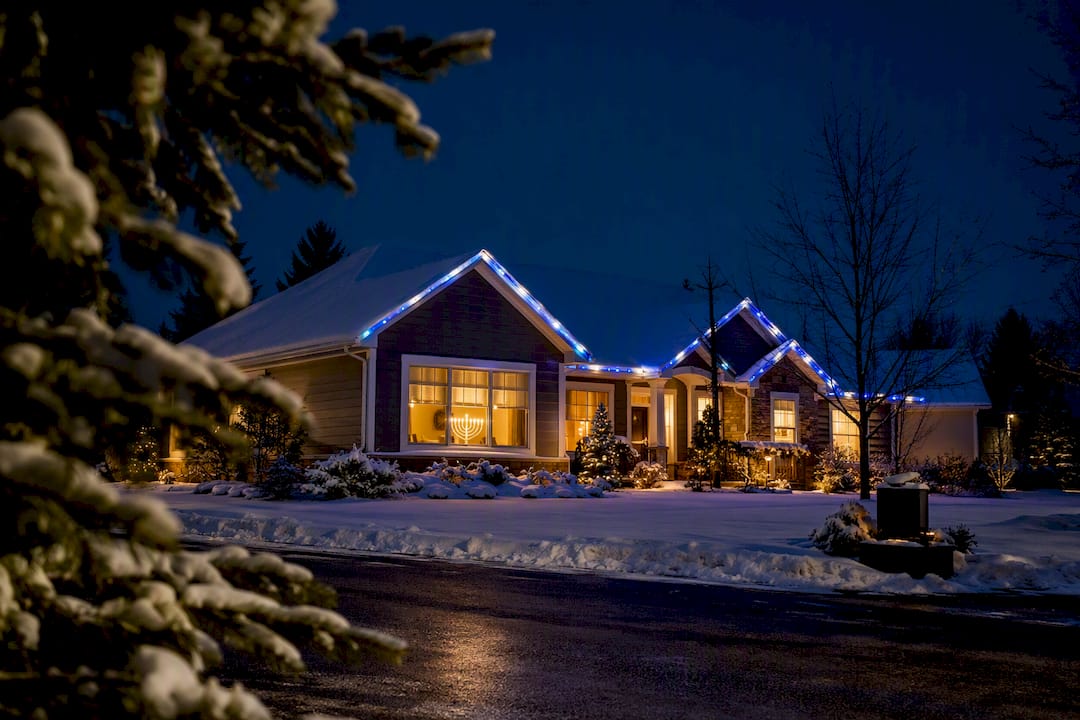
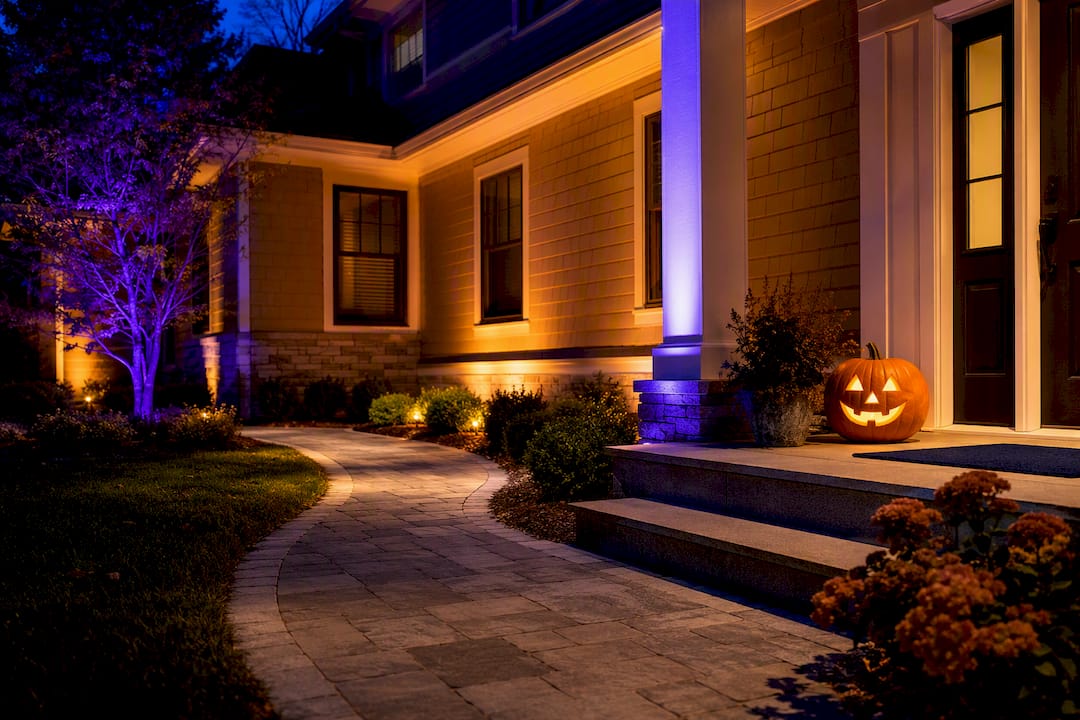
Seasonal string lights and temporary holiday displays have their place, but they don’t do the same job as a permanent system when it comes to resale. Temporary lighting is inconsistent by nature. It goes up for a few weeks and comes down, which means it’s absent for the vast majority of showings and listing photos.
Permanent installations solve that gap by staying lit year round, which means the lighting is present for every showing, not just the ones scheduled around a holiday. They also tend to look more finished, since track mounted or trackless systems are designed to sit flush against rooflines rather than draped and clipped.
The value comparison isn’t really close once you factor in labor. Temporary lighting requires ladder work every season, someone untangling strands, replacing bulbs, and taking everything down again, with a real risk of damage to gutters or fascia from repeated clip attachment. Permanent systems eliminate that recurring labor and the wear it causes.
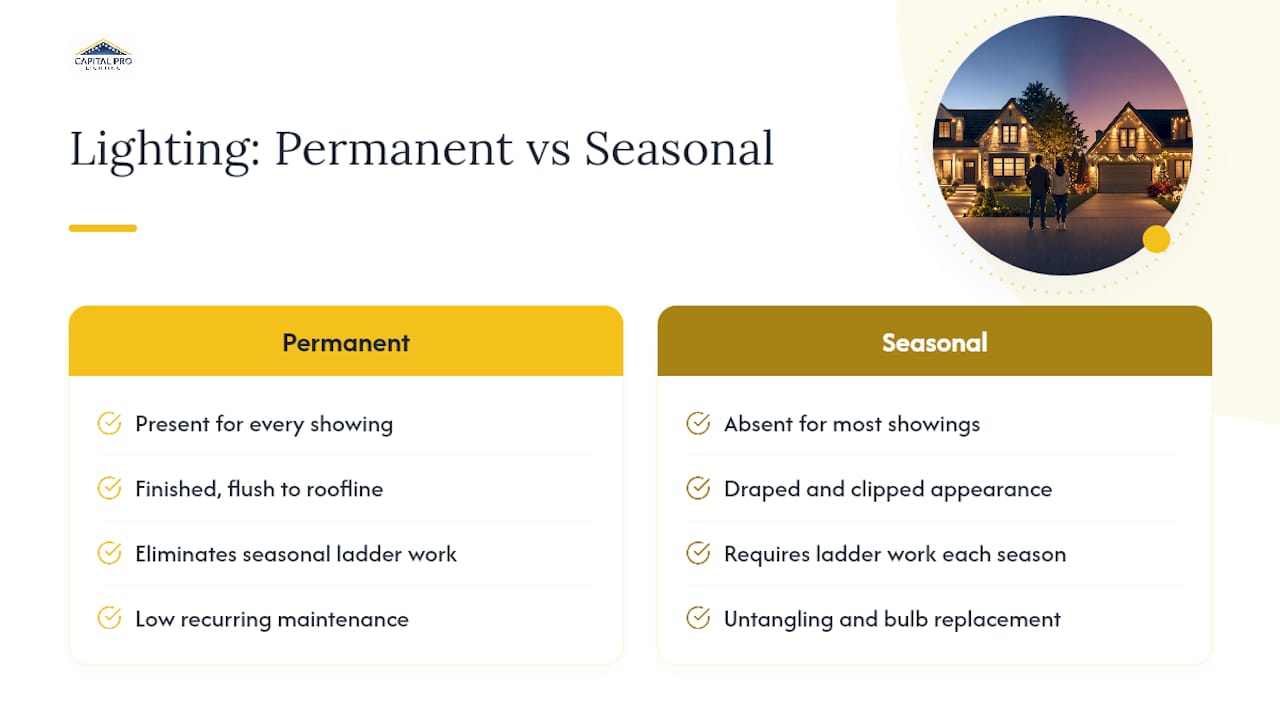
Where seasonal lighting still wins is upfront cost and flexibility for homeowners who aren’t planning to sell and just want a festive look for a few weeks a year. But for anyone thinking about resale, evening showings, or reducing the ladder-and-clip routine altogether, a permanent system carries the exterior’s presentation through every season a home might actually be on the market.
Editorial Take: Lighting as an Upgrade, Not a Decoration
The research supports a narrower claim than most articles admit: lighting helps sell homes faster and shapes buyer perception, but it isn’t a guaranteed appraisal bump, and treating it like one sets homeowners up for disappointment.
Conventional advice oversells fixture count, more lights, better results, when the data and practitioner experience both point to design and installation quality as the real drivers. A dozen mismatched, glaring fixtures do less for a home than three well-placed ones on a dimmer.
If you’re prioritizing one thing, prioritize installation quality over scope. A small, professionally executed entry and pathway system will outperform a sprawling, sloppily wired roofline setup every time a buyer walks up at dusk. Start narrow, get the fundamentals right, warm color temperature, concealed wiring, durable mounts, and expand from there if your budget and home support it.
— Luis T
Capital Pro Lighting installs permanent lighting with concealed wiring, durable mounts, warm color temperature, and a warranty that covers parts. Their installations include app-controlled color changes for holidays and everyday use, a warranty on track installations, and custom 3D printed brackets for a clean finish.
Professional installation is what separates a lighting system that helps resale from one that quietly works against it. Loose wiring, mismatched fixtures, and DIY mounting hardware are exactly the details buyers notice at a dusk showing, and exactly what a trained installer avoids from the start. If you’re weighing a full system, the permanent outdoor lighting page walks through options and warranty details, and you can request a quote to see what a design tailored to your roofline and landscaping would look like.
Sources
- Remodeling Impact Report: Outdoor Features | National Association of Realtors
- Lighting upgrades that will increase your home’s value | The Spruce
- Landscape Lighting Statistics & Data 2026 | NightLight Pros
FAQ
Do Permanent Lights Increase Home Value?
Permanent lighting generally supports perceived value and helps homes show better in the evening, though it rarely appears as a direct line item on an appraisal. The NAR survey found that a majority of buyers rate exterior lighting as important or very important, which translates into stronger first impressions and often faster sales.
How Much Does It Cost to Put Permanent Lighting on Your House?
Cost depends on home size, fixture count, and control complexity, with simple single zone systems costing less than full color changing setups with app control. Capital Pro Lighting’s InvisiLights Track Mounted system starts from 2500 USD one-off and its InvisiClips/Trackless option starts from 2000 USD one-off, both one-time installation costs.
Are Permanent Lights Worth It?
For most homeowners in competitive markets or with distinct architecture, yes, especially since targeted entry and pathway lighting tends to deliver the strongest return for mid-market homes. The value depends heavily on installation quality, cheap or poorly wired systems can undercut the benefit entirely.
How Many Years Do Permanent Lights Last?
Quality LED fixtures typically last 30,000 to 50,000+ hours of use, which usually means well over a decade of nightly operation before noticeable output loss. Drivers and controllers tend to need attention sooner, often in the 7 to 10 year range, which is why a warranty covering parts matters more than most homeowners realize.
Recommended
Ready for a Brighter Home?
Free, no-pressure quotes across the Capital Region.
No obligation. Local installer. Same-day callback.
Reviewed by Capital Pro Lighting
Capital Pro Lighting installs permanent outdoor lighting, architectural lighting, and holiday lighting across Albany and New York's Capital Region. We install UL listed permanent lighting systems and have 10 years in business. More about our team.