
Homeowners: App Controlled Permanent Soffit Lighting That Looks Invisible by Day
Homeowners: App Controlled Permanent Soffit Lighting That Looks Invisible by Day
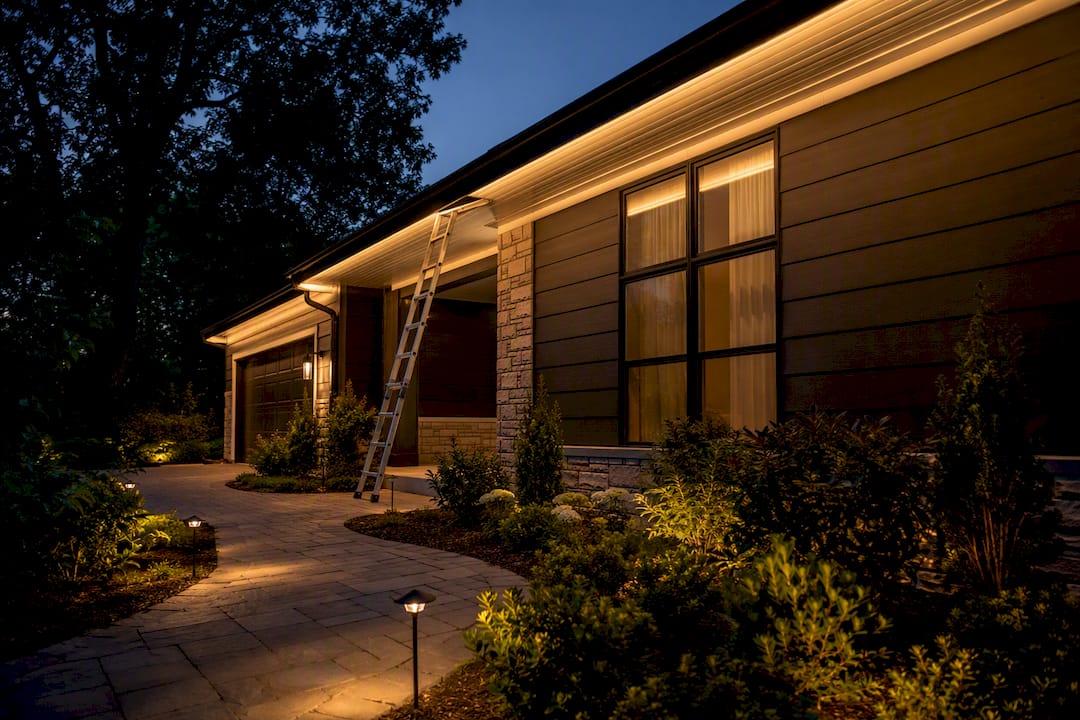
The best permanent soffit lighting solution for most homeowners is a low-profile, channel-mounted LED roofline system paired with a smart controller that changes color from a phone app. It delivers year-round curb appeal without seasonal ladder work, and once it’s wired and zoned correctly, it looks clean in daylight and dramatic at night. The rest comes down to product choice, installer quality, and how the system gets planned before a single bracket goes up.
TL;DR:
- Channel-mounted LED roofline systems with smart controllers cost between $2,000 and $8,000 depending on scope, with higher prices for larger or more complex projects.
- Proper installation includes a measured site survey, labeled zone design, concealed wiring, and fixtures aimed and tested before completion.
- Wi-Fi-based smart controls with firmware support and local fallback provide the best reliability for app-controlled scenes and future-proofing.
- Daytime appearance hinges on matching channel finish and discreet brackets; visible hardware and exposed wiring reduce the system’s aesthetic appeal.
- Regular maintenance involves occasional cleaning and firmware updates, with warranty coverage typically limited to parts and based on thorough, written policies.
What Types of Permanent Soffit Lighting Exist?
“Soffit lighting” gets used loosely, but three distinct product families fall under it, and picking the wrong one for your house is the most common regret homeowners report after the fact.
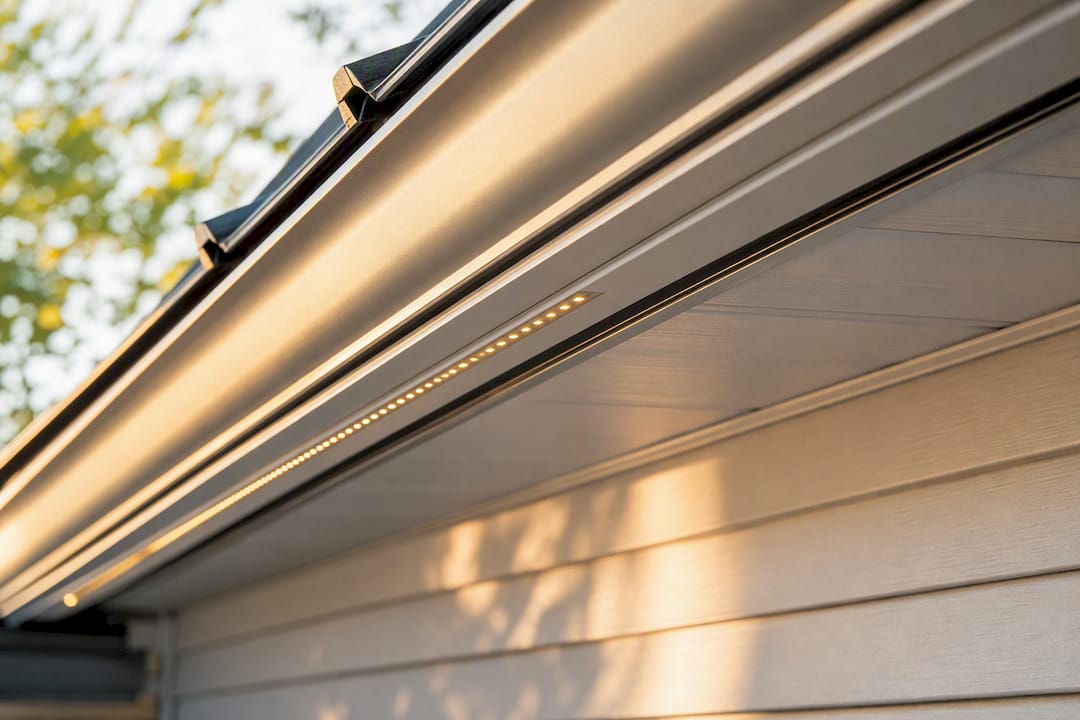
Channel-mounted eave and roofline strips run LED diodes inside an aluminum or PVC track that follows the fascia or soffit edge. These work best for outlining a home’s architecture, especially on longer runs where you want an unbroken line of light along a peak or gable.
Recessed or puck-style soffit fixtures sit flush in the soffit itself, aimed downward to wash a porch, entryway, or walkway. They give a softer, more functional glow rather than a decorative outline, and aiming them correctly matters more than most homeowners expect. Aim too steep and you get hot spots; too shallow and the light spills onto siding instead of the ground.
Permanent string and eave-light systems mimic holiday string lights but stay up year-round and connect to an app. Product roundups show these tend to be more consumer-friendly and DIY-oriented, while channel-mounted architectural systems give a more finished, professionally installed appearance.
- Channel/track strips: best for long rooflines and architectural outlining
- Recessed pucks: best for entry, porch, and walkway washes
- Permanent string systems: best for holiday-style flexibility with less structural commitment
How Much Does Permanent Soffit Lighting Cost?
Expect a professionally installed system to run into the low thousands of dollars, with the final number driven far more by scope than by the fixtures themselves. A Brightify cost analysis puts focused residential projects around $2,000 to $4,500, larger or multi-level homes around $4,500 to $8,000 or more, and complex or multi-elevation projects beyond that as custom work.
What actually drives the quote:
- Total footage and number of elevations covered
- Product tier (basic single-color vs. full RGB smart systems)
- Number of controllable zones
- Access difficulty (ladder work vs. lift or scaffolding)
- Wiring routing, trenching for underground runs, and controller placement
- Permit requirements, especially for line-voltage work
Pro Tip: Get quotes broken down by labeled line, not just total footage. A proposal that says “128 feet of roofline” tells you nothing; one that lists “front gable, garage peak, porch overhang” tells you exactly what you’re paying for.
Sample project breakdowns from Design Transition Studio show how materials, labor, electrical work, and permits stack up differently depending on house size, and separate installation cost calculators back up similar per-fixture benchmarks. Compare proposals on scope and included zones, not on a single per-foot number.
What Does Permanent Soffit Lighting Installation Involve?
A professional installation follows a fairly predictable sequence, and knowing it helps you spot a rushed or undersized proposal before you sign it; for example, coordinating with roofers and contractors often seen with Crowley Exteriors ensures smooth exterior work alongside lighting installation.
- Site survey and measured design. A technician walks the roofline, measures every run, and produces a labeled design showing which lines belong to which zone.
- Documented proposal. You should receive a written scope naming each elevation, the fixture type, controller location, and warranty terms, not a verbal estimate.
- Access setup. Depending on roof height and pitch, installers use ladders, scaffolding, or a lift. Steeper or taller homes push labor costs up regardless of footage.
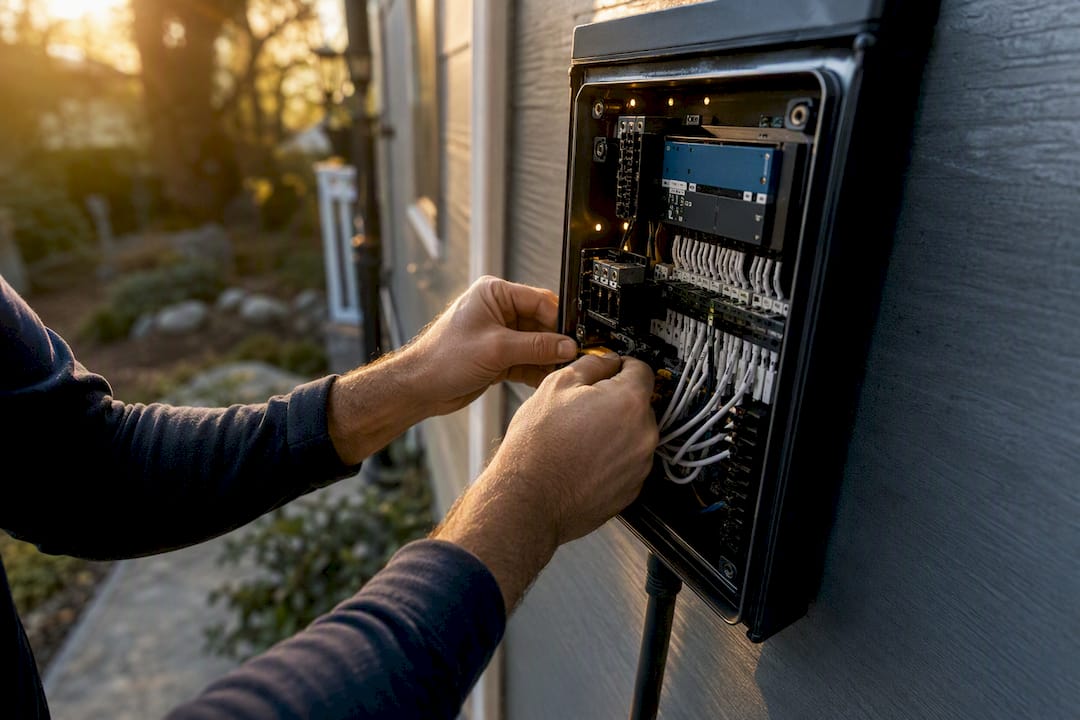
- Wire routing and power placement. Cable runs get concealed along the fascia or soffit, and the controller and transformer get mounted somewhere accessible for future service.
- Testing, aiming, and commissioning. Fixtures get powered on, checked zone by zone, and paired to the app before the crew leaves.
Most residential jobs, once scheduled, wrap in a single day for smaller homes; larger or multi-elevation projects can stretch to two or three. Voltage choice matters here too: low-voltage systems are generally simpler and cheaper to install, while line-voltage runs often require a licensed electrician and local permitting.
What Smart Controls Should You Prioritize?
Not every “smart” system is built the same, and the difference shows up years later, not on install day.
Wi-Fi bridges connect your lighting directly to your home network and usually offer the richest app features, but they depend on your router staying online. Local controllers store scenes on the device itself, which makes them more resilient to internet outages. Hardwired timers are the simplest and least flexible option. Hub or cloud-based systems sit in between, often trading some independence for easier multi-zone management.
- Prioritize saved scenes and schedules over flashy one-time effects
- Confirm the system supports multiple zones controlled independently
- Ask whether firmware updates are ongoing or the product line has been discontinued
- Check whether control transfers cleanly to a new phone or a future homeowner
Reviewers testing consumer smart lighting consistently flag firmware support and account transferability as the features people regret not checking upfront.
Pro Tip: Ask your installer what happens to your system if the app’s parent company shuts down. A good answer names a local-control fallback; a shrug is your answer too.
What Does the System Look Like During the Day?
A permanent soffit system that looks great lit up but sloppy at noon defeats half the purpose. Channel color and profile should match or disappear into your existing trim, whether that’s white, bronze, or black. Mounting hardware matters just as much as the channel itself; visible screws, exposed clips, or sagging brackets are the fastest way to make a premium system look cheap.
- Match channel finish to fascia or soffit color for a near-invisible daytime profile
- Use discrete brackets, including 3D-printed options shaped for your specific soffit profile, to avoid visible hardware
- Route and clip wiring behind the fascia line rather than letting it run exposed
- Choose diffused lenses over bare LEDs to cut glare and reduce spill onto neighboring property
Daytime appearance is one of the most overlooked factors homeowners cite after living with a system for a season.
What Maintenance and Warranty Coverage Should You Expect?
Permanent doesn’t mean maintenance-free, but it should mean low-maintenance if the install was done right. LED fixtures themselves are rated for tens of thousands of hours, so the components most likely to need service are drivers, transformers, and connectors exposed to weather cycling.
- Ask what the fixture warranty covers versus the controller warranty, since they often differ
- Confirm whether “lifetime parts warranty” applies to the whole system or just select components
- Expect occasional cleaning and a firmware check once or twice a year
- Get warranty and support terms in writing, not just verbal assurance at the sales visit
A written warranty policy that spells out parts coverage separately from labor coverage is worth more than a verbal promise, no matter how confident the installer sounds in your kitchen.
How Do You Choose the Right Installer?
Picking an installer is where most of the long-term satisfaction (or regret) with permanent soffit lighting actually gets decided, well before the first fixture goes up.
- Request a measured design, not a rough estimate. It should label every line and zone by name.
- Ask for a product spec sheet showing fixture type, channel material, and controller model, not just “LED lights.”
- Confirm warranty terms in writing, including whether it’s a lifetime parts warranty and what triggers a claim.
- Ask about bracket type. Custom or 3D-printed brackets that match your soffit profile tend to sit flatter and last longer than generic clips.
- Ask about future expansion. Systems that account for future zones during initial power planning avoid costly rework later.
Pro Tip: If a quote only lists a total price with no line-by-line breakdown of elevations, ask for one before signing. That single request filters out most of the installers who cut corners.
Watch for red flags: verbal-only quotes, no mention of controller placement, or vague answers about what “lifetime warranty” actually covers. Compare proposals by scope, not just by the bottom-line number.
Why a Professionally Installed System Beats DIY
Most homeowners underestimate how much correct zoning and controller placement matter until their scenes glitch or one section stays dark. A professional install gets the power routing, aiming, and daytime finish right the first time, with backup if something fails later.
— Luis T
Get a Measured Design and Quote From Capital Pro Lighting
If everything above sounds like a lot to get right on your own, that’s because it is, and it’s exactly the gap Capital Pro Lighting exists to close. The company builds app-controlled roofline systems with color-changing scenes, backs its track installations with a lifetime parts warranty, and uses custom 3D-printed brackets so the finished look stays discrete in daylight and sharp at night.
Every project starts with a measured design that labels each line and elevation before any pricing gets discussed, so you know exactly what you’re paying for and why. With over a decade of installation experience across the Capital Region, the team has already solved most of the access, wiring, and daytime-appearance problems this article walks through. Request a free measured design and quote to see what a properly zoned, permanent system would look like on your own roofline.
Sources
- Permanent Outdoor Lighting Cost (2026) | Brightify
- Permanent Outdoor Lighting Costs in the United States: Price Ranges and Planning 2026 – Design Transition Studio
- The Best Permanent Outdoor Lights (2026): Govee, Eufy, Cync | WIRED
- Exterior Lighting Installation Cost Calculator (2026)
FAQ
What Are the Best Permanent Soffit Lights?
Channel-mounted LED roofline systems with app-based smart controllers tend to perform best for most homes because they combine a clean daytime profile with flexible color and scene control at night. The right choice still depends on your roofline shape, so a measured design from an installer beats guessing from a product listing.
How Much Does Permanent Roofline Lighting Cost?
Most focused residential projects run $2,000 to $4,500, while larger or multi-level homes often land between $4,500 and $8,000 or more depending on footage, zones, and access difficulty. Complex or multi-elevation projects require a custom scope beyond those ranges.
Are Permanent LED Soffit Lights Worth It?
For homeowners who currently deal with seasonal ladder work and tangled string lights, a permanent system pays off in convenience and year-round flexibility, especially with app-controlled scenes for holidays and everyday use. The value depends on choosing quality fixtures and a controller with real firmware support, since a system that stops updating loses much of its appeal.
What Are Good Permanent Outdoor Lights for Eaves?
Low-voltage, channel-mounted strips with diffused lenses tend to work well along eaves because they minimize glare while still outlining the roofline clearly. Look for systems with discrete brackets and color-matched channels so the eave looks finished during the day, not just when it’s lit.
How Is Permanent Soffit Lighting Different From Seasonal String Lights?
Permanent soffit lighting is professionally installed into a channel or track, wired for year-round use, and controlled through a dedicated app rather than hung and removed each season. This eliminates the annual ladder work of installing and taking down holiday lights while giving you color-changing capability whenever you want it.
Recommended
Ready for a Brighter Home?
Free, no-pressure quotes across the Capital Region.
No obligation. Local installer. Same-day callback.
Reviewed by Capital Pro Lighting
Capital Pro Lighting installs permanent outdoor lighting, architectural lighting, and holiday lighting across Albany and New York's Capital Region. We install UL listed permanent lighting systems and have 10 years in business. More about our team.


