
Architectural vs Holiday Lighting: Which One Fits Your Home?
Architectural vs Holiday Lighting: Which One Fits Your Home?
Permanent architectural lighting wins for homeowners who want automation, safety, and year-round curb appeal, even though it costs more upfront. Seasonal holiday lighting still makes sense if you want the lowest possible entry cost or you like changing your entire display theme every year. The real tradeoff is money now versus hassle later. Installers like Capital Pro Lighting build permanent systems specifically to remove that annual ladder trip while still delivering holiday-ready color for December.
TL;DR:
- Permanent lighting systems offer a decade-long solution with minimal maintenance, eliminating the need for annual ladder climbs and bulb replacements.
- They typically cost more upfront, with installation prices rising for complex or multi-story roofs, but can pay for themselves within several years depending on seasonal lighting expenses.
- Seasonal lighting is more flexible and less expensive initially but requires yearly setup, storage, and potential bulb replacements, making it less cost-effective over time.
- Safety concerns and roof complexity should direct homeowners to hire professional installers for permanent systems, especially above 24 feet or on second-story rooflines.
- Combining permanent and seasonal lighting is feasible with proper planning for electrical capacity, color matching, and mounting to avoid damage and ensure cohesive displays.
What Is Permanent Architectural Lighting?
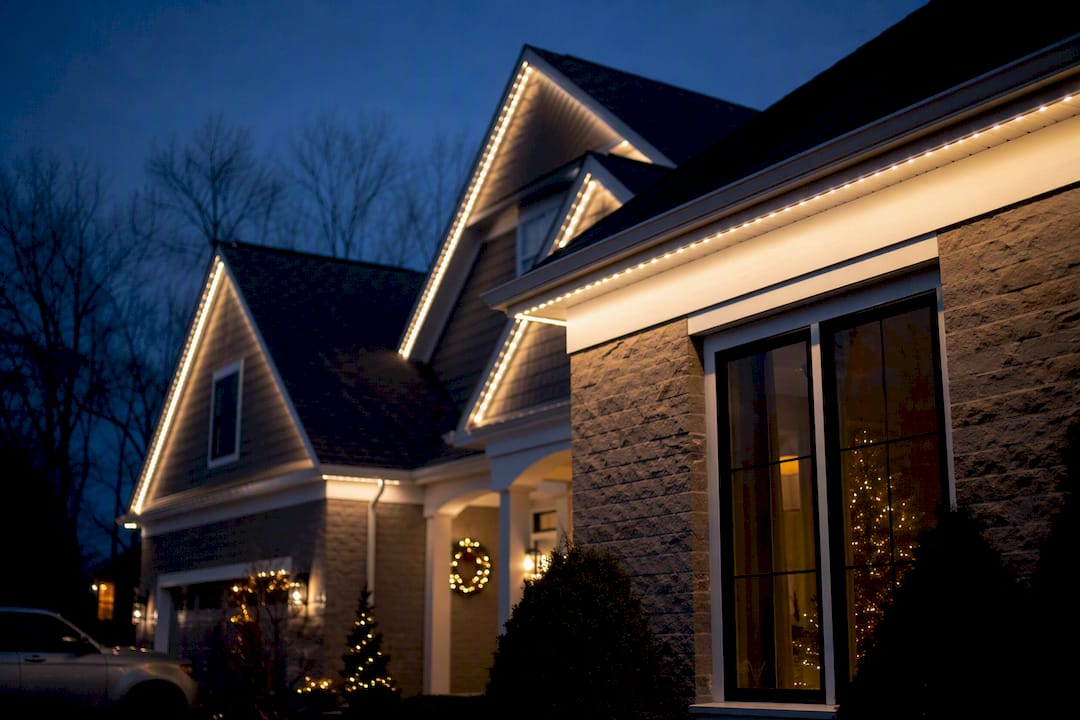
Permanent, or architectural, lighting means LED diodes mounted inside a low-profile track that runs along your roofline, soffits, or trim. The track is color-matched to your fascia so it disappears into the architecture during the day, a detail the Illuminating Engineering Society treats as a basic design standard for exterior accent lighting, not an afterthought.
Most systems run on a phone app rather than a wall switch. That app is where the real value shows up:
- Custom scenes for holidays, game days, birthdays, or a plain warm-white porch light on a Tuesday
- Zone control, so the garage trim can run a different color than the second-story eaves
- Scheduling that turns lights on at dusk and off at 11 p.m. without you touching anything
- Pixel-addressable color for animated effects, or simple warm-white diodes if you want something quieter
Quality installs typically last 10 to 15 years with minimal maintenance, since the diodes stay protected inside the track year-round instead of sitting outside in weather for one month and then a garage bin for eleven.
What Is Seasonal Holiday Lighting?
Seasonal holiday lighting is the traditional approach: strings of bulbs, C9s, or icicle lights that go up in November and come down in January. It relies on plug-in timers or smart outlets rather than an app tied to the fixture itself, and the whole system lives in bins the other 11 months of the year.
The strengths are real. Strung lights let you weave garlands around railings, wrap trees, and build the kind of layered, textured display that a flat roofline track can’t replicate on its own. Points to consider:
- Lower upfront cost, since you’re buying bulbs and clips, not a permanent track system
- Full creative freedom to change themes, colors, or characters every single year
- Best suited to trees, bushes, wreaths, and freestanding yard displays rather than architectural outlines
- Requires an annual install and removal cycle, plus storage space
If you like redesigning your entire display every December, temporary lighting still gives you that freedom.
Architectural vs Holiday Lighting: Key Differences at a Glance
| Factor | Permanent (Architectural) | Seasonal (Holiday) |
|---|---|---|
| Initial cost | Higher upfront investment | Lower upfront cost |
| Annual cost | Minimal after install | Recurring bulb replacement and labor |
| Lifespan | 10 to 15 years | Often replaced every few seasons |
| Safety risk | One-time professional install | Annual ladder exposure |
| Versatility | Year-round scenes, any color, any occasion | Seasonal, theme-flexible decor |
| Daytime look | Nearly invisible track | Visible bulbs and cords |
The 10 to 15 year lifespan gap is the number that actually moves the math. Run the simple version: if seasonal strings need replacing every 2 to 3 seasons at $150 to $400 a cycle, plus a service call or a Saturday on a ladder, a 10 year stretch can rack up four or five replacement cycles. A permanent system installed once absorbs that same decade with no re-buying and no repeat ladder trips. It’s less “which is cheaper” and more “who pays when.”
Cost and ROI: What to Expect From Quotes
Permanent system quotes vary with linear footage, roof complexity, and whether you choose warm-white or full-color pixel diodes. Expect the price to climb with steep pitches, multiple stories, or a roofline with a lot of corners and dormers, since multi-story and irregular rooflines add install time and sometimes conduit runs that a simple ranch roofline never needs.
Seasonal service costs work differently. You’re paying for labor twice a year, plus replacement bulbs as strings fail, plus storage if you don’t have a garage shelf to spare. A few things shape the total:
- Linear feet of roofline or trim being lit
- Pixel density if you want animation versus static color
- Access difficulty, including steep pitches or multiple stories
- Whether you’re paying for annual install and takedown labor every single year
The rule of thumb: if you’d hire a seasonal installer every year anyway, permanent lighting usually pays itself back within several years and then keeps paying dividends after that.
Safety and Installation: When to Call a Pro
Ladder work is where most homeowner injuries happen, and it’s also where DIY holiday lighting quietly gets expensive in a different way. FEMA’s guidance on exterior work and ladder safety is a reasonable baseline for knowing when to stop and call someone.
- Anything above roughly 24 feet, or any second-story roofline, should go to a licensed installer rather than an extension ladder in the driveway.
- Power injection points and controller placement need planning so long track runs don’t lose brightness or color accuracy at the far end.
- Professional installs typically carry warranty coverage that a DIY string job never will.
Pro Tip: Before your installer leaves, confirm the app or controller account transfers fully into your name. You want to be the one adjusting scenes at 10 p.m., not calling the installer to do it for you.
Which Option Fits Your Situation?
Not every home needs the same answer, and your timeline in the house matters as much as your roofline.
- Renting or selling within a year or two: seasonal lighting avoids sinking money into a home you won’t keep long enough to enjoy the payoff.
- Tall or architecturally complex roofline: permanent lighting removes the ladder risk entirely, and a professional handles the tricky angles once.
- Frequent party host or holiday-theme changer: temporary strings still win on flexibility if you like a totally new look every year.
- Long-term owner focused on curb appeal and convenience: permanent lighting delivers automation and a display that works for the Fourth of July and Christmas alike.
Choose permanent when safety, automation, and decade-long value matter most. Choose temporary when upfront cost or yearly creative freedom matters more.
Combining Permanent Systems With Seasonal Decor
You don’t have to pick one and abandon the other. A common approach uses permanent track lighting to outline the roofline and architecture year-round, then layers in temporary garlands, wreaths, and a live tree for the texture that a flat track can’t provide on its own, an approach Brightify highlights as a practical middle ground for homeowners who want both.
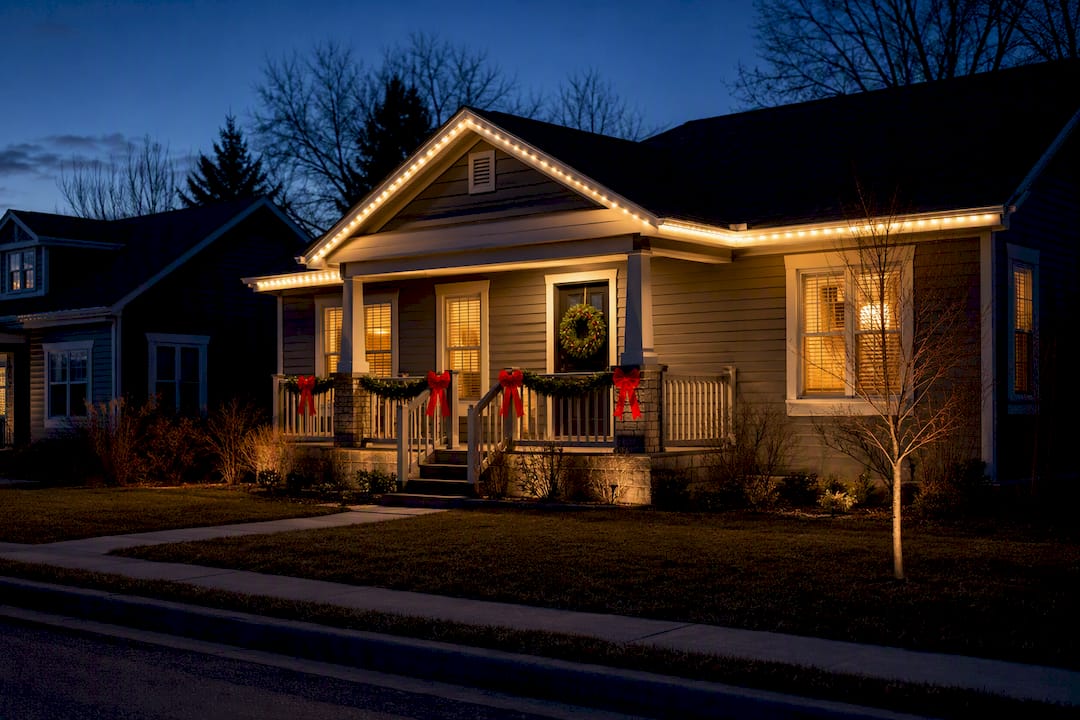
A few things to plan before combining the two: match color temperature so the permanent outline and temporary accents don’t clash, confirm your electrical capacity can handle both loads at once, and talk to your installer before hanging clips or garlands directly on the permanent track. Mounting points are usually available nearby that won’t risk damaging the channel.
Capital Pro Lighting: What a Quality Install Delivers
Not every permanent lighting company builds the same way, and the details in a proposal tell you a lot about what you’re actually buying. Capital Pro Lighting has installed permanent and seasonal systems across the Capital Region for more than 10 years, and a few specifics separate a durable install from one you’ll be troubleshooting in three years:
- A lifetime parts warranty on track installations, so failed diodes or connectors get replaced rather than becoming your problem
- Phone app color control for switching between everyday warm white, holiday themes, and event colors without touching a ladder
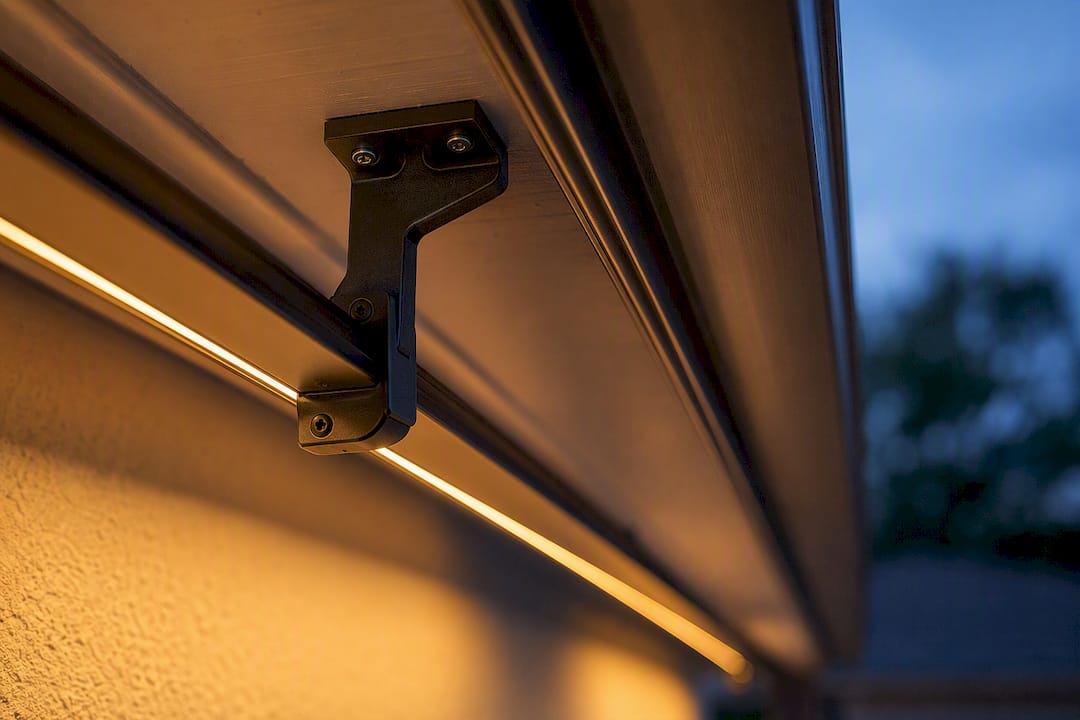
- Custom 3D-printed brackets designed for a clean, low-profile finish rather than generic clips that leave gaps
- Over a decade of local installation experience across roofline types common to the Capital Region, from ranch homes to multi-story colonials
Fewer ladder trips, warranty-backed parts, and a display that works in July as easily as December: that’s the practical payoff of a well-built system.
An Installer’s Honest Take
Permanent lighting earns its cost on homes people plan to keep for years, especially anything with a second story or a roofline that makes DIY string lights genuinely risky. If your roof is simple and you love redesigning your yard every December, don’t let anyone talk you out of that. For everyone else, get a site visit and an actual quote before assuming it’s out of reach. Financing options can close that gap faster than most homeowners expect.
— Luis T
Ready for Lighting That Works All Year?
If you’ve read this far, you already know the real cost of holiday lighting isn’t the bulbs. It’s every November ladder trip and every January takedown weekend. Capital Pro Lighting replaces that entire cycle with one professional installation that you control from your phone for Christmas, the Fourth of July, or a random Tuesday when you just want the house lit up.
Every installation includes a lifetime parts warranty on the track system, and Capital Pro Lighting offers financing with 6 months no interest for homeowners who’d rather spread out the investment than pay it all at once. Custom 3D-printed brackets keep the finish clean, and the app hands you full control the day the crew leaves. Check your address against the Capital Pro Lighting service area and request a quote to see what a permanent system would cost on your specific roofline.
Sources
- Permanent vs. temporary holiday lights: Cost, ROI, safety & best choice — Portfolio Lighting
- Brightify — Permanent vs seasonal Christmas lights (cost & features)
- FEMA — Reduced Risk of Falling: ladder and exterior work guidance
FAQ
What Is Considered Architectural Lighting?
Architectural lighting refers to fixtures built into a home’s structure, such as roofline or soffit track systems, designed to accent the building’s shape rather than sit on top of it as a visible decoration.
What Are the Current Trends in Holiday Lighting?
Homeowners are increasingly choosing app-controlled permanent systems that switch between holiday colors and everyday warm-white lighting, alongside classic garlands and wreaths for texture, a hybrid approach companies like Capital Pro Lighting build around.
Is Permanent Holiday Lighting Worth It?
For homeowners planning to stay put for several years, permanent lighting typically pays for itself by eliminating repeated bulb replacement and annual labor, especially on homes with 10 to 15 year system lifespans.
What Is the Difference Between Architectural and Decorative Lighting?
Architectural lighting is a permanent, low-profile system built to highlight a home’s structure year-round, while decorative lighting is typically temporary seasonal decor like string lights, wreaths, and inflatables put up for a specific holiday.
Recommended
Ready for a Brighter Home?
Free, no-pressure quotes across the Capital Region.
No obligation. Local installer. Same-day callback.
Reviewed by Capital Pro Lighting
Capital Pro Lighting installs permanent outdoor lighting, architectural lighting, and holiday lighting across Albany and New York's Capital Region. We install UL listed permanent lighting systems and have 10 years in business. More about our team.


