
Permanent Roofline Lights: Are They Worth It in 2026?
Permanent Roofline Lights: Are They Worth It in 2026?
Yes, permanent roofline lights are worth it for most homeowners who want year-round curb appeal without the annual ladder routine. The math favors the switch once you factor in labor savings and app-controlled flexibility for holidays, game days, and everyday evenings, even though the upfront cost runs higher than a box of clip-on strands.
- Best for: homeowners tired of the November install and January takedown cycle
- Tradeoff: higher install cost now versus zero seasonal labor for years afterward
- Next step: request a measured quote, or start with a front-elevation-only install if budget is tight
Key Takeaways
Permanent roofline lights pay off for most homeowners because they trade a one-time professional install cost for years of app-controlled, maintenance-free curb appeal.
| Point | Details |
|---|---|
| Cost range varies by scope | Expect $2,000 to $8,000+ depending on linear footage, roof complexity, and zone count. |
| Per-foot estimate | Budget roughly $20 to $30 per linear foot installed for a professional system. |
| Daytime profile depends on mounting | Shallow channels, color-matched trim, and custom brackets keep hardware hidden in daylight. |
| Hire pros for height and complexity | Multi-story homes and complex rooflines carry real ladder and electrical risk, per CPSC injury data. |
| Warranty terms matter | Confirm whether parts, labor, or both are covered, and whether controls transfer to a new owner. |
| Capital Pro Lighting as the professional option | Offers lifetime parts warranty, UL-listed components, and custom brackets for a clean, year-round install. |
What Are Permanent Roofline Lights?
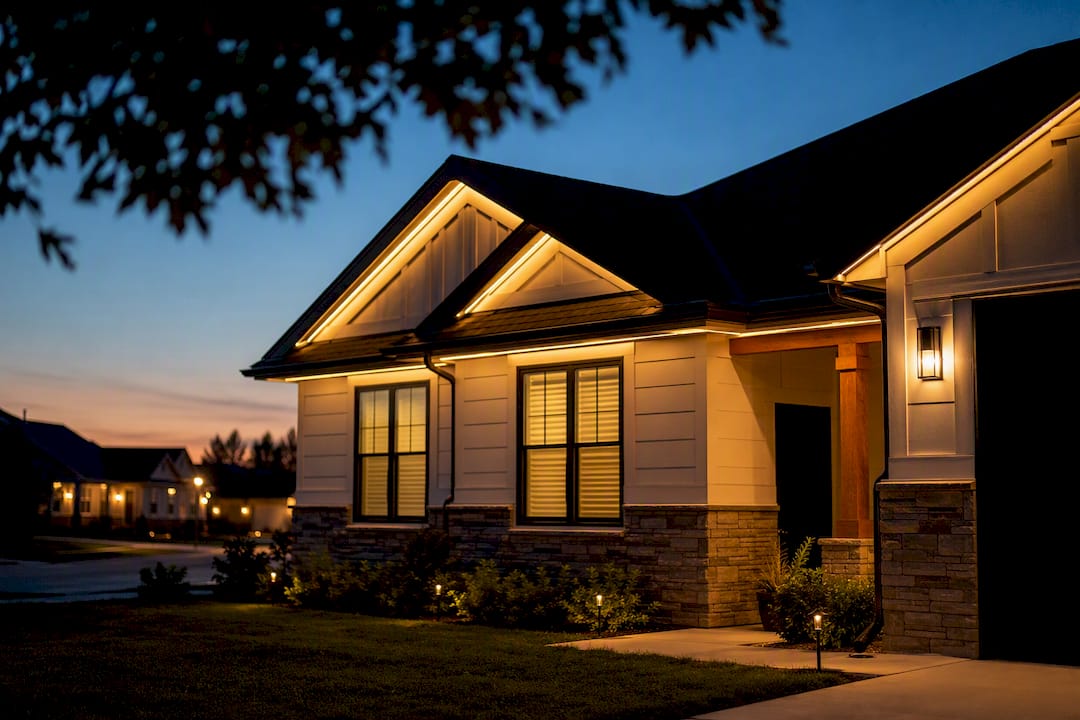
Permanent roofline lights are LED fixtures mounted in a hidden channel or track along the eaves, fascia, or roofline that stay installed year-round and get controlled through a phone app instead of a wall switch or timer. Unlike seasonal string lights, they’re built to disappear into the architecture during the day and switch colors or effects on command.
- Concealed channels or tracks that follow the roofline permanently
- App control for color, scheduling, and scene changes
- RGB or RGBW color options alongside standard warm white
- Weather-rated housings (IP rating) built for year-round exposure
- UL listing as a baseline safety and quality signal
Homeowners use them for holiday scenes, birthday colors, sports team nights, security-adjacent visibility, and plain architectural accent lighting the other 350 days of the year.
What Types of Permanent Roofline Lighting Exist?
Three product families dominate this category, and picking the right one depends on how much control and visual complexity you actually want. Rigid LED channel or track systems sit lowest-profile against the fascia and work best for clean architectural lines. LED tubing or rope diffuses light into a soft continuous glow rather than distinct points. Pixel-addressable or ARGB string systems, the kind Twinkly popularized for retail holiday displays, let each individual LED change independently for animated effects and pattern shows.
- Rigid channel/track: discreet daytime profile, ideal for permanent architectural accent
- LED tubing/rope: diffused line effect, softer look along gutters and eaves
- Pixel/ARGB systems: individually addressable LEDs for animations, patterns, and full color-mixing
Control complexity scales with the system. Basic setups offer single-color or warm-white-only operation. Full RGB/RGBW setups add color mixing across zones. Pixel systems, meanwhile, need a more capable controller to manage effects and zone counts. Whatever the system, check expandability, power draw, and the IP weather rating before committing. For professional installation, Capital Pro Lighting handles the design, mounting, and controller setup so you’re not stuck reverse-engineering a DIY kit’s wiring diagram at 9 PM.
What Are the Pros and Cons of Permanent Roofline Lights?
The short answer: you gain year-round curb appeal and app control, and you give up some upfront budget flexibility. Permanent systems deliver smart home integration and virtually invisible daytime hardware when installed with hidden tracks and color-matched channels, plus LEDs that outlast typical seasonal strands by years.
Benefits:
- Year-round curb appeal without seasonal reinstallation
- App-based control for holidays, events, and daily accents
- Longer LED lifespan than disposable seasonal lights
- No annual ladder climbing or storage bins in the garage
Drawbacks:
- Higher upfront cost than seasonal string lights
- Requires proper electrical planning (dedicated circuits, weatherproof connections)
- Poor installation can leave visible hardware in daylight
- Repairs need a plan since components sit in a fixed, mounted position
Pro Tip: Ask any installer how they hide daytime hardware. Color-matched channel trim and custom brackets designed for a clean, discreet fit matter more than the LED brand itself.
How Much Do Permanent Roofline Lights Cost?
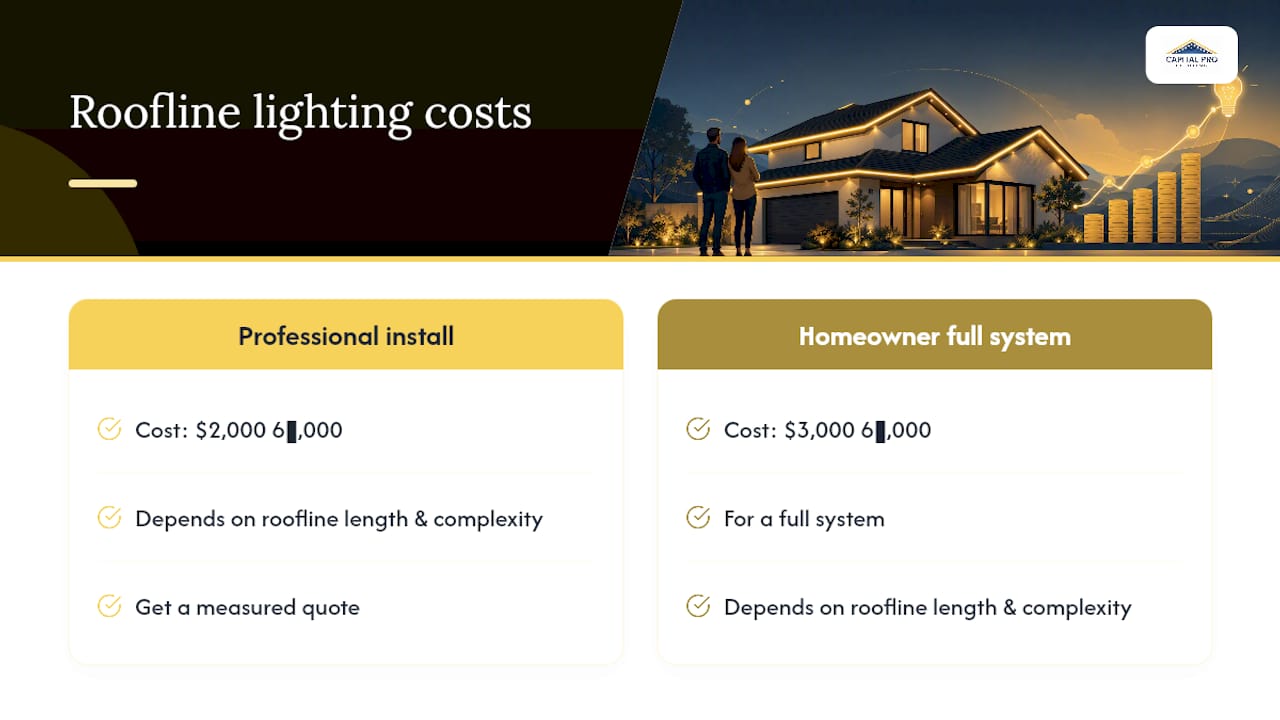
Budget somewhere between $2,000 and $8,000 for a professionally installed system, though your actual quote depends on a measured design, not a guess from a blog post. Focused residential projects often start around $2,000 to $4,500, while larger or architecturally complex homes commonly land in the $4,500 to $8,000-plus range.
What drives the price:
- Total linear footage of roofline
- Roof complexity (peaks, valleys, dormers, multiple stories)
- Access difficulty (ladder work versus lift equipment)
- Number of zones and controller sophistication
- Electrical work, permits, and travel/labor time
Many homeowners pay roughly $20 to $30 per linear foot installed, and full professional installs on a typical home often total $3,000 to $7,000 once design, materials, labor, and permits are factored in.
Per-foot math alone can mislead you. Peaks, corners, and controller complexity add fixed costs that a simple linear-foot estimate won’t capture.
LEDs in a quality system typically run for years before needing replacement, and Capital Pro Lighting backs its installations with a lifetime parts warranty and UL-listed components. Always confirm whether a warranty covers the manufacturer’s parts, the installer’s labor, or both, and whether controls transfer if you sell the house.
What Happens During a Professional Installation?
A typical install runs through four stages: a site visit, a measured design, a scheduled install day, and controller setup with a homeowner handoff. Most residential projects wrap in a single day once the design is finalized.
- Measure the roofline and map zones during the site visit
- Route wiring and plan driver/transformer placement
- Mount channels or brackets along the fascia or eaves
- Cut and fit LED runs to the measured lengths
- Wire runs to drivers and controllers
- Test scenes, colors, and app connectivity before handoff
Height and access determine whether the crew uses a ladder or a lift, and multi-story homes almost always call for the latter. Electrical work should meet GFCI requirements, and a professional crew tests every connector and weather seal before calling the job done. CPSC injury data consistently flags ladder falls and electrical mishaps among common home-project injuries, which is exactly why multi-story or complex rooflines are worth handing to a professional crew rather than a weekend DIY attempt.
Should You DIY or Hire a Pro for Roofline Lighting?
Simple single-story lines on a tight budget can work as a DIY project; multi-story homes, complex architecture, or anyone wanting an invisible daytime profile should hire a professional installer. The line isn’t about ability. It’s about how much the mistakes cost you later.
Run through this checklist before deciding:
- Roofline complexity (peaks, dormers, multiple elevations)
- Number of zones and scenes you actually want
- Warranty and ongoing service support
- Installer experience with your specific home type
- UL listings on every component
- Whether controls transfer to a new homeowner if you sell
- Room for future expansion (backyard, landscape beds, a second structure)
Watch for these red flags in any quote:
- Vague line items without a measured breakdown
- No mention of channel color or mounting placement
- Missing or unclear warranty language
- No documented power or controller location
- Support that expires after one year
Get a measured design drawing before you sign anything, with every included line item labeled and a written plan for future phases. If a roofer needs to inspect or repair the roofline first, coordinate that separately. A roofing services team can confirm your fascia and eaves are sound before mounting anything permanent to them.
What Does a Professional Roofline Lighting Project Look Like?
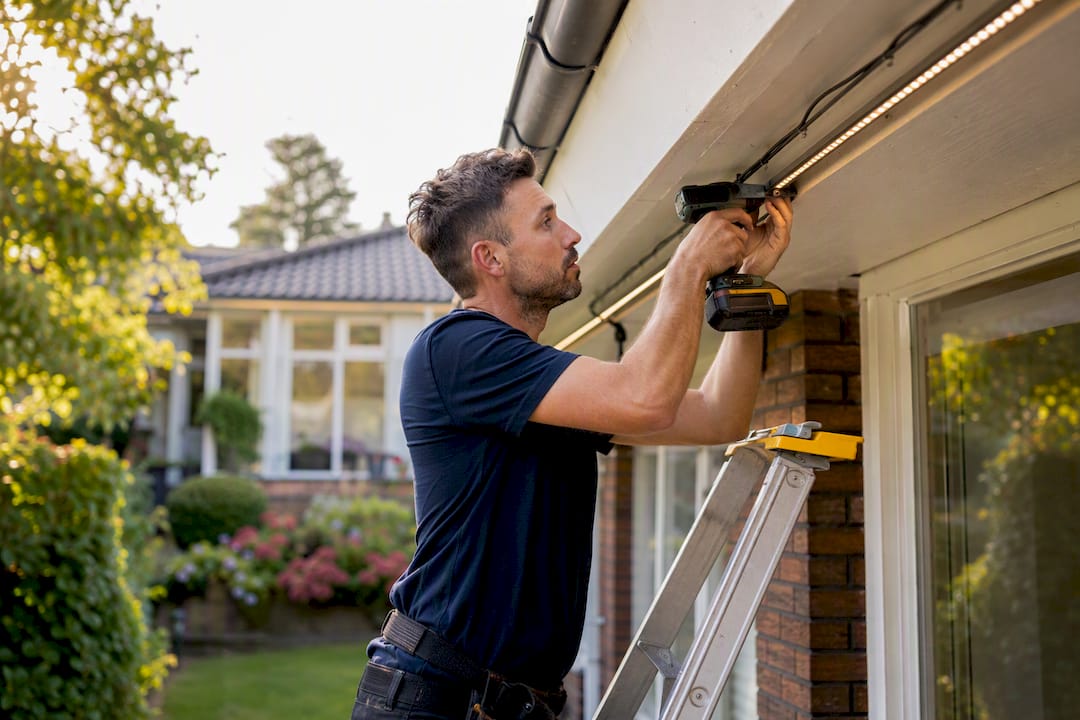
A representative Capital Pro Lighting project covers a full front elevation with a measured, color-matched channel system, an app-controlled multi-zone setup, and a lifetime parts warranty on the installed hardware. Most homeowners see the full process, from consult to working scenes, wrapped inside a single scheduled visit.
Before your design consult, capture:
- Roofline lengths and peak heights
- Corner and return details where the fascia changes direction
- Preferred controller and power location
- Any existing outdoor outlets or dedicated circuits
The finish quality comes down to details most homeowners never think to ask about. Custom 3D-printed brackets keep the mounting clean and nearly invisible in daylight, and every component ships UL-listed for safety compliance. During handoff, the installer configures your saved scenes (holiday colors, a neutral everyday white, event-specific looks) directly in the app so you’re not guessing at settings later.
Pro Tip: Photograph your roofline in full daylight before your consult. It helps the design team spot mounting challenges (gutter guards, low overhangs, wiring runs) before install day instead of during it.
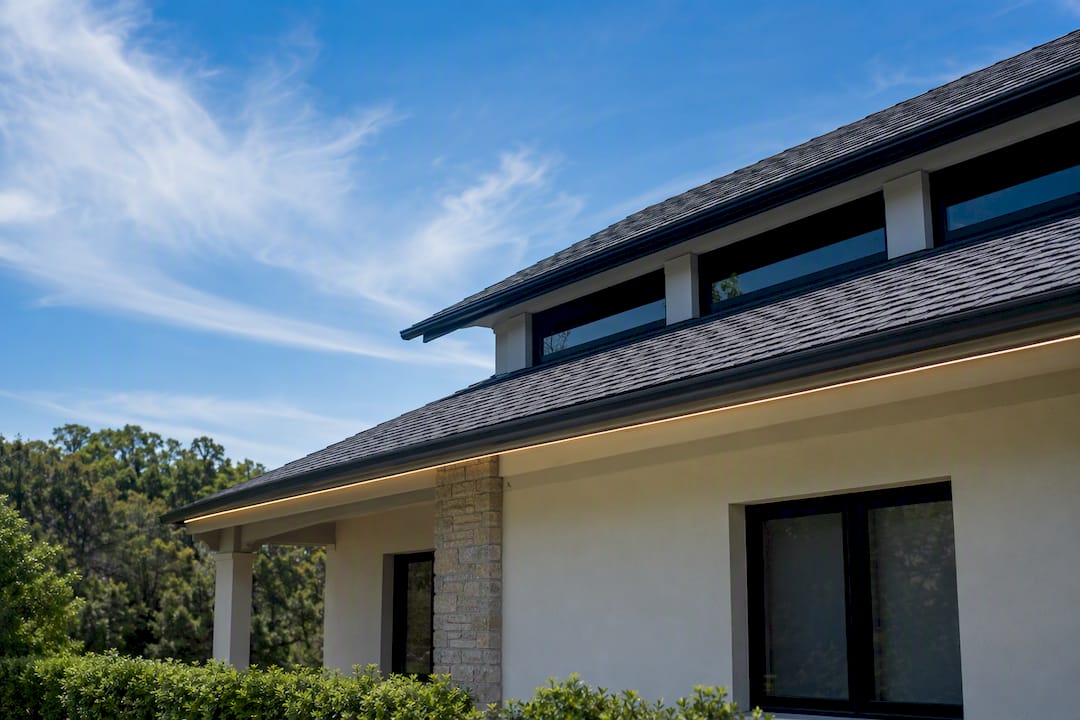
A clean daytime profile isn’t about the LED product. It comes from shallow channel depth, color-matched trim, and brackets built for the specific roofline, not a one-size-fits-all clip.
Why Professional Installation Usually Wins Long-Term
Professional installation typically delivers better long-term value than DIY, not because DIY kits are bad, but because most homeowners underestimate how much a clean daytime profile and dependable warranty actually matter five years in. Match your choice to your real goals. If budget is tight, start with the front elevation only; if a discreet, invisible-by-day finish matters more than saving a few hundred dollars, hire it out.
Get a Measured Quote From Capital Pro Lighting
Capital Pro Lighting installs programmable roofline systems with app control, custom color-matched channels, and a lifetime parts warranty on every project, so you get one professional install instead of a new box of lights every November.
The company uses UL-listed components and custom 3D-printed brackets for a discreet daytime fit, and offers financing options for homeowners who’d rather spread the cost than pay it all upfront. Service covers homeowners and businesses across the Capital Region, from full-roofline projects to focused front-elevation installs for budget-conscious buyers.
Ready to see what your home would cost? Request a measured design quote from Capital Pro Lighting and get scene setup, warranty details, and a real number instead of a guess.
Sources
- Permanent Outdoor Lighting Cost (2026) | Brightify
- Permanent Christmas Lights Cost: What You’ll Spend for a Nationwide Setup 2026 – Current Cost
- How Much Do Permanent Lights Cost? - Thunder Lighting Supply
- NEISS Data Highlights 2022 — CPSC
FAQ
How Much Does Permanent Roofline Lighting Cost?
Most professional installations run between $2,000 and $8,000, with many homeowners paying $3,000 to $7,000 for a full system depending on roofline length and complexity. Get a measured quote for an exact number since per-foot estimates alone can be misleading.
Are Permanent House Lights Worth It?
For homeowners who want year-round curb appeal without annual installation and takedown, yes. The upfront cost is higher than seasonal lights, but you eliminate labor costs and ladder risk every year afterward.
Which Brand Is Best for Permanent Outdoor Lights?
It depends on your goals: pixel-addressable systems like Twinkly suit animated holiday displays, while professionally installed channel systems from a company like Capital Pro Lighting suit homeowners who want a discreet, year-round architectural look with a lifetime parts warranty.
How Many Years Do Permanent Lights Last?
Quality LED components in a professionally installed system are built to last for years of regular use, though exact lifespan depends on the product line and how well the installation protects wiring and connectors from weather. Always confirm what the manufacturer and installer warranties each cover.
Recommended
Ready for a Brighter Home?
Free, no-pressure quotes across the Capital Region.
No obligation. Local installer. Same-day callback.
Reviewed by Capital Pro Lighting
Capital Pro Lighting installs permanent outdoor lighting, architectural lighting, and holiday lighting across Albany and New York's Capital Region. We install UL listed permanent lighting systems and have 10 years in business. More about our team.


