
Birds Nesting Under Eaves: A Homeowner's Legal Guide
Birds Nesting Under Eaves: A Homeowner’s Legal Guide
Don’t touch an active nest. If a bird has already laid eggs or hatched chicks under your eaves, federal law makes it illegal to disturb it, no matter how inconvenient the mess or noise. If the nest is confirmed inactive, empty for several days with no adults coming and going, you can remove it yourself.
- Watch the nest for several days before assuming it’s empty.
- Keep kids, pets, and ladders away from active nest zones.
- Plan your exclusion work for after the nest empties, not before.
Quick fact: Under the Migratory Bird Treaty Act, you may not take, possess, or destroy an active nest containing eggs or chicks. Violations carry real federal penalties, and “I didn’t know” isn’t a defense.
Key Takeaways
Legal, lasting bird control under eaves depends on confirming nest status first and sealing access points with hardware cloth or angled flashing before the next breeding season starts.
| Point | Details |
|---|---|
| Never touch an active nest | Federal law bars disturbing nests with eggs or chicks; wait for fledging. |
| Confirm inactivity first | Watch for several consecutive days before assuming a nest is empty. |
| Identify the species | Mud nests suggest swallows; loose debris in cavities points to sparrows or starlings. |
| Exclude, don’t repel | Hardware cloth and angled flashing beat spikes and decoys for lasting results. |
| Time your install right | Seal gaps in late winter or early spring, before nesting season begins. |
This article is general information, not a substitute for advice from a qualified lawyer. Consult a qualified legal professional about your own circumstances before acting on anything here.
Which Birds Are Nesting Under Your Eaves?
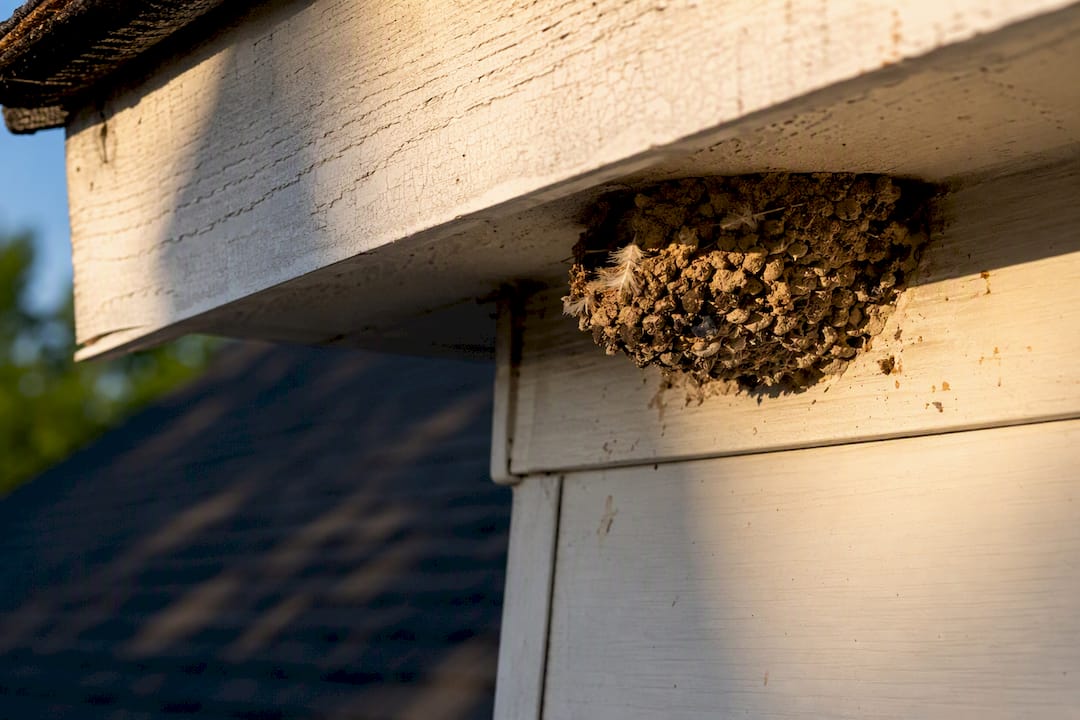
Different species build different nests, and knowing which one you’re dealing with changes your timeline and your options. Barn and cliff swallows build gourd-shaped or cup-shaped nests out of mud pellets, often plastered directly under the roofline. House sparrows and starlings favor loose, messy nests of grass, feathers, and trash stuffed into any gap they can squeeze through, usually inside soffit vents or cavities. Eastern phoebes build a moss-and-mud cup wedged against a flat ledge, often reused year after year. Pigeons keep it simple: a rough platform of sticks on any flat surface with an overhang.
- Swallows: mud pellets, gourd or cup shape, plastered under the eave itself.
- Sparrows/starlings: grass and debris stuffed into gaps, cavities, or vents.
- Phoebes: neat moss cup on a ledge or beam.
- Pigeons: loose stick platform, often on flat trim.
Fresh droppings below the nest, adults flying in and out repeatedly, or faint chirping from inside are your best signs of active use.
Pro Tip: Swallows have a long breeding window and often raise two broods, so a nest that looks done in May can be active again by July. Never assume one clear check is the final word.
Is It Legal to Remove a Bird’s Nest?
The Migratory Bird Treaty Act protects the vast majority of native North American species, including every bird commonly found nesting under eaves. That protection covers the nest itself once it contains eggs or chicks, not just the birds. You can’t knock it down, relocate it, or seal the entry point while it’s occupied, even if the birds are a genuine nuisance.
There’s a narrow federal carve-out. 50 CFR 21.14 authorizes removing migratory birds and nests from the interior of human-occupied buildings under specific conditions. That doesn’t extend to exterior eaves in most cases, which is exactly where the vast majority of homeowner nest problems live.
Confirming a nest is truly inactive takes patience, not a single glance. Watch it over several consecutive days. If you see no adults returning, no fresh material added, and no movement or sound, it’s almost certainly safe to remove.
Pro Tip: Species like bald eagles carry extra protections under separate federal statutes. If you’re unsure what’s nesting on your roofline, treat it as protected until you’ve positively identified it.
What Should You Do Right Away?
- Observe from a distance for several days. Use binoculars or your phone’s zoom to check for adults entering or exiting, and listen for chick sounds.
- Log what you see. A few dated notes or photos protect you if a dispute ever comes up later.
- Keep the area quiet. Avoid ladder work, roof repairs, or pressure washing anywhere near the nest.
- Block off the space below the nest so kids and pets stay clear.
- If the nest sits near wiring, a vent, or another fire or safety hazard, flag it for a professional instead of climbing up yourself.
- Never poke, spray, or knock at an active nest to “encourage” the birds to leave. That’s disturbance, and it’s exactly what the law prohibits.
How Do You Safely Remove an Inactive Nest?
Once you’ve confirmed no activity for several days running, removal is straightforward, but skipping the safety steps is where homeowners get hurt or sick.
- Suit up first. Wear gloves and an N95 mask. Old nests can carry mites, lice, and fungal spores you don’t want to breathe in.
- Remove the nest whole where possible. Bag it immediately in a sealed plastic bag rather than knocking debris loose onto the ground.
- Disinfect the area. Wipe down the eave surface with a diluted bleach solution or a household disinfectant before it dries out.
- Seal the entry point the same day. An open cavity or ledge is an open invitation for the next passing pair.
Pro Tip: Keep a dated photo of the sealed, cleaned area. If a neighbor or local wildlife officer ever asks about the nest you removed, you’ll have proof it was empty and handled correctly.
What Stops Birds From Nesting Under Eaves Long Term?
Removal only solves today’s problem. Prevention is what actually keeps the same swallows, sparrows, or pigeons from rebuilding next spring, and exclusion consistently outperforms repellents because birds simply get used to noise, decoys, and fake predators within a season or two.
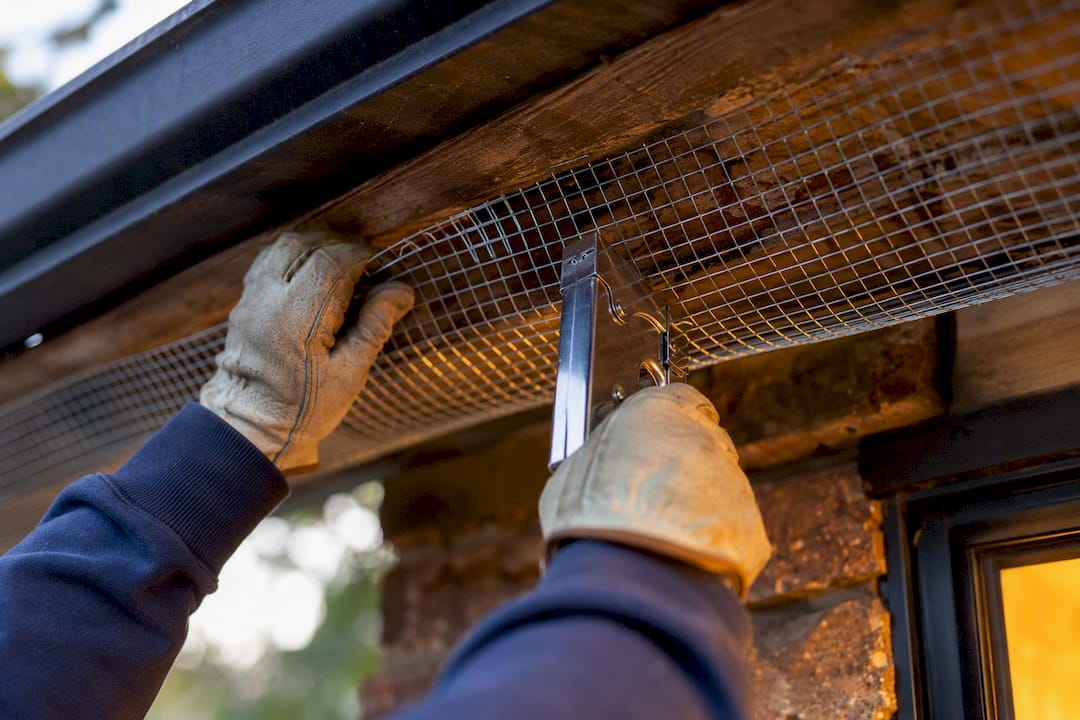
Hardware cloth is the workhorse fix. Seal soffit gaps, vent openings, and cavity access points with 1/4 inch to 1/2 inch stainless or galvanized mesh. For dryer vents and attic openings specifically, 1/2 inch to 3/4 inch hardware cloth keeps cavity nesters like sparrows and starlings out without blocking airflow.
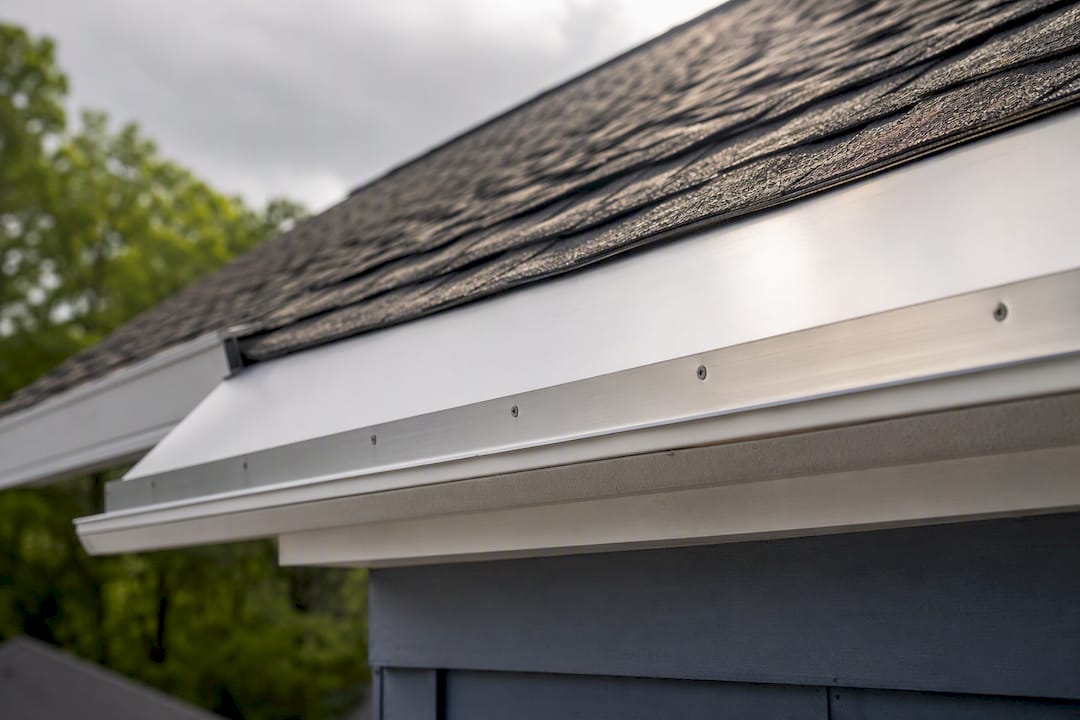
Ledges are the real magnet. Swallows and phoebes need a flat surface to plaster mud against. Angled flashing, sloped metal panels, or corrugated inserts remove that flat surface entirely, which works far better long term than bird spikes, which mainly deter perching birds and do little against mud nest builders.
Netting works too, but only when it’s properly tensioned and gapless. A loose net is worse than no net. Birds can get tangled in it, creating a welfare problem you didn’t have before. For small overhangs, a homeowner with a ladder and a staple gun can usually handle hardware cloth or flashing themselves. Steep roofs, multi-story eaves, or large swallow colonies are jobs for a licensed pro.
Timing matters as much as materials. Install barriers in late winter or early spring, before the first scouts arrive looking for last year’s nest site. Clear away every trace of old mud or nesting debris first. Swallows will rebuild on the same spot given the smallest excuse.
How Do You Clean Up and Repair Eave Damage?
Droppings under a used nest aren’t just unsightly. They can harbor parasites and corrode paint, wood, and metal trim over a single season.
- Wear gloves and a mask, then rinse droppings with a low-pressure hose before scrubbing.
- Mix a mild bleach solution for stubborn residue; avoid high-pressure blasting that aerosolizes debris.
- Check for mites or swallow bugs in the nest cavity before sealing it shut.
- Inspect soffits, fascia boards, gutters, and nearby wiring for damage the nest may have caused or hidden.
Pro Tip: If droppings have soaked into wood trim for more than one season, budget for replacement, not just a wash. Saturated wood rots from the inside out.
When Should You Call a Wildlife or Roofing Professional?
Call in help when you see nests built near electrical wiring or vents, a large swallow colony rather than a single pair, a protected species you can’t confidently identify, or any nest sitting three stories up with no safe ladder access.
Before hiring anyone, ask about their licensing and insurance, their exclusion methods, and how they handle MBTA compliance. A good contractor also offers a post-removal warranty and a clear cleanup plan, plus references you can actually check.
A homeowner’s balancing act
Your roofline isn’t a battlefield. Protect people, follow the law, and let exclusion, not confrontation, do the long-term work.
Sources
- Bird nests – U.S. Fish & Wildlife Service
- Excluding migratory birds from buildings — Cornell Cooperative Extension IPM
- Excluding migratory birds from buildings — UC Agriculture and Natural Resources
- 50 CFR 21.14 — Special provisions for migratory birds
FAQ
How do I get rid of birds nesting under my eaves?
Wait until the nest is confirmed inactive, then remove it, disinfect the area, and immediately seal the gap with hardware cloth or angled flashing so birds can’t rebuild.
Which birds typically nest under eaves?
Barn and cliff swallows, house sparrows, European starlings, eastern phoebes, and pigeons are the most common eave nesters, each with a distinct nest material and shape.
What time of year do birds stop building nests?
Swallow breeding season generally runs from March through September, often with two clutches, so nesting activity can persist well into late summer before it tapers off.
What does it mean when birds keep nesting around my house?
It usually means your eaves offer a sheltered ledge or gap they’ve already used successfully; birds are creatures of habit and will return to a proven site unless you physically block access.
Recommended
Ready for a Brighter Home?
Free, no-pressure quotes across the Capital Region.
No obligation. Local installer. Same-day callback.
Reviewed by Capital Pro Lighting
Capital Pro Lighting installs permanent outdoor lighting, architectural lighting, and holiday lighting across Albany and New York's Capital Region. We install UL listed permanent lighting systems and have 10 years in business. More about our team.


