5 Spooky Chic Halloween House Lighting Zones for Homeowners
5 Spooky Chic Halloween House Lighting Zones for Homeowners
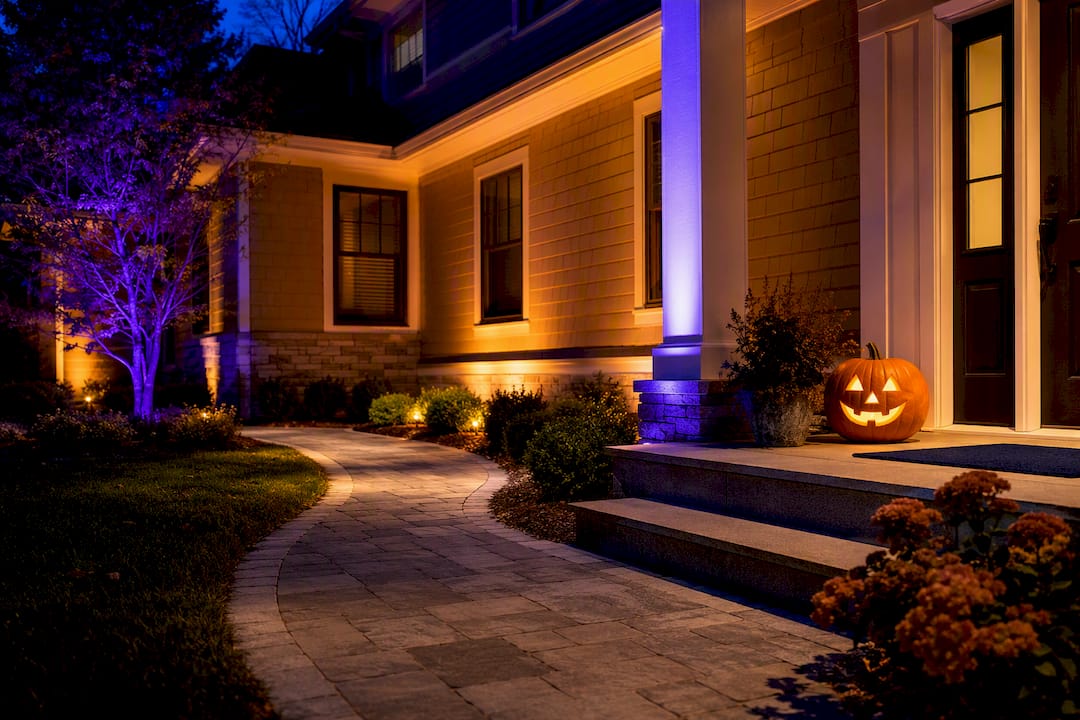
The best Halloween house lighting layers three things: a low, colored ambient wash across the facade, a few sharp accent lights on the details you want noticed, and one or two safe, momentary effects for drama. Skip the tangle of cheap string lights and go for a small number of quality fixtures instead. If you decorate every year, a permanent programmable system from a company like Capital Pro Lighting removes the ladder work entirely. Just keep pathways lit and strobes brief.
TL;DR:
- Using a small number of quality fixtures strategically placed in five key zones creates a more professional and cohesive Halloween display than scattering cheap lights everywhere.
- Choosing fewer, versatile fixtures with programmable controls helps maintain consistent, reusable lighting schemes that can be adjusted for safety and aesthetics.
- Bright, even lighting on pathways and stairs improves safety; avoid stacking multiple effects to prevent a cluttered or chaotic appearance.
- Permanent, app-controlled outdoor lighting systems have a higher upfront cost but eliminate yearly reinstallations and offer flexible color options for multiple holidays.
- Strobe effects should be used briefly and with caution to avoid health risks for photosensitive individuals, and outdoor fixtures must be weather-rated and properly concealed for a polished look.
Halloween Lighting Ideas by Zone and Budget
Most Halloween house lighting fails for one reason: everything gets the same treatment. A single strand of orange lights strung along the gutters looks like an afterthought. Professional-looking displays treat each part of the house as its own zone with its own job.
Start by breaking your property into five areas:
- Facade — the broad wall surface, best served by low-intensity color washes rather than bright floodlights.
- Porch and entry — where guests actually stand, so brightness and safety matter more than mood.
- Pathway — the walkway and steps leading to your door.
- Yard silhouettes — trees, fences, and any props you want backlit or outlined.
- Windows — often the easiest high-impact zone, since a single colored bulb behind glass reads as eerie from the street.
Once you’ve got zones, pick a palette and stick to it. Classic orange and purple still works because the colors sit opposite each other and pop against most siding colors. Witchy green and purple reads more theatrical. But the trend gaining traction with homeowners who want something less costume-party and more curb-appeal is what designers are calling “spooky chic”: muted amber, deep violet, and bone white instead of neon orange and green. Design writers have flagged this shift toward refined palettes and reusable lighting that looks good in October and doesn’t scream “holiday decoration” the other eleven months.
Budget shapes what’s realistic:
- Under $75: A handful of color-changing LED spike lights for the facade, battery-powered flameless candles for the porch, and one fog machine puck near the entry.
- $75 to $250: Add low-voltage uplights for trees or columns, a small gobo projector for a moving-cobweb or bat effect on the wall, and dimmable smart bulbs for porch fixtures.
- $250 and up: Blacklight fixtures for glowing props, multiple gobo projectors, and a real controller that syncs colors and timing across zones.
The point isn’t spending more. It’s spending on fewer, better fixtures aimed with intention instead of scattering cheap lights everywhere.
How to Choose Lights, Colors, and Placement That Actually Work Together
A good display follows a simple ratio: one dominant color covering most of the facade, a supporting color for accents, and a single pop color reserved for the one thing you want people to notice first, like a lit-up pumpkin or door wreath. Trying to balance four colors equally usually just looks busy.
Visibility matters as much as mood. Keep porch steps, walkways, and any grade changes brightly and evenly lit. Save the moody dimness for wall washes and yard silhouettes where nobody’s walking. This layering (low ambient light punctuated by brighter targeted highlights) is part of why haunted attractions feel unsettling even in daylight hours; researchers studying the psychology of haunted-house design point to contrast and ambiguity, not brightness, as what actually builds suspense.
A few placement basics:
- Aim uplights from the ground toward the feature, not down onto pavement.
- Use dimmable controllers so you can adjust brightness without buying new fixtures next year.
- Check the IP rating on anything going outside. IP65 or higher handles rain without failing mid-party.
Pro Tip: Buy one extra fixture beyond what you think you need. Bulbs die, and nothing kills a display faster than one dark gap in an otherwise even wash.
What Each Fixture Type Actually Does
Every fixture in a Halloween display has one job. Wash lights flood broad areas in color and set the base mood. Uplights punch light upward on a single tree, pillar, or column for drama. Spotlights isolate one object, like a carved pumpkin, cleanly.
Strobes create disorientation but only work as a momentary tool, not ambient lighting. Blacklights make white or UV-reactive props glow eerily, especially when paired with light fog to reveal the beam. LED strips outline architectural edges like rooflines and window frames. Gobo projectors throw moving shapes (bats, spiders, ghosts) onto flat surfaces without any physical prop at all.
Installation notes that save headaches later, drawn from professional haunt-lighting practice:
- Hide fixtures behind shrubs, planters, or trim rather than leaving them exposed at eye level, since concealment is what keeps the haunt lighting guide’s recommended effects looking intentional instead of rigged.
- Use IP-rated fixtures for anything outdoors, full stop.
- Keep fog water-based and aim it to drift across your light beams, not into guests’ faces.
- Combine wash plus one accent effect at a time. Stacking strobes, blacklight, and fog together at full intensity usually just looks like static.
Safety, Accessibility, and Being a Good Neighbor
Strobe effects deserve real caution. Roughly 1 in 4,000 people in the United States have photosensitive epilepsy, and flash rates within a certain moderate frequency range carry seizure risk for that group, so it’s best to avoid those frequencies. Keep any programmed strobes brief, distant from where people gather, and paired with a strobe-free path so trick-or-treaters and guests with sensitivities have an alternate route to your door.
Fire and trip hazards are the more common problem, though. A few fixes handle most of it:
- Use flameless LED candles instead of open flames near pumpkins or decorations.
- Secure extension cords flat against walkways with cord covers or landscape channels, not loose across steps.
- Light every uneven surface, especially stairs, even if it means sacrificing some mood lighting there.
- Run timers so lights shut off at a reasonable hour, and keep effects like fog and strobes indoors after trick-or-treating winds down, out of respect for neighbors.
Temporary Decorations vs. Permanent Programmable Lighting
Buying string lights and floodlights every October is cheap upfront but adds up over years, especially once ladders, storage bins, and replacement bulbs enter the picture. A permanent, app-controlled exterior system costs more initially but eliminates the annual install and takedown entirely. Homeowners get year-round color flexibility instead of a display that only exists for six weeks.
Permanent installs make the most sense if you decorate for multiple holidays, care about a clean architectural finish with no visible fixtures, or prefer to avoid ladder use. When shopping for a professional installer, ask about:
- Parts warranty length and what it actually covers.
- How colors are controlled (app, schedule, voice) and whether presets exist for Halloween specifically.
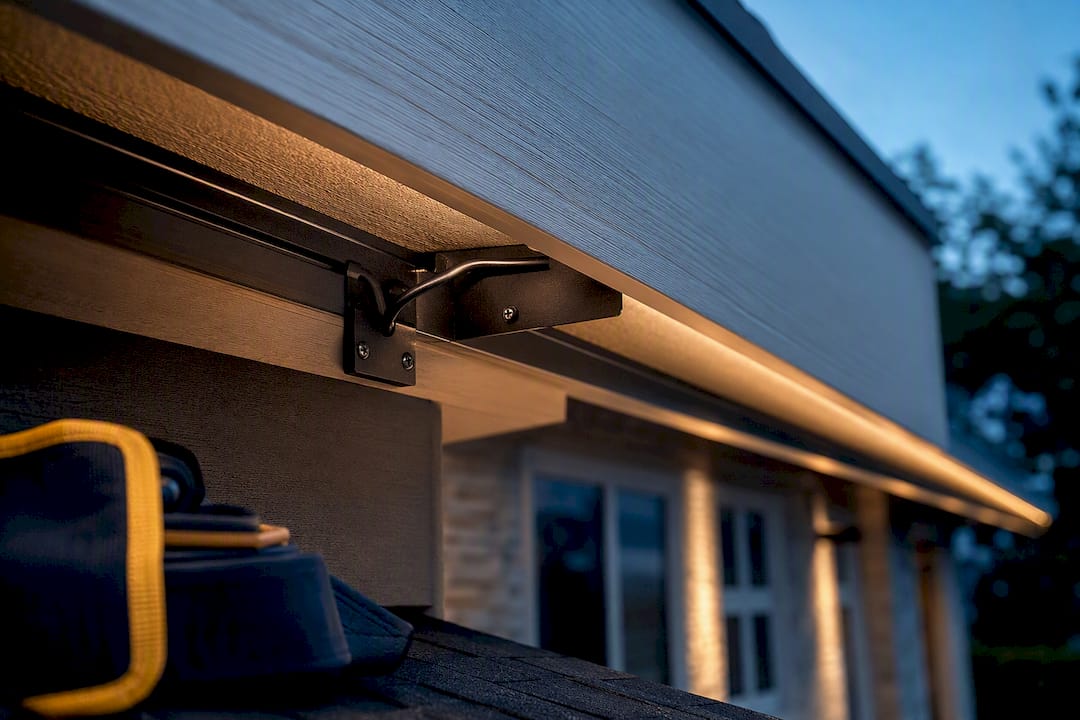
- Installation timeline and whether brackets are custom-fit to your roofline.
Your Shopping and Setup Checklist
Get this done in three passes instead of one frantic weekend before Halloween.
- Plan. Sketch your house, mark the five zones, and count fixtures you’ll actually need. A small facade generally needs 2 to 4 uplights; a typical pathway needs 4 to 8 path lights depending on length.
- Buy and stage. Gather LED fixtures (LEDs run cooler and use less power, which ENERGY STAR recommends for exactly this kind of extended outdoor use), extension cords rated for outdoor use, and mounting hardware like stakes or brackets.
- Test early. Set up and run the full display at night, at least a few days before Halloween, to check colors, timing, and brightness. Fix trip hazards and confirm every cord connection is weatherproofed.
Pro Tip: Test in the exact conditions guests will see: full dark, front door closed, standing at the sidewalk. Displays that look great from your porch can look completely different from the street.
Why More Homeowners Are Going Permanent
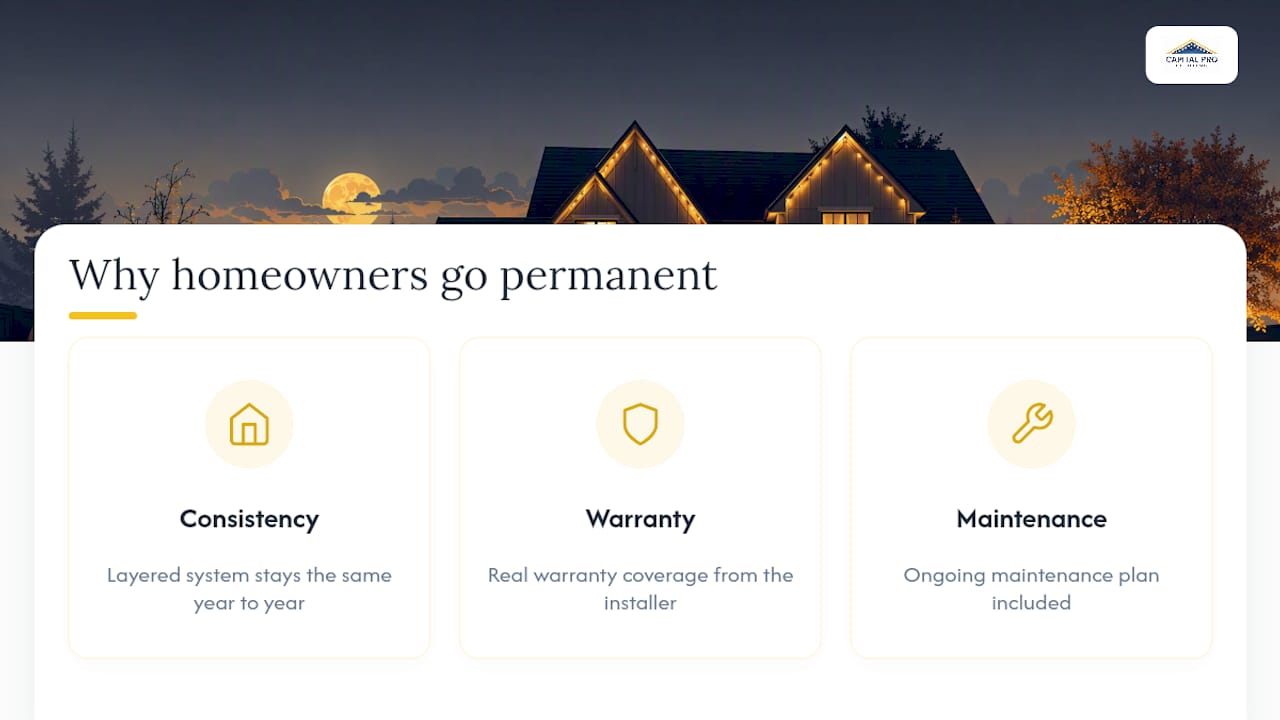
Layered lighting concepts like the ones covered here (color washes, architectural accent placement, and control by zone) work best when the system stays consistent year to year. That consistency is exactly what pushes repeat decorators toward professional installation, provided the installer offers real warranty coverage and a maintenance plan.
Get Halloween-Ready Without the Ladder
Every idea in this guide, the color washes, the gobo effects, the layered accents, gets easier when the fixtures are already mounted and controlled from your phone. Some companies install permanent roofline lighting systems that let you switch colors for different occasions like Halloween and holidays, without the need for ladder work.
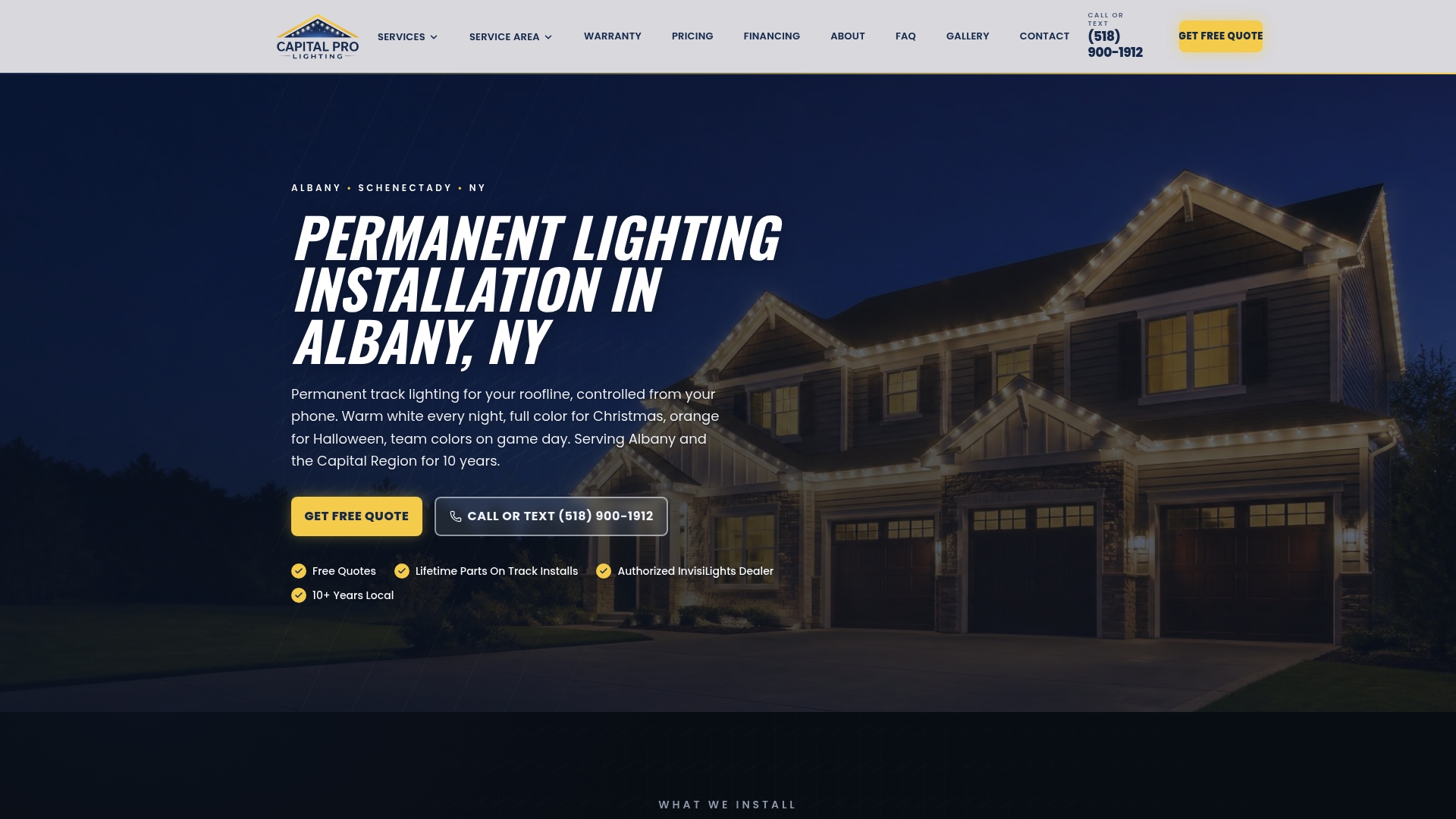
The system runs on custom color-matched tracks with 3D-printed brackets built for a clean finish, no visible wiring, and no sagging strings. Some installers have a decade or more experience in the Albany and Capital Region working with homeowners who want a single lighting investment rather than buying decorations each season.
If you’re ready to stop reinstalling lights every season, check whether your address falls in the current service area and request an estimate. It’s the fastest way to see what a permanent, phone-controlled display would actually look like on your own roofline.
Sources
- Photosensitive epilepsy — Epilepsy Foundation
- Haunt lighting guide for haunted houses and Halloween — SFXzone
- ENERGY STAR
- The psychology of scary movies and haunted houses — Greater Good (UC Berkeley)
FAQ
How do you light a house for Halloween?
Layer a low ambient color wash across the facade, add targeted uplights or spotlights on key features, and reserve strobes or fog for brief, occasional effects rather than constant use. Keep the porch and walkway bright regardless of the mood elsewhere.
Why did Hobby Lobby stop selling Halloween decor?
Hobby Lobby’s founder has cited religious reasons for the company not carrying Halloween merchandise, a policy that predates recent design trends and isn’t related to lighting safety or product quality.
What are the Halloween lighting trends for 2026?
Homeowners are moving toward muted, sophisticated “spooky chic” palettes, amber, deep violet, and bone white, using reusable fixtures that work beyond just Halloween instead of single-use neon string lights. Permanent, app-controlled systems like those from Capital Pro Lighting are also gaining ground for exactly this reusability.
Why do haunted houses use strobe lights?
Strobes create brief disorientation and mask scene transitions, but professional haunt designers use them sparingly since overuse causes desensitization and headaches rather than sustained fear.
Is strobe lighting safe for everyone at Halloween displays?
Not universally. About 1 in 4,000 people in the U.S. have photosensitive epilepsy, and strobe rates between roughly 5 and 70 Hz carry the highest risk, so keep strobes brief, distant, and offer a strobe-free path to your door.
Ready for a Brighter Home?
Free, no-pressure quotes across the Capital Region.
No obligation. Local installer. Same-day callback.
Reviewed by Capital Pro Lighting
Capital Pro Lighting installs permanent outdoor lighting, architectural lighting, and holiday lighting across Albany and New York's Capital Region. We are an authorized InvisiLights dealer and with 10 years in business. More about our team.