6 Places to Use Architectural Accent Lighting: 30° Beams, 2700K Tips
6 Places to Use Architectural Accent Lighting: 30° Beams, 2700K Tips
Architectural accent lighting uses concealed or directional light to create focal points and reveal texture on surfaces that would otherwise disappear into flat ambient glow. The techniques that matter most are cove lighting, wall washing and grazing, and spot or track accents, each solving a different problem depending on the surface and the mood you’re after. Get the contrast ratio, beam angle, and color temperature right, and a $200 stone accent wall looks custom. Get them wrong, and even a well-built feature looks cheap.
TL;DR:
- Proper fixture aiming at roughly 30 degrees and using aimable, fixtures with a contrast ratio of 1:10 are essential for highlighting features without glare.
- Wall grazing at close angles emphasizes texture on rough surfaces like stone and brick, while wall washing creates an even, broad glow for smooth surfaces.
- Concealed lighting like cove and wall washing works well as background layers, while grazing and spotlights serve as attention grabbers, often combined for dynamic effects.
- Early planning and precise aiming are critical; DIY attempts often fail at aim and concealment, whereas professional installation guarantees effectiveness and future maintenance access.
What Are the Main Architectural Accent Lighting Techniques?
Every accent technique does one of two things: it hides the light source and lets the effect speak, or it aims light deliberately at something worth looking at. Which one you pick depends on the surface, the material, and how much drama you want.
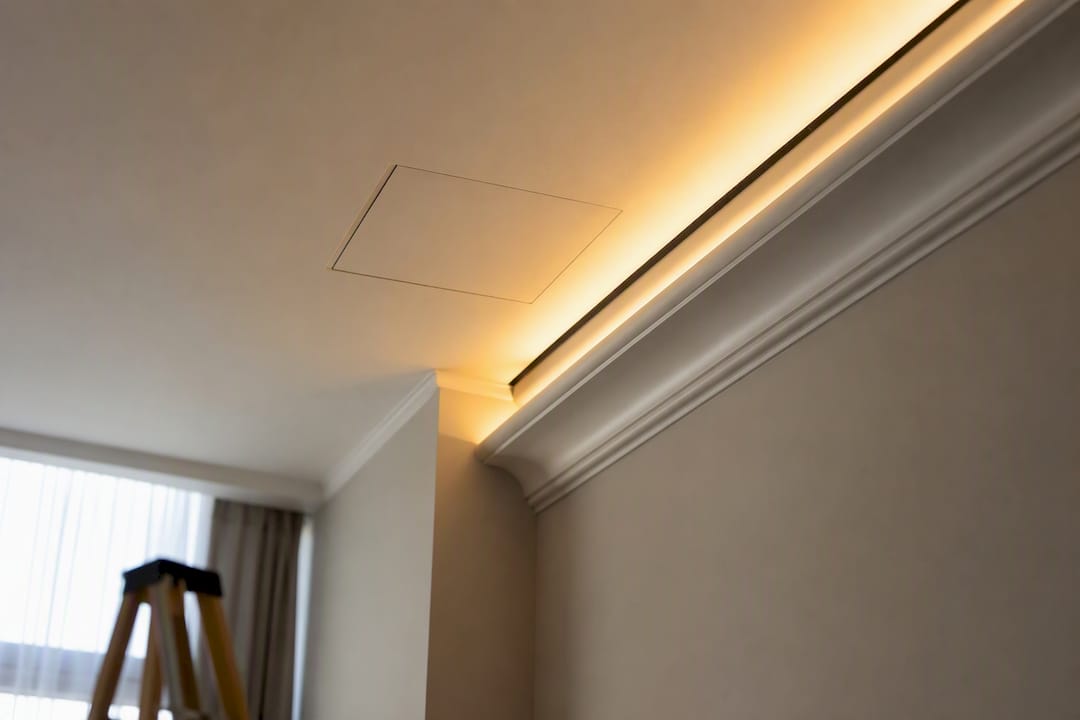
- Cove lighting conceals a linear source in a ceiling recess or shadow gap, bouncing light upward or across a surface for a soft, architectural glow with no visible fixture. Works best in living rooms, tray ceilings, and modern hallways.
- Wall washing spreads even light across a vertical surface from a distance, making rooms feel larger and smoothing out flat drywall or painted surfaces, according to Light Ideas.
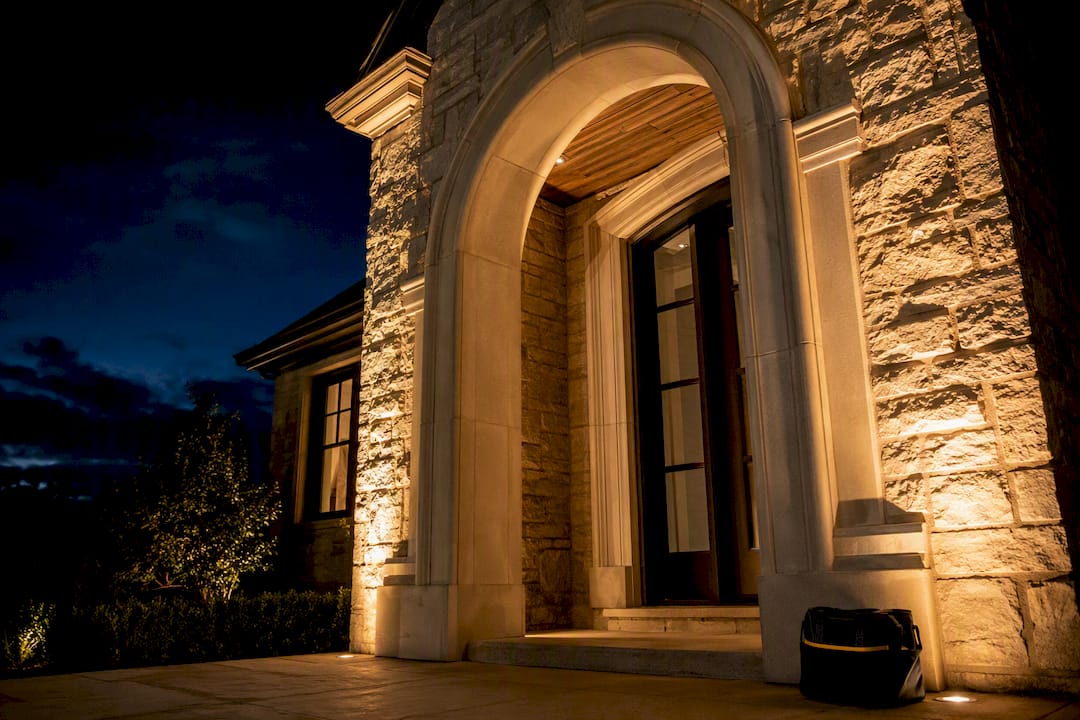
- Wall grazing places the fixture close to the surface at a steep angle, throwing shadows across texture. It’s the technique of choice for stone, brick, and rough timber, since grazing dramatizes texture that washing would flatten out.
- Uplighting aims fixtures upward from the ground or a low mount, typically to highlight trees, columns, or façade details from outside.
- Track and spot accents are aimable, repositionable fixtures ideal for art, sculpture, or any focal point that might move or change over time.
- Linear accents run continuous LED strips along stair edges, shelving, or baseboards for a low, guiding glow rather than a single hero moment.
Cove and wall washing tend to work as background layers. Grazing and spotlighting are the attention-grabbers. Mixing both is usually what separates a lit room from a designed one.
What Contrast Ratio, Beam Angle, and Color Temperature Work Best?
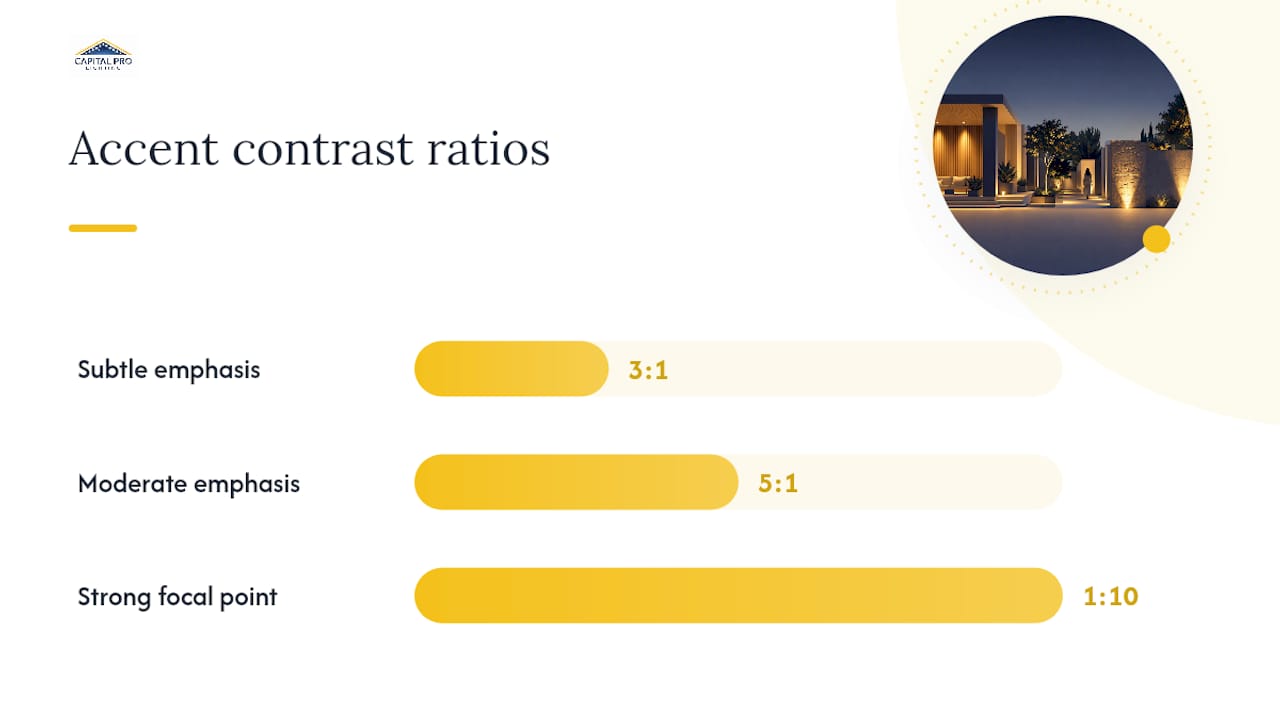
A 1:10 brightness contrast ratio reads to the human eye as a strong, dominant focal point. That’s the number to reach for when you want one object, one wall, or one architectural feature to clearly outrank everything around it, according to ERCO’s lighting design guidance. For subtler emphasis, like a slightly brighter reading nook or a gently highlighted alcove, a 3:1 to 5:1 ratio against the surrounding ambient light does the job without shouting.
Beam angle and aiming matter just as much as brightness. A beam directed at roughly 30 degrees from vertical illuminates objects without producing harsh shadows or unwanted reflections, a rule of thumb backed by ERCO’s fixture research. Fixtures need to be aimable, not fixed, since even a few degrees off can throw glare straight into a seating area.
Color temperature and CRI decide whether the accent feels warm and intentional or cold and clinical:
- 2700K for intimate residential spaces like reading corners and dining nooks
- 3000K as the standard for most residential and retail accents
- 4000K for many commercial and office environments
- Accent light generally runs warmer than ambient light so highlighted features appear to “glow” rather than simply get brighter, per AI-Architect’s lighting guide
- Look for a Color Rendering Index (CRI) of ninety or above on fixtures intended to render materials like stone, wood grain, or fabric color accurately.
Pair fixtures with a dimmer or scene controller. Static accent lighting looks fine on day one and dated within a year, once you realize the brightness that worked for a dinner party is wrong for a Tuesday morning.
Which Fixtures and Optics Prevent Hot Spots and Glare?
The housing matters as much as the bulb. Bare LED strips stuck directly onto a surface almost always produce visible diode dots and uneven hot spots, which is the single fastest way to make a lighting installation look homemade. Properly engineered aluminum profiles with diffusers spread that same light into one continuous, even line.
- Use symmetric optics for even wall washing across flat, uniform surfaces
- Use asymmetric optics when the fixture sits close to a wall and needs to throw light up or across without spilling onto the ceiling or floor
- Choose high density COB strips or SMD strips sized correctly to the channel width to avoid banding
- For outdoor mounts, confirm IP ratings and gasket seals before installation, not after the first freeze
Pro Tip: Before you commit to a channel, hold a sample diffuser up against the strip at the exact mounting distance you’re planning. What looks smooth on a spec sheet can still show pinpoints once it’s six inches from your eye instead of six feet.
Access for future maintenance deserves attention early. A gorgeous cove detail that requires removing crown molding to change a driver is a design that fights its own owner for the next decade.
Where Should You Actually Place Accent Lighting?
Technique only matters once it’s applied somewhere specific. A few placements come up again and again, in homes and commercial spaces alike:
- Living room cove. Run a warm 2700K to 3000K linear source along a ceiling recess above a fireplace wall or built-in shelving, aimed to graze the ceiling for a soft upward glow.
- Dining room grazing. Mount a narrow beam fixture close to a stone or brick accent wall, angled steeply to dramatize texture during evening meals.
- Hallway baseboard glow. Recess a low linear strip at floor level for a guiding path that avoids overhead glare, especially useful in homes with stairs.
- Façade and roofline accents. Uplight columns, gables, or stonework from ground-mounted fixtures, and consider a programmable system if the goal is holiday and event flexibility rather than one fixed look.
- Landscape focal points. Use uplighting on mature trees or specimen plantings, keeping beam spread narrow enough to avoid washing out the surrounding lawn.
- Pathway and wayfinding. Low, wide beam fixtures spaced consistently along walkways balance safety with a subtler, less runway-like effect than continuous strip lighting.
A door or entryway can also work as an accent focal point in its own right. One Day Doors & Closets makes the case that a well-designed door deserves the same attention as any other architectural feature, and a single well-aimed spot can turn an entry into the first thing guests notice.
Why Should Lighting Be Planned Early in a Project?
Lighting added as an afterthought almost never looks architectural. Coordinating fixture locations with millwork, ceiling structure, and electrical runs during the design phase, rather than after drywall goes up, is what separates a seamless cove detail from a visible retrofit, according to Autodesk’s lighting design resources.
Common mistakes stack up fast when lighting comes late: adhesive LED strips slapped onto finished surfaces, symmetric optics used where asymmetric was needed, and light channels buried behind finished ceilings with no access panel.
Before calling a project done, run through this:
- Every fixture aimed and locked at its final angle
- Scene balance checked at night, not just during a daytime walkthrough
- No visible glare from typical seating or walking positions
- A documented, accessible path to every driver and connection point for future maintenance
When Does DIY Accent Lighting Actually Work?
Reasoning through the specs in this piece is the easy part. Actually mounting an asymmetric optic three feet from a stone wall at a true 30 degree angle, in the dark, on a ladder, is where most DIY attempts fall apart.
A simple linear strip under a single shelf is forgiving territory for a confident homeowner. Anything involving façade uplighting, roofline runs, or a coordinated multi-room scene benefits from a professional eye, mainly because the failure mode isn’t “it doesn’t turn on.” It’s “it turns on and looks amateur forever.” A professional lighting installer with local experience has observed that the gap between success and failure usually comes down to aiming precision and fixture concealment, not the fixture brand itself.
— Luis T
Capital Pro Lighting: Permanent, Programmable Accent Lighting Done Right
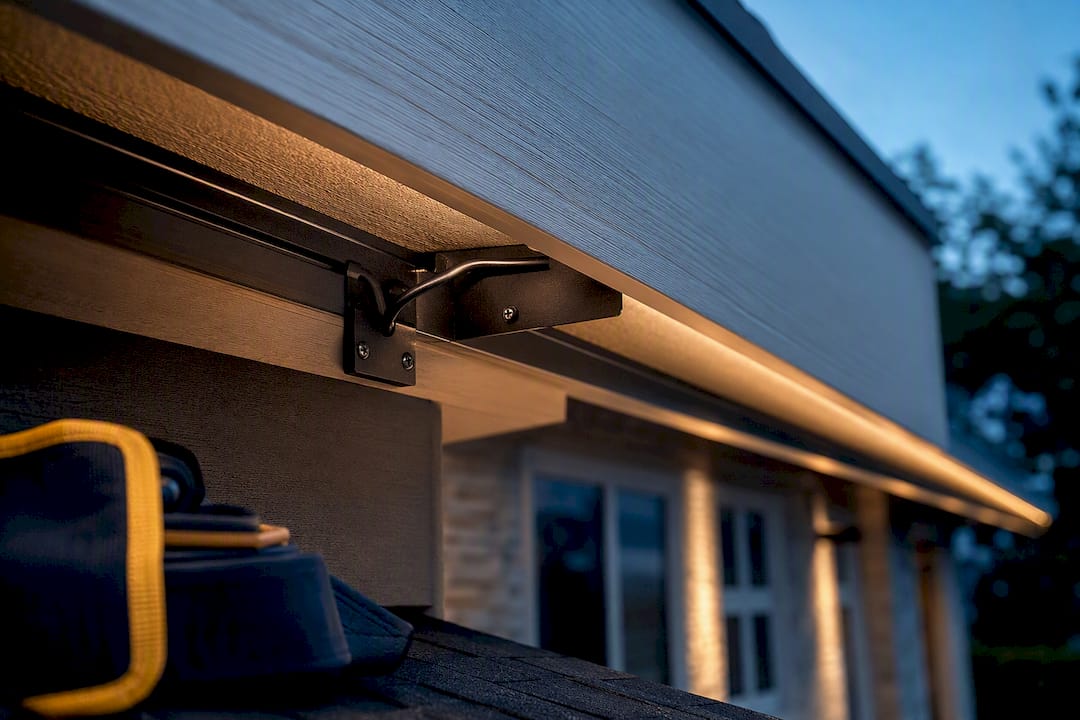
Permanent outdoor architectural accent lighting can be controlled from your phone, so switching a roofline from warm white for a dinner party to a full color scheme for the holidays takes a tap, not a ladder.
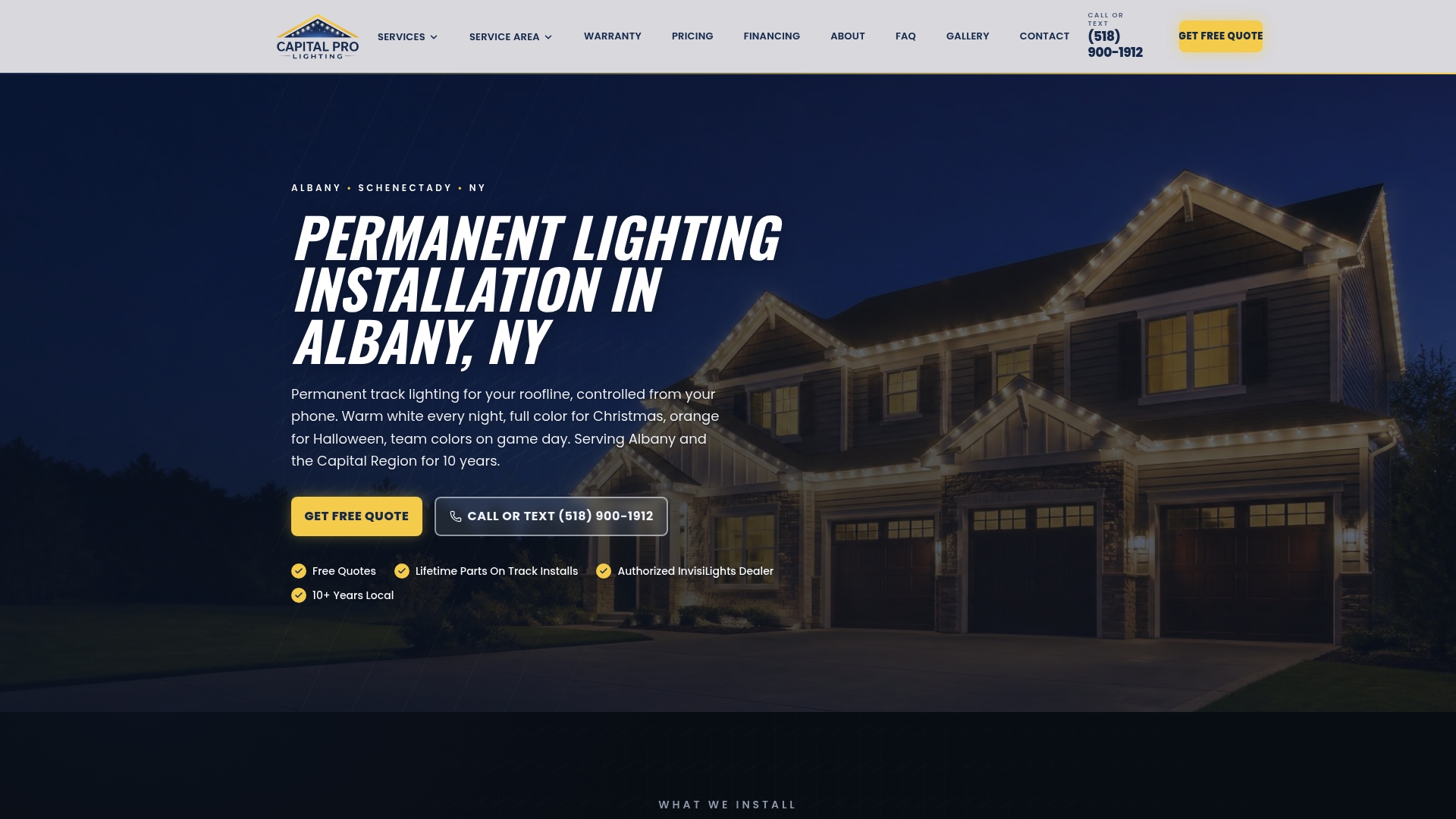
Every permanent outdoor lighting installation comes with custom color-matched tracks, a lifetime parts warranty, and 3D-printed brackets designed for a clean finish instead of the visible clips and sagging strips that plague most DIY attempts. If your project involves a façade, roofline, or landscape feature that needs to look intentional in every season, that’s exactly the gap a professional install closes. Homeowners and business owners across the Capital Region, from Albany to Delmar, have leaned on ten years of local installation experience to get there. Check your service area and request a quote to see what a permanent, programmable accent system would look like on your own roofline.
Sources
- Accent lighting — ERCO
- Accent lighting design — AI-Architect
- Wall washing: How to reveal texture & architecture with light — Light Ideas
- Architectural and interior lighting design — Autodesk
FAQ
What Is the 5’7" Lighting Rule?
It’s a common interior design guideline suggesting that key visual details, like art, mirrors, or focal accents, are most comfortably viewed when centered around average eye height. It’s a placement reference, not a lighting code, so treat it as a starting point rather than a fixed rule.
What Are Some Examples of Architectural Lighting?
Cove lighting in a ceiling recess, wall grazing on exposed brick, façade uplighting on columns, and recessed linear strips along stair edges are all common examples. Each uses concealed or directional fixtures to highlight a structural or decorative feature rather than just fill a room with brightness.
What Are Examples of Accent Lighting?
Track heads aimed at artwork, uplights on landscape trees, under-cabinet strips highlighting a backsplash, and graze lighting on a stone fireplace wall all count as accent lighting. The common thread is a light source dedicated to one feature rather than general room illumination.
What Are the Lighting Trends for 2026?
Programmable, app-controlled color changing systems for permanent outdoor lighting are gaining ground because they let homeowners switch from daily warm white to holiday color schemes without new hardware. Layered indoor schemes that combine cove lighting with warmer 2700K accents also continue to outpace single-source overhead lighting in both residential and commercial projects.
Ready for a Brighter Home?
Free, no-pressure quotes across the Capital Region.
No obligation. Local installer. Same-day callback.
Reviewed by Capital Pro Lighting
Capital Pro Lighting installs permanent outdoor lighting, architectural lighting, and holiday lighting across Albany and New York's Capital Region. We are an authorized InvisiLights dealer and with 10 years in business. More about our team.