Keep Voltage Drop Under 5%: Low Voltage vs Line Voltage for Homeowners
Keep Voltage Drop Under 5%: Low Voltage vs Line Voltage for Homeowners
Line voltage (120V in most US homes) powers general household lighting and runs straight off a branch circuit. Low voltage (typically 12V or 24V) runs through a transformer or driver and handles accent, landscape, and short-run decorative fixtures. Pick line voltage for primary lighting, low voltage for accents, and always check that your lamp, transformer, and dimmer are actually built to work together.
TL;DR:
- Low voltage systems are easier and cheaper to install for DIY projects but are more affected by voltage drop over long distances, requiring proper wire sizing.
- Line voltage circuits demand professional installation, involve higher safety risks, and accommodate a broader range of high-output fixtures suitable for general illumination.
- Voltage drop in low voltage runs can reach over 16%, significantly reducing fixture brightness if not properly planned with additional wiring considerations.
- Compatibility among lamps, transformers, and dimmers is essential, especially for low voltage LED setups prone to flickering if mismatched.
- Upfront costs favor low voltage kits, but long-term maintenance and energy efficiency are comparable once LED fixtures are used in both systems.
Low Voltage vs. Line Voltage: What Each One Actually Means
The core difference is how the electricity gets to the fixture. Line voltage runs directly from your electrical panel through a branch circuit, no middleman required. Low voltage needs an isolating power supply, either a transformer or an LED driver, to step household current down before it reaches the bulb.
In the US, line voltage almost always means 120V for residential circuits. Some commercial buildings run 277V, which is worth knowing if you’re comparing spec sheets, but it rarely comes up in a homeowner’s project. Line voltage fixtures cover most of what you’d recognize as “normal” lighting:
- A-lamp bulbs in ceiling fixtures and lamps
- PAR floodlights on many home exteriors
- Recessed and track lighting throughout the house
- Many hardwired outdoor wall and post lights
Installing or modifying line voltage circuits means conduit, proper breakers, and code-compliant branch wiring. This is not a weekend DIY task in most jurisdictions. A licensed electrician isn’t just a formality here. Line voltage carries enough current to cause serious shock or fire risk if wired wrong, which is exactly why most municipalities require a permit and inspection for new circuits.
Low Voltage Systems Explained: Transformers, Drivers, and Common Uses
Low voltage systems separate the power source from the fixture with a transformer or driver, and UL’s guidance on landscape and outdoor lighting treats this isolating power supply as the defining safety feature of the category. Instead of 120V running to the bulb, the transformer drops it to 12V or 24V before it ever reaches a fixture outdoors.
You’ll see low voltage most often in:
- Landscape and pathway lighting along walkways and garden beds
- MR16 accent fixtures used for uplighting trees or architectural features
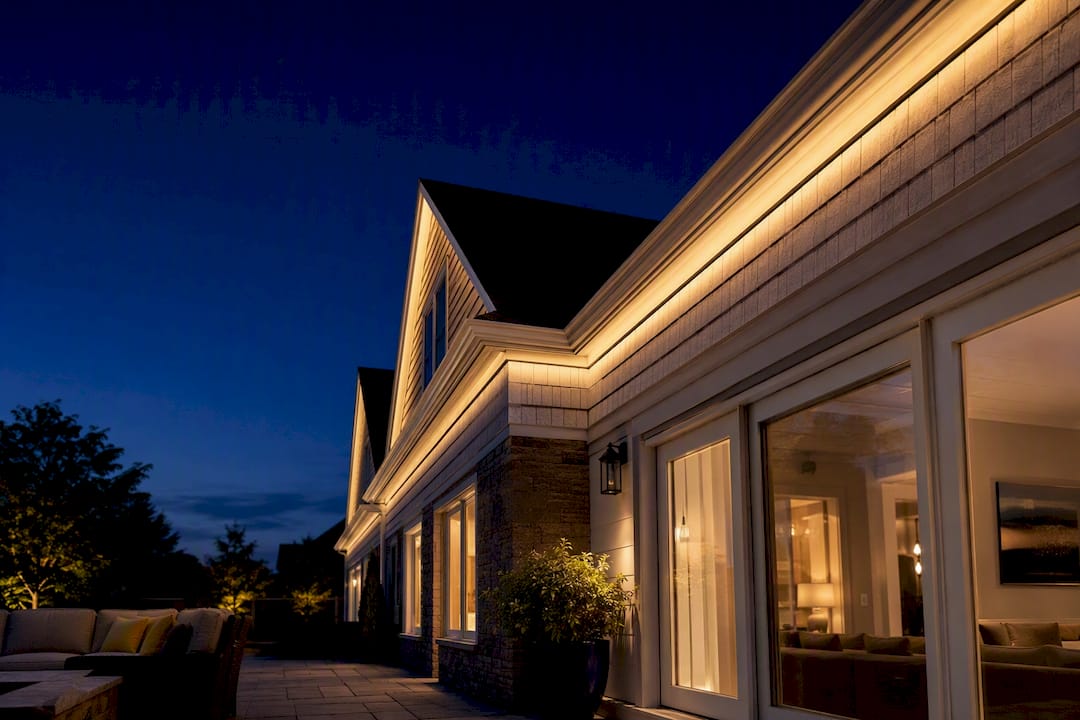
- Permanent roofline accent systems that outline a home’s edges
- Deck, step, and patio lighting where fixtures sit close to grade
Most low voltage systems run on AC power from the transformer, though some LED drivers output DC, which raises polarity concerns you don’t have with standard AC wiring. Get the polarity backward on a DC-fed fixture and it simply won’t light. As for 12V versus 24V, the choice usually comes down to distance and fixture count. Longer runs or larger installations often move to 24V because it handles the same wattage with less voltage drop over distance, which matters a lot once you’re feeding a dozen fixtures spread across a large yard.
Line Voltage vs. Low Voltage: The Trade-Offs That Matter
Nominal voltage numbers only tell part of the story. What actually decides which system fits your project is a handful of practical factors that play out differently once you’re standing in the yard with a spool of wire.
Safety and shock risk. Low voltage systems present far less risk of serious shock, which is why code allows more relaxed installation standards for them, including some DIY-friendly landscape kits. Line voltage carries real danger and generally requires licensed work.
Installation cost and skill. Low voltage landscape kits are often approachable for a motivated homeowner. Line voltage work almost always means hiring an electrician, and that labor cost adds up fast on anything beyond swapping a fixture.
Fixture selection and brightness. Line voltage fixtures come in a wider range of high-output options for broad illumination. Low voltage fixtures, especially LED accent lights, have closed much of that brightness gap in the last decade, but very high-output applications still often favor line voltage.
Run-length sensitivity. This is where low voltage gets tricky. Voltage drop over distance affects both systems, but it shows up far more visibly on a 12V run than a 120V one, which the next section breaks down in detail.
Dimming and control compatibility. Line voltage dimmers are mature and widely compatible with standard bulbs. Low voltage dimming depends on matching the lamp, transformer, and dimmer as a set, and mismatches are a common source of flicker.
Here’s a quick decision checklist before you commit to either path:
- What is the fixture’s primary job: general illumination or accent?
- How far is the run from the power source to the farthest fixture?
- Do you want app-based color or scene control, and does your fixture support it?
- Are you comfortable pulling a permit and hiring an electrician, or does this need to stay DIY?
- Will you be adding fixtures later, and does your transformer or panel have room?
Pro Tip: Never evaluate a fixture on its own. Check the full chain, lamp, transformer or driver, and dimmer or app controller, as one system. A perfectly good MR16 lamp paired with the wrong transformer will flicker no matter how good the bulb is.
Why Voltage Drop Hits Low-Voltage Runs So Much Harder
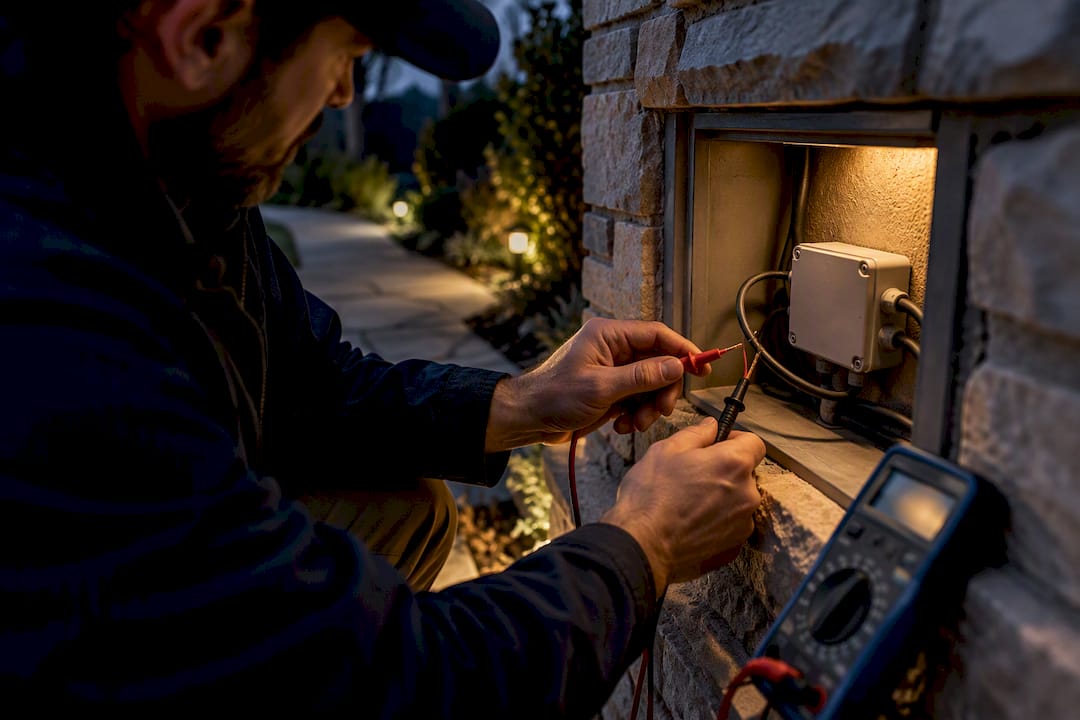
A 2-volt drop sounds small until you consider what it’s a percentage of. On a 120V line-voltage circuit, that same 2-volt loss is under 2%, invisible to the eye. On a 12V low-voltage run, it’s more than 16%, and voltage drop guidance from Lightology points to that gap as the reason designers commonly target under 5% drop on low-voltage circuits.
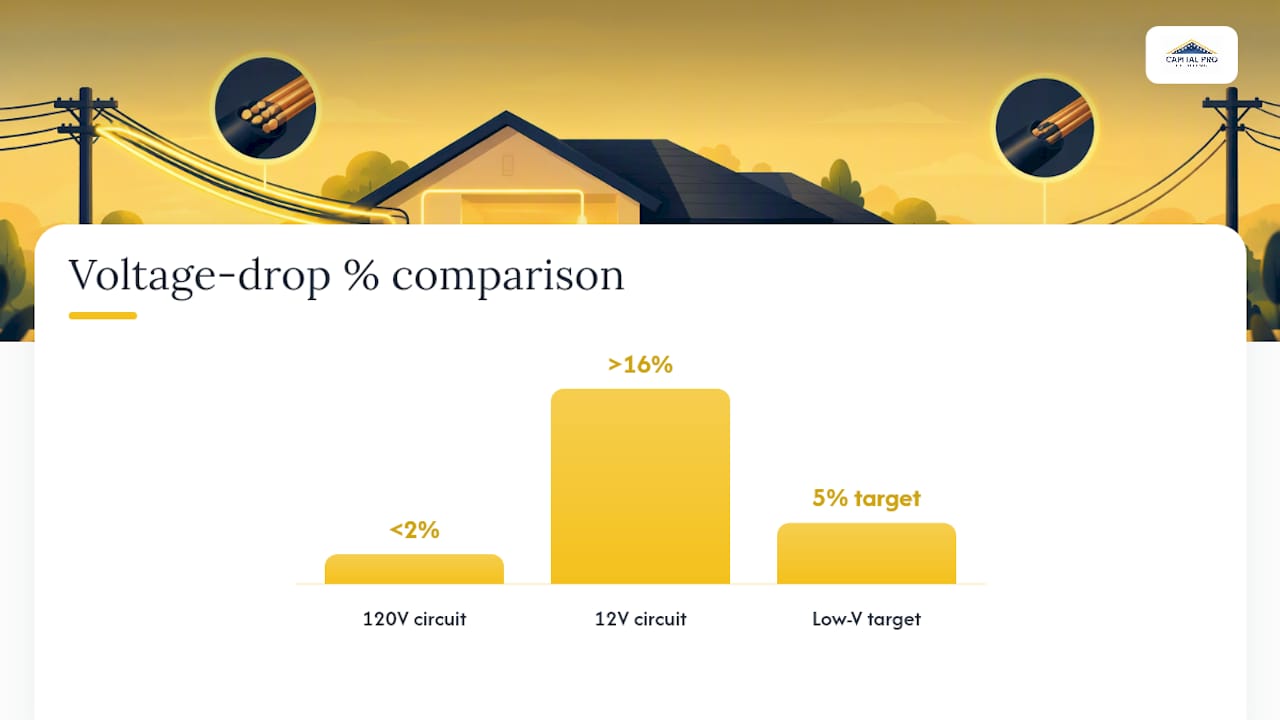
Practically, that means wire gauge and run length matter far more on a 12V system than most homeowners expect. A thin gauge wire that works fine for a short run will dim fixtures noticeably toward the end of a long one. Rather than guessing, calculate actual run length and total wattage, then size the wire gauge to keep drop under that 5% target.
This is also why UL recommends against sizing a transformer by fixture count alone. Add up actual fixture wattage, factor in driver requirements, and leave headroom, since underpowered transformers strain and fixtures at the end of the run suffer first. Long runs or heavily loaded circuits are often the trigger to move from 12V to 24V.
Getting Dimmers, Transformers, and Drivers to Actually Agree
Supply voltage and control signal are two different things, and mixing them up causes most dimming headaches. Common control types include:
- Phase-cut (ELV/MLV) dimmers for traditional low-voltage transformers
- 0 to 10V analog control, common in commercial and some residential LED setups
- PWM (pulse-width modulation) for smooth LED dimming
- DALI and DMX for addressable, app-driven, or theatrical control
DOE research on 0 to 10V control systems makes clear that a fixture can run on line-voltage power while still accepting a low-voltage control signal, so a system’s supply voltage doesn’t dictate its control options.
The classic failure point is MR16 lighting. CALiPER testing on MR16 LED lamps found that the same lamp can flicker or dim poorly with one transformer and dimmer combination while working fine with another. Always check the manufacturer’s compatibility list before assuming any dimmer will work.
Pro Tip: When in doubt, buy your lamp, driver, and dimmer as a vendor-tested set rather than piecing them together from three different brands.
Safety Standards and Code Checks Before You Buy
UL draws a clear architectural line between the two categories. Line-voltage luminaires fall under UL 1598, evaluated as branch-circuit-powered fixtures, while low-voltage lighting systems align with UL 1838 and UL 2108, which evaluate the fixture and isolating power supply together as a system.
Before installing either type outdoors, run through this list:
- Confirm UL listing for the specific fixture and, for low voltage, the transformer as a matched system
- Check NEC requirements for keeping low-voltage landscape cable separated from line-voltage wiring, since local code guidance on cable separation varies by jurisdiction
- Add surge protection, since surge protective device guidance from ESFI applies to sensitive electronics in both low- and line-voltage systems
- Verify IP (ingress protection) ratings for any fixture exposed to rain, sprinklers, or snowmelt
Skipping the permit process on line voltage work is a common shortcut that creates real liability if something fails later, especially at resale.
Cost Comparison: Setup and Ongoing Operating Expenses
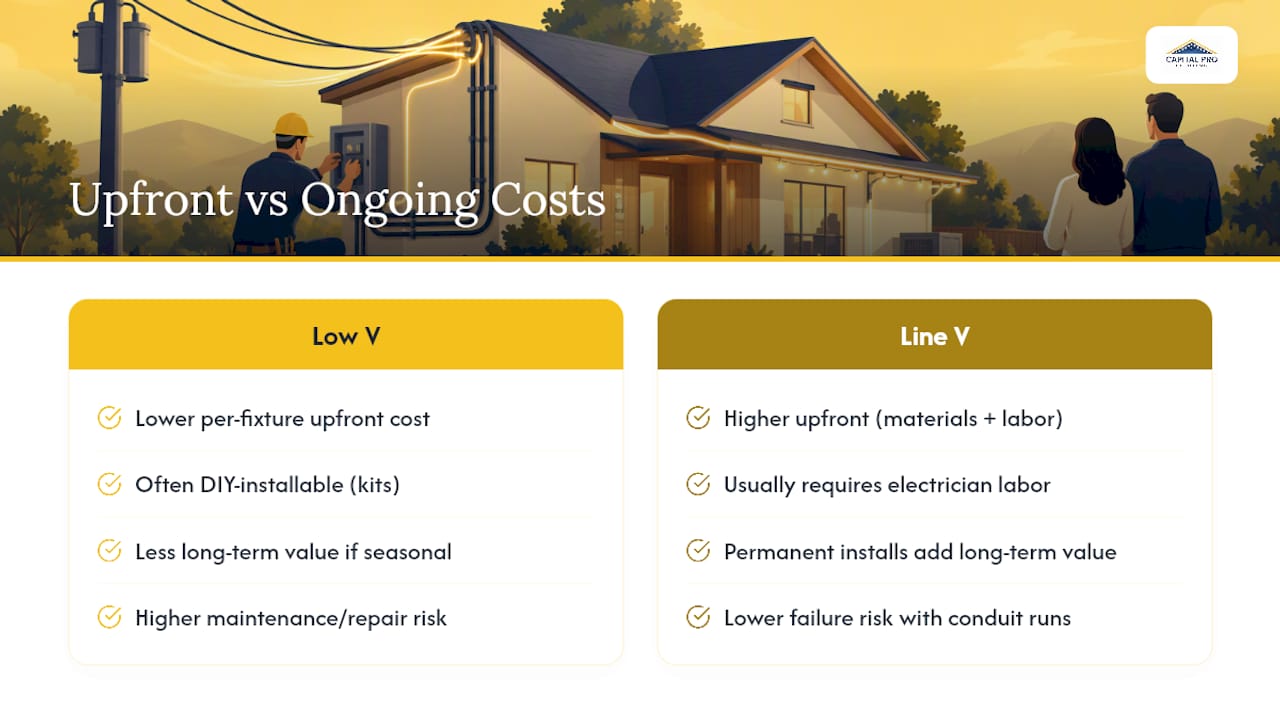
Low voltage systems generally cost less upfront on a per-fixture basis. A basic landscape kit with a small transformer and a handful of path lights is one of the more affordable outdoor lighting upgrades a homeowner can take on, and many are approachable enough to install without an electrician. Line voltage work, by contrast, almost always adds electrician labor costs on top of materials, since new circuits, conduit runs, and panel work require licensed hands.
Permanent roofline systems complicate that simple math, but a professionally installed residential solar panel system can add long-term value alongside your lighting setup. A professionally installed permanent lighting setup, like InvisiLights Track Mounted or InvisiClips systems, involves custom brackets, weatherproof tracks, and app-based controllers, so the upfront investment reflects a built-to-last installation rather than a seasonal kit.
Operating costs tell a different story once you factor in LED adoption, which has narrowed most of the efficiency gap between the two categories. Where the real ongoing cost difference shows up is maintenance and labor over time. Low voltage transformers occasionally need replacing, and DIY landscape wiring left exposed to yard work or lawn equipment tends to fail and need repair more often than a properly conduit-protected line-voltage run. A warranty on a permanent track installation removes a chunk of that long-term cost uncertainty, since you’re not paying to replace failed components down the road.
Seasonal decorative lighting adds its own cost layer regardless of voltage. Anyone who has priced out a ladder rental, replacement bulbs, and the time cost of hanging and removing string lights each year knows that a seasonal installation service can end up cheaper than the DIY version once labor and breakage are counted honestly.
Energy Efficiency: Where the Real Savings Show Up
Both line voltage and low voltage systems have moved almost entirely to LED, which has done more to cut lighting energy costs over the past decade than voltage choice ever will. A modern LED fixture, whether it’s a 120V PAR floodlight or a 12V MR16 accent light, uses a fraction of the wattage an incandescent or halogen equivalent needed for the same brightness.
That said, low voltage systems retain a structural efficiency edge in one specific way: transformers and drivers only step down the exact power the connected fixtures need, and many modern LED drivers operate efficiently across a wide load range. Line voltage circuits, by comparison, don’t lose meaningful efficiency to the delivery method itself. The efficiency conversation today is really an LED-versus-legacy-bulb conversation, not a low-voltage-versus-line-voltage one.
Where voltage choice does affect your energy bill is indirectly, through design decisions it forces. A low-voltage system with poor voltage-drop planning can run fixtures at less than their rated output, meaning you’re paying for brightness you’re not actually getting. A well-designed system, sized correctly with the right wire gauge and transformer capacity, delivers full rated output and full rated efficiency. For homeowners running lighting nightly, whether for security, curb appeal, or a permanent roofline system left on for holidays and everyday use, that design quality matters more for your electric bill than the nominal voltage printed on the transformer.
What Installers Check Before Any Low Voltage or Line Voltage Job
Before quoting a job, installers want fixture specs, total run length, your control preference, and transformer or driver ratings, plus a quick local code check. The mistakes that come up again and again: dimmers that don’t match the transformer, undersized transformers, and voltage drop nobody planned for. Gather your fixture list, a rough sketch of your yard or roofline, and your control wish list before you call anyone.
— Luis T
Sources
- Landscape and Outdoor Luminaire Lighting | UL
- Voltage drop guidance / calculator (Lightology)
- DOE report on 0–10 V control and SSL impacts (2023/2024)
FAQ
Can You Run 110V and Low Voltage in the Same Conduit?
No, running line voltage and low voltage wiring in the same conduit is not standard practice and creates safety and interference risks. The NEC calls for separating low-voltage landscape cable from line-voltage wiring, though exact separation rules vary by local jurisdiction, so check with your local code office before running anything together.
Is 480V Considered Low Voltage?
No, this voltage level is not low voltage in the residential lighting sense discussed here. It’s a line voltage level used mainly in commercial and industrial power distribution, well above the low-voltage lighting systems.
Is 240V Phase or Line Voltage?
This voltage level in a US home is line voltage, delivered from two 120V legs of the panel to power larger appliances like dryers and ranges. It’s not a separate “phase voltage” category. It’s simply a higher line-voltage tier used for higher-draw circuits.
Is 120 Volt Line Voltage?
Yes, 120V is the standard line voltage for general household circuits in the US, powering most lighting, outlets, and small appliances directly from the branch circuit. It’s the baseline nominal voltage most homeowners mean when they say “line voltage.”
Ready for a Brighter Home?
Free, no-pressure quotes across the Capital Region.
No obligation. Local installer. Same-day callback.
Reviewed by Capital Pro Lighting
Capital Pro Lighting installs permanent outdoor lighting, architectural lighting, and holiday lighting across Albany and New York's Capital Region. We install UL listed permanent lighting systems and have 10 years in business. More about our team.