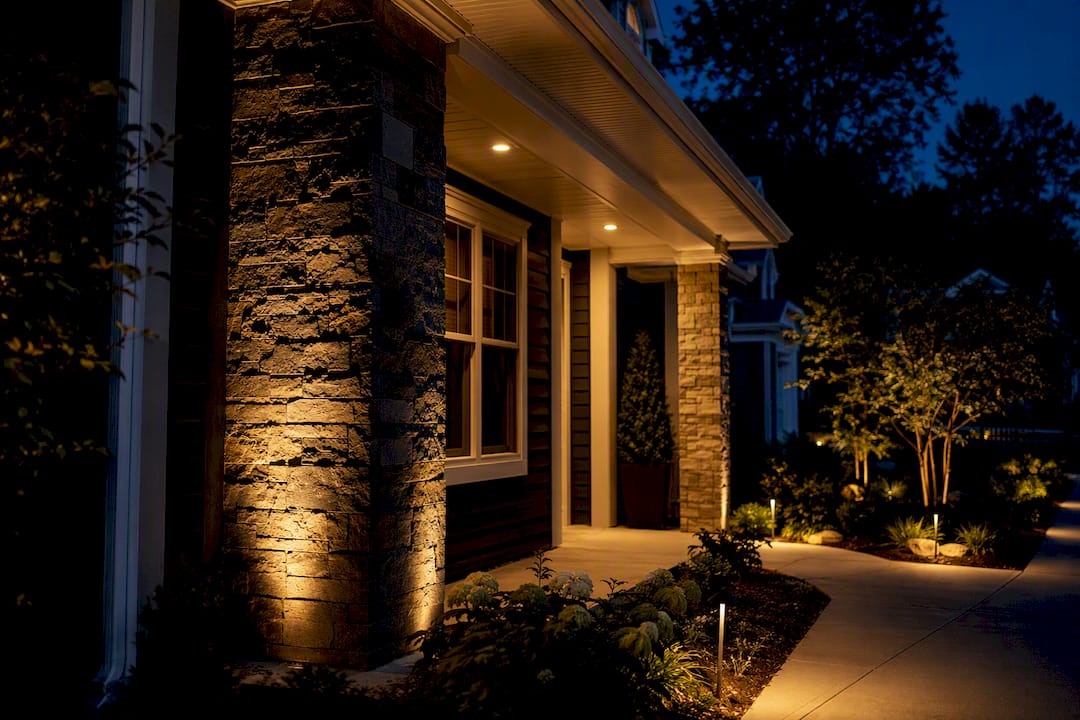
Make Permanent Lights Last 15–25 Years: Drivers, Connectors, Mounting
Make Permanent Lights Last 15–25 Years: Drivers, Connectors, Mounting
A well-installed permanent outdoor LED system typically lasts 15 to 25 years, but the LED chips are rarely the reason it fails. Drivers, connectors, and installation quality determine whether you hit that range or replace fixtures at year six. Thermal management and the correct IP rating matter more than the bulb technology itself, and a few seasonal habits can stretch usable life well past what the box promises.
TL;DR:
- The lifespan of outdoor LED systems depends more on thermal management, IP rating, and installation quality than on the LED chips themselves.
- Components like drivers, connectors, and mounting methods generally fail before the LED chips, with improper mounting and heat exposure accelerating early failure.
- System-level lifetime is almost always shorter than chip-rated hours due to heat buildup, moisture intrusion, and undersized transformers, especially in hot or exposed environments.
- Regular maintenance checks of connectors, power sources, and mounting points can extend system life, with early signs including dimming or flickering.
- Investment in mechanically fastened, sealed wiring and appropriate enclosure ratings, along with careful installation practices, significantly improves long-term durability.
What Does Permanent Lights Lifespan Actually Mean?
Manufacturers advertise “rated hours” using two lab standards: L70 and B50. L70 marks the point where an LED has dimmed to 70% of its original brightness, the threshold most people notice as visibly dimmer. B50 measures how many units in a batch have failed outright by a given point. Neither number tells you how long your specific system will last on your roofline.
Converting rated hours to real years depends entirely on how many hours you run the lights nightly:
- A 50,000 hour L70 rating equals roughly two decades at 6 hours per night, based on real-world testing across 31 fixtures.
- At 4 hours a night, that same rating extends substantially.
- At 8 hours a night, common for homeowners who run accent lighting through the evening, the lifespan proportionally decreases.
Here’s the catch almost nobody explains: that 50,000 hour figure is usually the chip L70, tested in a controlled lab with ideal cooling. System L70, the number that reflects your actual installed fixture with its driver, housing, and roofline heat exposure, is almost never published. The IES and DOE’s technical guidance on LED luminaire lifetime is blunt about this: system lifetime is “often controlled by other components,” not the LED source itself.
Which Components Fail First in a Permanent Lighting System?
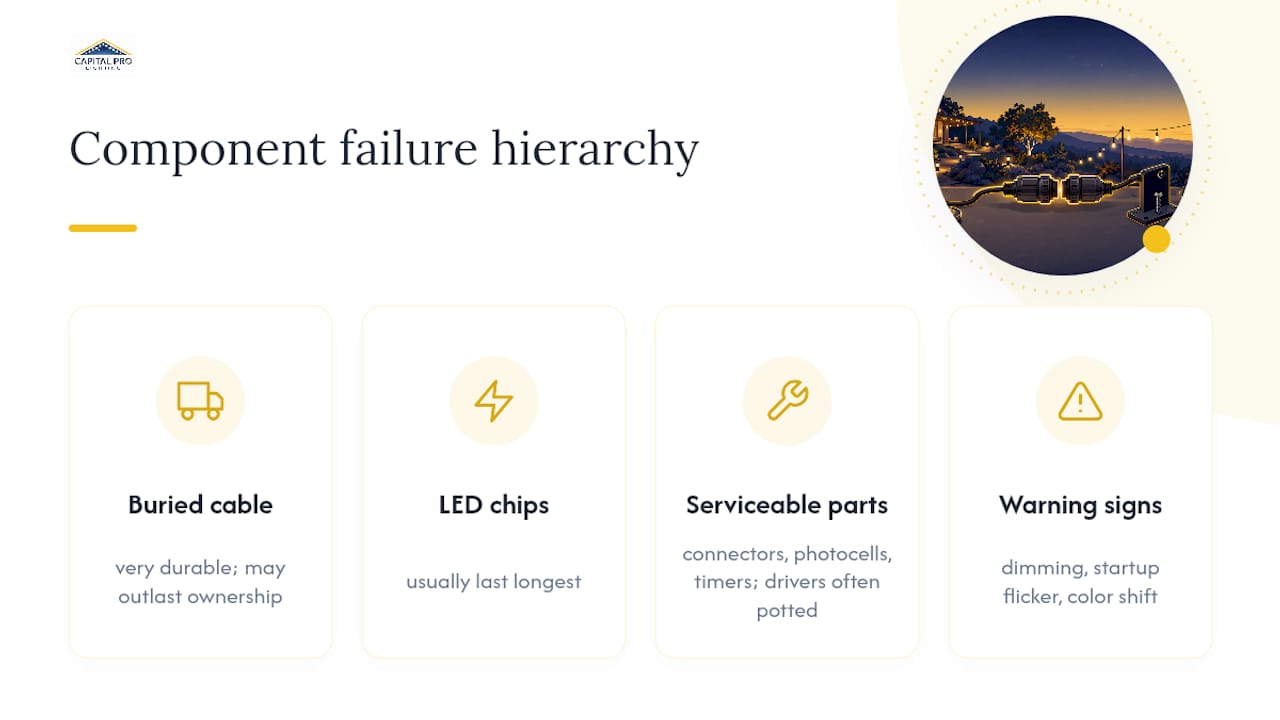
The LED chips are usually the last thing to go. Everything else in the circuit ages faster, and knowing the pecking order helps you budget for repairs instead of assuming a dark fixture means starting over.
These ranges come from field data on outdoor lighting component life expectancy. Notice the spread: buried cable can outlast a house’s ownership, while an unsealed connector might fail before your first holiday season ends.
Connectors, photocells, and timers are serviceable. Swap them out and the system keeps running. Integrated fixtures with a failed driver usually aren’t worth repairing, since the driver is potted inside the housing. Early warning signs include one fixture running noticeably dimmer than its neighbors, a faint flicker on startup, or a color shift where whites start looking slightly yellow or blue compared to the rest of the run.
Why Do Some Permanent Lights Fail Years Early?
Published hours assume lab conditions. Your roofline is not a lab. Heat, moisture, and mounting choices are what actually separate a system that lasts 20 years from one limping along at year seven.
- Thermal buildup on drivers. For roughly every 18°F rise in driver operating temperature, remaining driver life is cut roughly in half, following the Arrhenius relationship documented in fixture reliability testing. A driver baking in a sealed, sun-facing enclosure ages faster than one with airflow.
- IP rating mismatches. Installing a fixture with too low an IP rating where a higher rating is needed can let moisture creep in and significantly shorten expected life, from multiple seasons down to just a few, according to testing on outdoor LED compliance standards. For a broader look at how exposure level should dictate rating choice, this IP66 vs IP67 breakdown is a useful reference even outside the security camera world it was written for.
- Adhesive-only mounting on hot rooflines. VHB adhesive strips, common on consumer smart-light kits, tend to fail within 2 to 4 years on south or west-facing roof exposure without mechanical backup.
- UV exposure on housings and gaskets. Plastic housings can become brittle over time, compromising seals that were watertight when new.
- Undersized transformers. A transformer running near or past its rated capacity runs hotter and pushes voltage drop further down the line, dimming fixtures at the far end of a run.
Pro Tip: Ask your installer where the transformer and driver enclosures will sit. If they’re tucked into a hot, unventilated soffit space, that alone can shave years off system life regardless of what the fixture box promises.
How Should Homeowners Maintain Permanent Lights?
Most permanent lighting failures announce themselves before they become a full outage. Catching them early is mostly about looking in the right places, in the right order.
- Inspect connectors each spring and fall. Look for corrosion, discoloration, or a loose fit. This is the single highest-payoff five minutes you’ll spend on the whole system.
- Test the photocell and timer. Cover the photocell to confirm the lights trigger, and confirm timer settings survived any power blips.
- Check adhesion and fasteners. Run a hand along mounting points after a hot summer or hard winter. Loose clips or lifted adhesive strips are easier to fix in October than to discover in January.
- Watch for differential dimming. If one section of the run looks dimmer than the rest, that’s often the first visible sign of driver or connector trouble, a pattern confirmed by field observations on fixture degradation.
- Troubleshoot in this order: connectors first, then the power source or transformer, then the fixture driver itself. Most “dead” sections trace back to a bad connection long before they trace back to a bad LED.
Budget for photocells, timers, and connectors as consumable parts. They tend to need attention every 5 to 8 years, well before the fixtures or cable underneath them.
Pro Tip: If an entire zone goes dark at once but neighboring zones stay lit, suspect the transformer or a shared connector before assuming every fixture in that zone failed simultaneously. That’s a statistical long shot.
What Specs and Practices Actually Extend System Life?
Not every “permanent lighting” quote uses the same components, even when the marketing language sounds identical. A few questions separate systems built to last two decades from ones built to look good for two years.
Ask for specifics on:
- System-level L70 data, not just chip L70. Few manufacturers publish it, but a serious installer should be able to explain how lab numbers translate to your roofline.
- LM-80 test data on the LED source, the standard lab method for lumen maintenance.
- Driver capacitor temperature rating. A 105°C-rated capacitor holds up substantially better in hot, sun-exposed installs than an 85°C part, a distinction with an outsized impact on driver longevity.
- IP rating on both fixtures and control enclosures, matched to actual exposure, not the minimum code requirement.
On installation practices, prioritize concealed hardwiring over adhesive-only mounting, mechanical fasteners on any roofline that bakes in direct sun, a transformer sized to run at 80% load or less, and gel-filled or heat-shrink sealed connectors, which can double or triple connector life over unsealed wire nuts.
Before signing anything, ask the installer directly: what’s the warranty on parts versus labor, and what happens if a driver fails in year eight?
What Ten Years of Local Installs Have Taught Us
Some installers have spent many years installing permanent outdoor lighting across various regions, and the failures they see almost never trace back to the LED chip itself. They trace back to mounting and wiring decisions made during install.
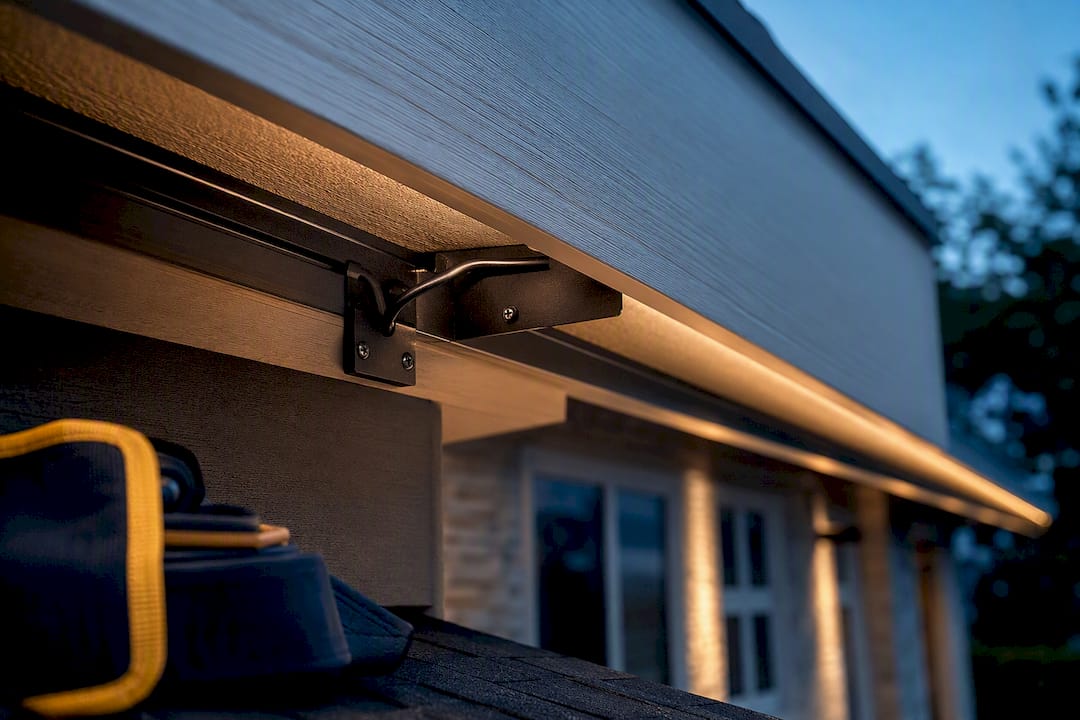
Our systems use phone-controlled roofline lighting with custom color-matched tracks, secured with 3D-printed brackets designed for a clean, mechanically fastened fit rather than adhesive alone. Concealed wiring and correctly rated hardware can help protect against the two failure modes that shorten lifespan the fastest: heat buildup and moisture intrusion. Every track installation carries a lifetime parts warranty, which reflects how confident we are in that approach holding up over decades, not seasons.
. . .
Why Most Lifespan Advice Misses the Point
The industry loves to talk about LED chip life because it’s an impressive number. Fifty thousand hours sounds permanent. But that number is a red herring for homeowners trying to figure out what will actually happen to their system in year twelve.
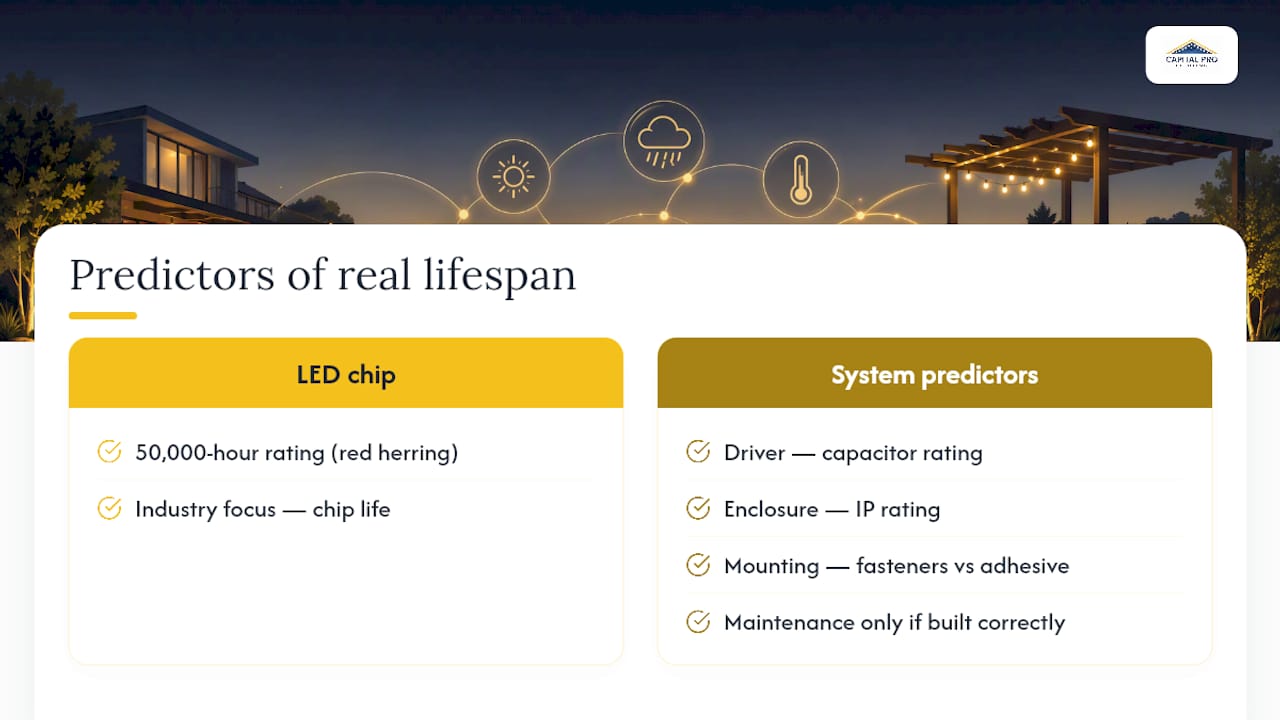
The conventional advice, “LEDs last 20 years, so buy and forget,” skips the part that matters: your driver, your connectors, and your installer’s mounting choices are doing most of the work to get you anywhere near that number. A cheap driver in a hot, sealed housing can compress that same 50,000 hour rating down to a fraction of its promised life, regardless of how good the chip itself is.
If you’re evaluating a system, spend less time asking about the LED and more time asking about the driver’s capacitor rating, the IP rating on the enclosure, and whether the installer uses mechanical fasteners or just adhesive. Those three answers predict your year fifteen far better than any chip spec sheet does. Maintenance matters too, but it can only protect a system that was built correctly in the first place.
— Luis T
Get a System Built to Actually Last
Some companies offer an alternative to consumer light kits and short-term installers for homeowners who want a system that still looks sharp long-term, not just in the first year. Systems with concealed wiring, mechanical fasteners instead of adhesive-only mounting, and warranty coverage on track installations reduce risk of premature driver or connector failure.
If you’re comparing quotes, ask each installer the same questions this article raised: capacitor rating, IP rating, and how the fixtures are actually mounted to your roofline. Then check our service area coverage to see if you’re in our footprint, and request a quote for a system designed around your home’s actual sun exposure and roofline heat, not a generic spec sheet.
Sources
- LED Landscape Lighting Lifespan L70 Database: Real-World Service Life vs Published Hours Across 31 Fixtures
- LED luminaire lifetime guide (IES / DOE technical guidance)
FAQ
How Much Do Permanent Lights Usually Cost?
Cost varies widely based on roofline length, fixture quality, and control features, and installers price projects individually after assessing your home. Ask any quote to break out driver, connector, and warranty specs, since those details affect long-term cost more than the sticker price does.
Are Permanent House Lights Worth It?
For most homeowners, yes, largely because a properly installed system running 15 to 25 years eliminates the recurring cost and hassle of seasonal string lights and ladder climbing. The payoff depends heavily on installation quality, particularly driver protection and mounting method.
What Are the Longest-Lasting Permanent Christmas Lights Available?
Systems with sealed connectors, mechanically fastened housings, and drivers rated for 105°C tend to outlast consumer-grade adhesive-mounted kits by a wide margin. Look for a system-level warranty rather than just a chip life claim, since that’s a stronger signal of real durability.
How Long Do Govee Permanent Lights Last?
Govee-style consumer kits typically rely on VHB adhesive and clip mounting, which field guides show can fail within 2 to 4 years on hot, sun-exposed rooflines without added mechanical support. The LED chips themselves may last longer, but adhesive failure is usually the limiting factor for these kits.
Ready for a Brighter Home?
Free, no-pressure quotes across the Capital Region.
No obligation. Local installer. Same-day callback.
Reviewed by Capital Pro Lighting
Capital Pro Lighting installs permanent outdoor lighting, architectural lighting, and holiday lighting across Albany and New York's Capital Region. We are an authorized InvisiLights dealer and a Govee certified installer, with 10 years in business. More about our team.