NEC Compliant Bay Window Outline Lighting: Concealed Mounts, Warranty

NEC Compliant Bay Window Outline Lighting: Concealed Mounts, Warranty
Yes, a permanent, app-controlled LED system can outline the exterior profile of a bay window cleanly and safely. A licensed installer handles the National Electrical Code (NEC) compliance, GFCI protection, concealed wiring, and choice between track or trackless mounts, then backs the work with a lifetime parts warranty on track installs. If you want phone control and a finish that looks intentional rather than bolted on, start with a site survey and ask the installer to document GFCI testing and warranty terms in writing.
TL;DR:
- A professional installer ensures outdoor wiring complies with NEC GFCI safety standards, requiring weather-resistant receptacles and sealed splices.
- Proper placement and spacing of LED nodes are crucial; too close causes reflected light washout, while too far apart creates visible gaps.
- White LED channels usually produce a consistent, true white, whereas RGB-only systems often simulate white and may look less clean for everyday use.
- A site survey maps out angles, power access, and obstacles, optimizing the system’s reliability and visual effect before installation begins.
- Routine maintenance includes monthly GFCI testing and visual inspections, with most issues resolvable by homeowners or addressed under warranty by the installer.
Why homeowners choose permanent bay window outline lighting
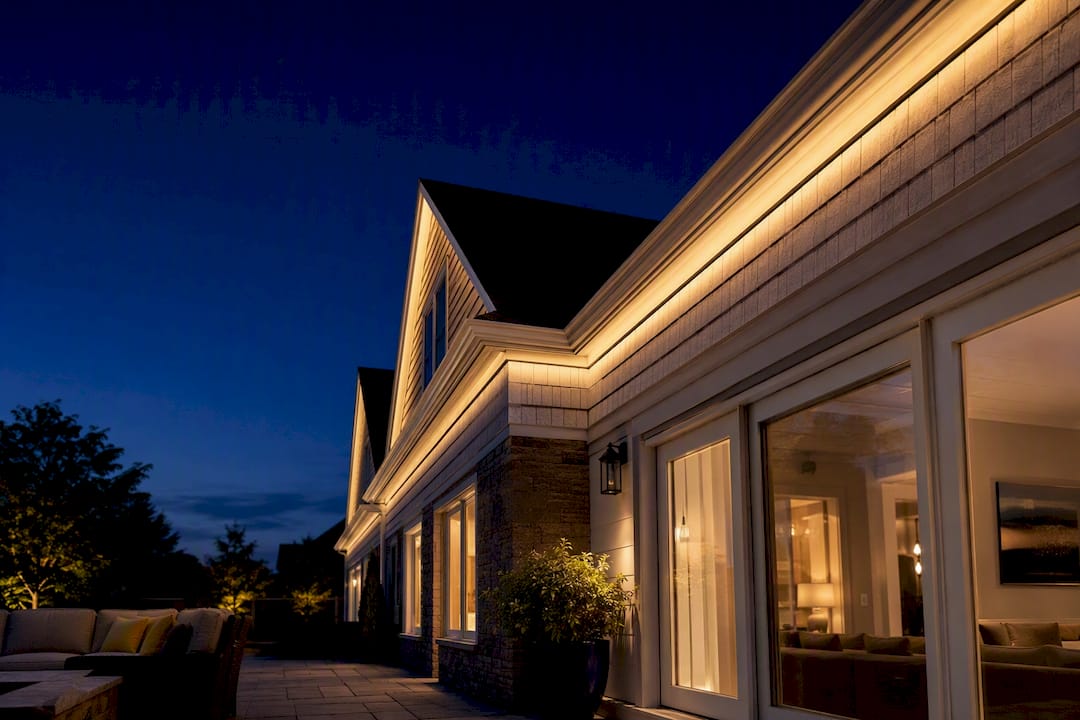
A bay window’s angled geometry makes it one of the most rewarding features on a house to light. It projects out from the wall, catches shadow differently than a flat surface, and gives you three or more distinct planes to trace instead of one flat run. Homeowners who’ve dealt with a decade of tangled string lights tend to switch for one reason: they never have to touch a ladder again once the system is in.
Phone and app control changes the daily experience more than most people expect before they own it. You can set a warm white scene for a Tuesday evening, switch to team colors for a game night, and schedule sunset activation automatically, all from the same app.
Common reasons homeowners request this upgrade:
- Replacing seasonal holiday strings with one system that runs year-round
- Highlighting the bay’s angled geometry as a standing architectural feature, not just a holiday accent
- Running subtle warm white light nightly for safety and curb presence
- Switching to themed colors for holidays, game days, or parties without new hardware
- Syncing bay-window lighting with existing rooflines for a unified look
Safety and code rules a professional installer actually handles
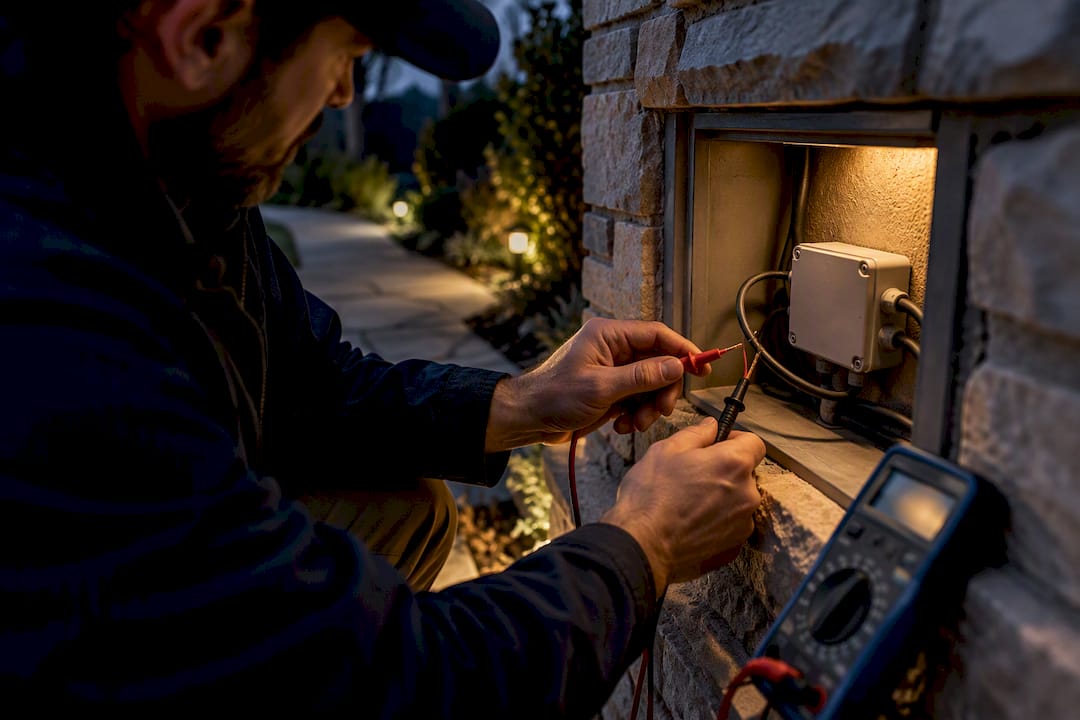
Outdoor-powered lighting is not optional territory when it comes to code. Any permanently wired outdoor lighting circuit needs ground-fault protection, and the National Fire Protection Association is explicit that GFCI protection is essential for outdoor-powered equipment, with weather-resistant GFCI receptacles required outside. This isn’t a nice-to-have installers tack on. It’s the baseline that separates a code-compliant bay window outline from a liability.
NEC 210.8(A) lists numerous residential locations, including outdoor circuits, that require GFCI protection, and it’s common for one GFCI device to protect several downstream receptacles on the same circuit, according to NFPA guidance on ground-fault protection. A qualified installer typically handles this by:
- Wiring into a protected outdoor receptacle or dedicated GFCI breaker
- Routing adapters and controllers to a sheltered, indoor-adjacent location
- Sealing every cable splice against moisture before it’s ever tested
- Running a documented test cycle before calling the job complete
Control requirements matter too, separate from wiring safety. Permanently attached residential outdoor lighting generally has to meet efficacy or control standards, and energy code guidance accepts photocells, astronomical time clocks, or approved energy management controls as compliant methods. A phone app with scheduling capability usually satisfies this requirement, which is one more reason app control isn’t just a convenience feature. It’s doing double duty as your automatic shutoff.
How to plan the placement, spacing, and color of a bay window outline
Getting the outline right comes down to four decisions, and skipping any one of them shows up as a flaw you’ll notice every single night.
- Choose the mount type. Track-mounted systems create a continuous, unbroken line and hold up well on longer bay-window runs. Trackless clips or brackets work better where drilling into trim is restricted or the surface is too narrow for a track channel.
- Set node spacing and standoff distance. Nodes spaced too tightly waste product and money; spaced too far apart, they create visible gaps once dusk hits. The offset from the wall matters just as much, since fixtures mounted too close to glass tend to bounce light back into the window and wash out the outline instead of defining it.
- Decide on white versus RGB. Dedicated warm and cool white channels, often labeled RGBWW, produce a true white for everyday use, while RGB-only systems simulate white and rarely look as clean. Save full-color RGB modes for holidays and events, and lean on dedicated white for the other 350 nights a year.
- Confirm hardware ratings. Ask for UL or ETL-listed fixtures and IP-rated housings suited to your climate’s exposure to rain, ice, and UV. Discreet mounting hardware, including custom 3D-printed brackets, keeps the daytime look clean since there’s no visible hardware between window and trim.
Pro Tip: Test the full run on the ground before anything gets mounted. Lay the strand out, power it on, and check color consistency and spacing in daylight and after dark before a single bracket goes up.
What to expect from a professional bay window lighting installation
A proper install starts well before anyone touches a drill. The installer measures the bay’s angles, checks roofline access, and maps out where power will originate, since planning the wiring path is genuinely the biggest time investment in the whole project.
- Site survey. The installer documents exact dimensions, existing electrical access, and any obstacles unique to your bay window’s trim or overhang.
- Mounting and wiring. Track or clips go up first, followed by low-voltage wiring routed to a protected, weather-rated controller, with every splice sealed against water intrusion.
- Commissioning. The system pairs to your phone, scenes and schedules get configured, and the installer runs a GFCI and circuit test before handing over documentation.
- Warranty paperwork. You receive written confirmation of what’s covered, which matters more than people expect once a component eventually needs replacing.
Most single bay-window segments install in a matter of hours rather than days, though larger homes with multiple architectural features naturally take longer. A lifetime parts warranty on track installations typically covers the physical hardware; labor for service calls outside standard defects may carry its own charge, so ask what’s included before you sign.
Keeping your bay window lighting running smoothly
Upkeep on a permanent system is minor compared to storing and restringing seasonal lights every year, but it’s not zero-effort. NFPA guidance recommends testing GFCI receptacles at least monthly and again after major storms, and that habit alone catches most problems before they become expensive ones.
- Press the GFCI test button monthly and confirm it trips and resets properly
- Do a quick visual check for cracked housings, loose connectors, or pooled water near the controller
- If nodes go dark, check the GFCI and power source first, then run app diagnostics before assuming hardware failure
- Call your installer if a controller needs replacing or multiple nodes fail at once, since that’s usually outside routine troubleshooting
Seasonal cleaning and basic checks are typically on you. Component failures under warranty terms are usually the installer’s responsibility to resolve.
An installer’s honest take on bay window lighting trade-offs
The single biggest mistake I see homeowners consider is skipping the planning phase to save time. Concealed wiring and a properly routed power path aren’t cosmetic choices. They’re the difference between a system that runs trouble-free for years and one that generates service calls every time it rains.

Dedicated white channels get underrated because RGB color modes are more fun to demo. But most nights, you want a clean, consistent white, not a light show, and that’s where RGBWW hardware earns its cost. IP-rated controllers and custom brackets matter for the same reason. They’re invisible when done right, which is exactly the point.
Warranty documentation is the part homeowners skip reading and later regret. Commissioning isn’t just pairing an app. It’s the paper trail that prevents an argument later about what’s covered.
— Luis T
Get a bay window lighting quote from Capital Pro Lighting
Some companies offer permanent lighting installations as an alternative to seasonal ladder-climbing and rental light services, providing solutions that can be covered by lifetime parts warranties on track installs. We offer both InvisiLights track-mounted systems for a continuous clean line and InvisiClips trackless mounts for tighter trim, plus custom 3D-printed brackets that keep hardware out of sight.
Every job starts with a site survey, moves through concealed wiring and app commissioning, and ends with documentation you actually keep. If your bay window trim calls for a discreet approach rather than a visible track, our trackless and track-mounted pricing page breaks down both options. Homeowners weighing broader roofline work alongside a bay window outline can also review our permanent outdoor lighting page for the full process. Request a quote and we’ll schedule a survey to map out your specific bay window before anything gets ordered.
Sources
Safety and control claims above draw on NFPA electrical safety guidance, NEC GFCI testing standards, and residential lighting control code requirements. Homeowners researching product-level detail, including dedicated white channel hardware, may also find this permanent outdoor lighting product review useful, alongside design inspiration from this bay window styling resource.
FAQ
Is permanent bay window outline lighting worth the cost?
For homeowners tired of seasonal setup and takedown, most find the year-round convenience and app control worth the upfront investment. Capital Pro Lighting’s InvisiLights and InvisiClips options start at 2500 USD and 2000 USD respectively for one-time installation, backed by a lifetime parts warranty on track installs.
Do I need a permit for permanent exterior LED lighting?
Permit requirements vary by municipality, but any permanently wired outdoor lighting circuit must meet NEC standards for GFCI protection regardless of local permitting rules. A professional installer typically confirms local requirements as part of the site survey.
Can I control bay window lighting from my phone?
Yes, app control is standard on modern permanent outdoor LED systems, letting you set schedules, switch colors, and create scenes remotely. This app scheduling can also satisfy code requirements for automatic lighting controls on permanently attached fixtures.
How far should LED nodes sit from bay window glass?
Fixtures mounted too close to glass reflect light back and blur the outline instead of defining it crisply. An installer sets the standoff distance based on your specific window’s glass angle and trim depth during the site survey.
What does the lifetime parts warranty actually cover?
A lifetime parts warranty on track installations generally covers hardware defects and component failure over time, though labor for service calls may be billed separately depending on the issue. Ask your installer for written warranty terms before signing, since coverage details vary by provider.
Recommended
Ready for a Brighter Home?
Free, no-pressure quotes across the Capital Region.
No obligation. Local installer. Same-day callback.
Reviewed by Capital Pro Lighting
Capital Pro Lighting installs permanent outdoor lighting, architectural lighting, and holiday lighting across Albany and New York's Capital Region. We install UL listed permanent lighting systems and have 10 years in business. More about our team.